
Table of Contents
- Work Details
- Recordings
- Published Scores
- In Williams’ Words
- Quotes & Commentary
- Video
- Bibliography and References
Work Details
Piano solo suite consisting of four movements:
I. Phineas and Mumbett
II. Claude and Monk
III. Chet and Miles
IV. Strays, Duke … and Blind Tom
Year of Composition: 2012-2013
Duration: 18 min ca.
First Performance: August 10, 2012, Tanglewood Music Center, Lenox, Massachusetts (“Phineas and Mumbett” movement only)
November 12, 2013, Zipper Hall at the Colburn School, Los Angeles, California (world premiere)
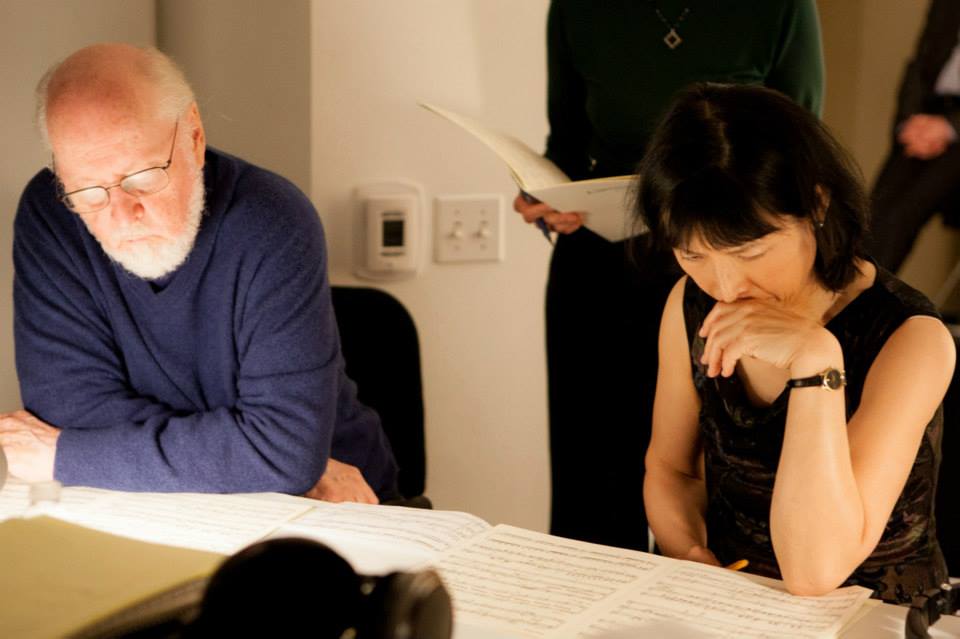
Soloist: Gloria Cheng
Selected Recordings
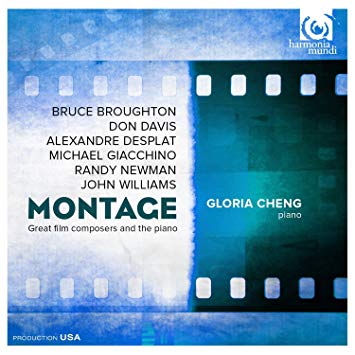
MONTAGE – Great Film Composers and the Piano (2015)
Harmonia Mundi USA – HMU 907635 (CD)
contains “Conversations”
Gloria Cheng, piano
Producer: Judith Sherman
Liner notes: Jon Burlingame

MONTAGE – Great Film Composers and the Piano – 10th Anniversary Edition (2025)
SuperTrain Records (digital only)
contains “Conversations”
Gloria Cheng, piano
Reissue of the 2015 album with new bonus tracks including a live recording of John Williams’ Conversations
Published Scores
There are no published scores for this work. The section will be updated in case anything will be made officially available.
In Williams’ Words
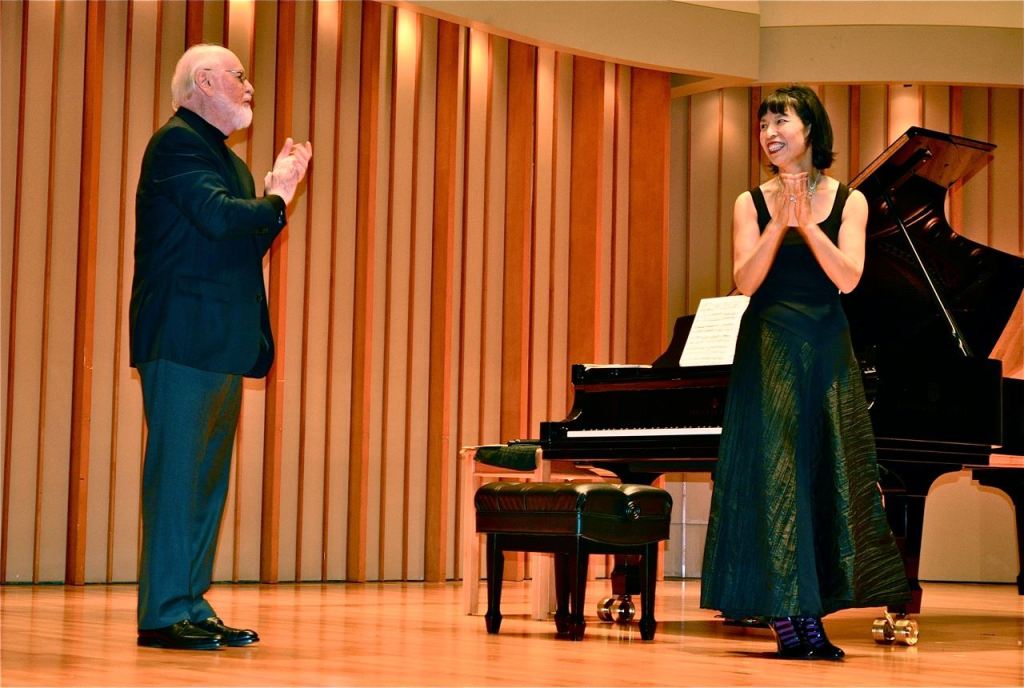
I’ve always wanted to write something for Gloria Cheng. I originally intended to write a series of “water pieces” for her, but I got distracted.
Instead, while at Tanglewood… and for no reason that I can explain… I began to think of what a conversation might be like between the great jazz pianist Phineas Newborn, Jr. and Elizabeth Freeman, known as Mumbett, a resident of western Massachusetts and a former slave who sued the state of Massachusetts in 1781 for her freedom… and she won! Two strong personalities, one pianistic and the other most surely vocal and hymnal… meet for a chat. I imagined them having their conversation near the Sedgwick Pie in Stockbridge, Massachusetts: Visit it, if you can.
Next came Claude and Monk. Not the Claude you might think I mean, but Claude Thornhill… a seminal figure in jazz history, principally remembered for his mentoring of Gil Evans. Thornhill, who loved Debussy, and who I knew during my childhood, understood the sea change in piano sonorities discovered by Debussy, and those equally radical ones invented by Thelonious Monk. It’s delicious to imagine an exchange between these two giants.
Chet Baker and Miles Davis possessed markedly opposing personalities, however they did have much in common. They both eschewed bravura and needless display, and always revealed their art with the barest minimum of fuss. They could be brief and often quiet, but their message was invariably brought forth with great force and power.
Finally, “Strays” (Billy Strayhorn), Duke (that one, of course…) and Blind Tom, another former slave and somewhat forgotten 19th-Century figure in American pianistic history… here gather to unravel the secrets surrounding the birth of “stride”.
And dear listener/reader, if you’re still with us… don’t listen too intently to identify the voices named within. Theirs will remain inimitable and incomparable. However, that we might be permitted to overhear these luminaries chatting in some undiscovered time zone… unrestrained by such things as clefs and bar lines… is a notion that is indeed enciting, and I hope that these minor musings might, in some small way, be worthy of the memory of these notable antecedents of ours.
— John Williams

Quotes & Commentary
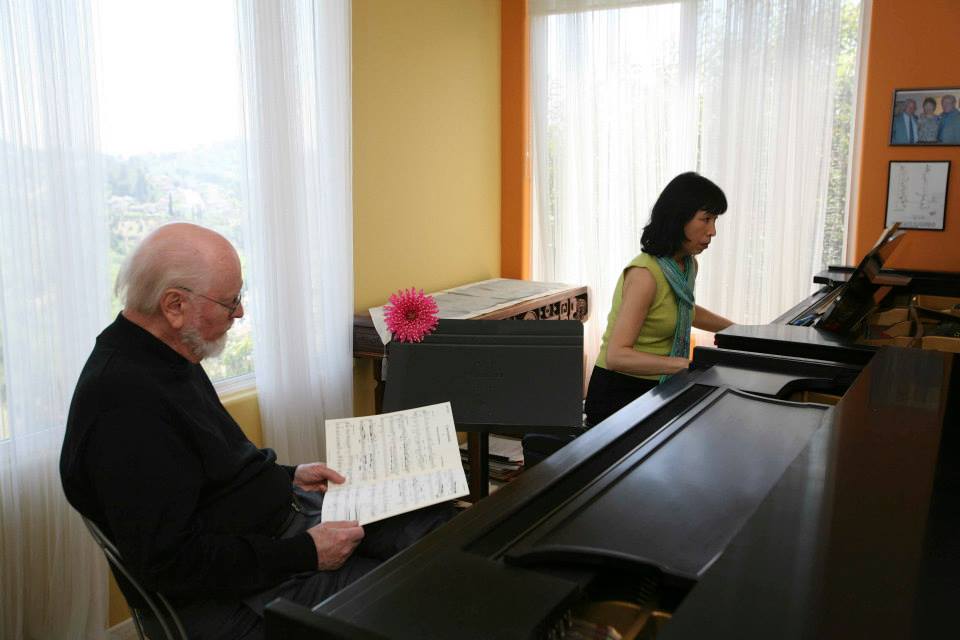
“I’m so grateful that John took time out from his extraordinarily busy schedule to sit down and compose the four movements that comprise his “Conversations.” We communicated a great deal while he was composing the piece, and I’ve kept all of the versions that he ended up revising along the way. It was a rare glimpse into his compositional process to take note of the changes that he made until arriving at the final version. Fedex was at my door many times during the creation of his piece! The virtuosity with which he taps into such heterogenous jazz styles is almost dizzying, and for me as a classically trained, hopelessly-unable-to-improvise pianist, they provided a welcome stretch for me. I’ve always worshipped jazz pianists, and stride playing in particular, so I was delighted that he gave me some of that rhetoric to put under my fingers. 1
“Pianistically speaking, [John] never asked me to play in the way Duke Ellington or Phineas Newborn played… I think he just embedded the licks and stylings of those composers into the music, then set me free to make of them what I would. The slow movement, “Chet and Miles,” was the one that I connected with most immediately. When I introduce the piece to an audience, I say that I can smell the beer, the sawdust and stale peanuts. …In the MONTAGE movie John had said, “How did this girl from New Jersey end up channeling these jazz composers so well? She must have wandered into some bars that her parents didn’t know about!” The fact is that I work with so many composers, I know them, and my job is to go deep to convey their own sound, personality, and soul. So whether it be John Williams channeling Phineas Newborn, Ellington, Monk, or Miles, I try to get through the layers and connect straight to the source.” 2
— Gloria Cheng
What strikes me is both the originality of the approach and the fact that the piano writing is here looking at the jazz style, even though abstractly, but at the same time also at the innovations brought in by contemporary art composers like Ligeti — for example some passages in the Études for Piano. The whole suite is permeated by a very dream-like character. The use of legato, especially in some figures that cover long melodic lines with wide intervals, is instead very expressionistic. Looking at the movements, I think that this sense of evocation is very strong and present. It’s almost the opposite of film music, which is the description or the illustration of something that is already existent. Williams once said, with his typical charming restraint, that writing ‘pure’ music is much more difficult for him than writing for film. It may be true, but in this piece the sense of evocation flows powerfully like a great river, as if he were putting down on paper what lies in the deepest corners of his memory and his personal life.
When he’s not writing for a film, Williams remains faithful to one of his ethical standards, which is to write music as a moment of personal growth and experimentation. Therefore, I believe Conversations is a very important addition to the piano repertoire in general and also a significant step forward for Williams’s own style. It adds a new and unexpected piece to the overall mosaic of his own catalogue of compositions. 3
— Simone Pedroni (pianist)
Williams imagined conversations among jazz musicians he admired over the years, several of whom he’d known and worked with. Thelonious Monk did peek through in a Debussyan “conversation” with Claude Thornhill, a mentor of Gill Evans. Two former slaves — Mum Bett (aka, Elizabeth Freeman) and Blind Tom were among the ghosts. So, too, Duke Ellington, Billy Strayhorn, Chet Baker and Miles Davis. The tone was wistful Williams not epic Williams, the composer creating the mood for imagining music history rather than re-creating it cinematically.4
— Mark Swed (Los Angeles Times)
Video
“III. Chet and Miles” from Conversations
Gloria Cheng, piano
World Premiere Performance
Zipper Hall at the Colburn School, November 12, 2013
Gloria Cheng performs Conversations at the HEAR Now Music Festival
Celebrating New Music of Los Angeles Composers
September 24th, 2021
Italian pianist Simone Pedroni performs “Phineas and Mumbett” from Conversations
Bibliography and References
. Burlingame, Jon – MONTAGE – Great Film Composers and The Piano liner notes, Harmonia Mundi, 2015
. Caschetto, Maurizio – “John Williams Seen From The Piano: Interview with Simone Pedroni,” in John Williams: Music for Films, Television and the Concert Stage, Brepols, 2017
. Caschetto, Maurizio – “Gloria Cheng: Interview,” The Legacy of John Williams, September 2018
. Swed, Mark – “Review: Gloria Cheng opens Piano Spheres with film composers’ fancy,” Los Angeles Times, November 14, 2013
 The Legacy of John Williams