
Table of Contents
- Work Details
- Recordings
- Published Scores
- In Williams’ Words
- Quotes & Commentary
- Audio & Video
- Bibliography and References
Work Details
Commissioned by the Sports Division of the NBC network as part of their television coverage of the 1988 Olympic Games in Seoul, South Korea
Year of Composition: 1988
Duration: 4 min ca.
Instrumentation: 3 flutes (one doubling piccolo), 2 oboes, English horn, 2 clarinets, 2 bassoons, 4 horns, 4 trumpets, 3 trombones, tuba, timpani, percussion, harp, piano, strings
First Performance: May 3, 1988, at Symphony Hall, Boston, USA
Soloist/Orchestra: Boston Pops Orchestra conducted by John Williams

Selected Recordings
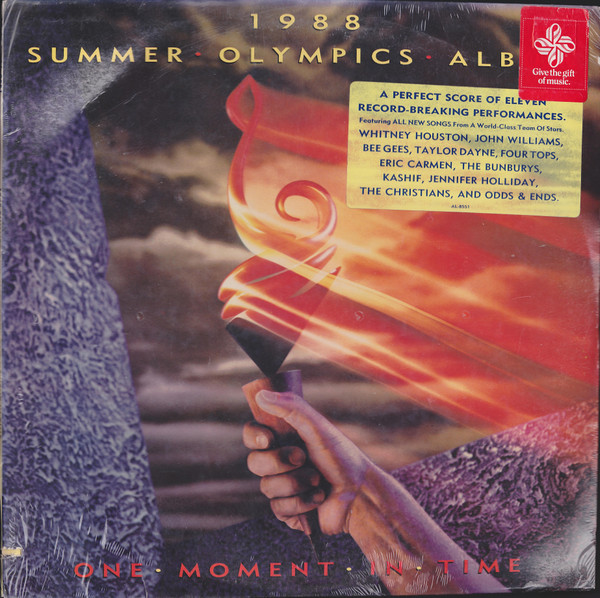
1988 Summer Olympics Album: One Moment In Time (1988)
Arista – AL-8551 (LP) – 259 247 (CD)
Studio orchestra conducted by John Williams
Produced by John Williams
Engineer: Dan Wallin
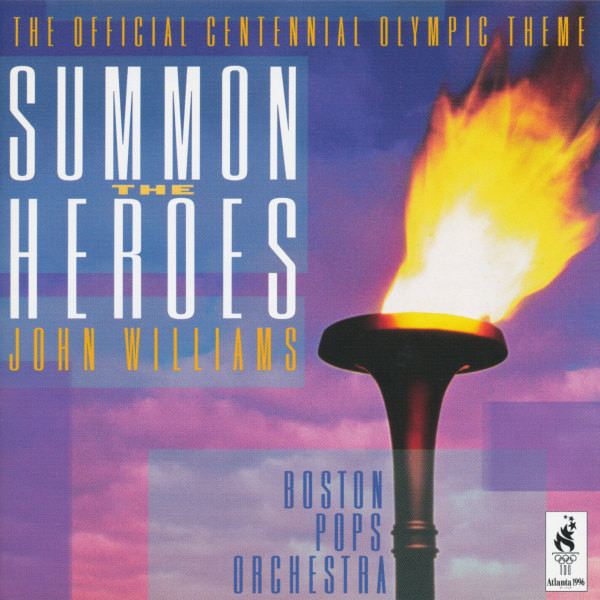
Summon The Heroes – CD (1996)
Sony Classical SK 62592
Boston Pops Orchestra conducted by John Williams
Produced and Engineered by Shawn Murphy
Recorded at Symphony Hall, Boston, April 1996
This version restores a section originally omitted from the previous recording and also features slightly different orchestration.
Published Scores

John Williams Signature Edition
The Olympic Spirit
Hal Leonard Corp. Music Publishing
HL 04490040
Version for Orchestra
In Williams’ Words
‘”The Olympic Spirit” was written in 1988 at the request of the NBC Sports Division to accompany parts of their visual presentation of the Olympic Games celebrated that year in Seoul, South Korea.
I tried to create a clear, simple “anthem” that could be stated by the entire orchestra, but primarily featuring the brass choir which is unequalled in its ability to conjure the spirit of heroism and dedication exhibited by the Olympic athletes.
As always, the Olympic Games themselves present a metaphor for peaceful competition and worldwide cooperation that are our best hope for the future, and if “The Olympic Spirit” can in some small way capture the essence of these higher goals it would be rewarding indeed.”
Quotes & Commentary
Fanfares have traditionally been calls to action, signals designed to carry a simple message ( ‘forward,’’ “rally,’’ “attack”) over long distances when communications were slow. In classical antiquity, the quadrennial athletic events held near Mount Olympus substituted a healthier kind of competition — between young men trained to the highest peak of physical perfection — for military combat. Indeed, so strong was the Olympic spirit among all the regions of ancient Greece that wars were actually stopped while the games went on. The modern Olympics bring together athletes — now including women, too — from all over the world in re-enactment of that ancient tradition. John Williams’s new fanfare, “written especially for the NBC Sports Division in celebration of the 1988 Olympics,” features a broad and noble melody, supported by crisp rhythmic underpinnings, that climbs steadily, in tribute to the high aspirations of those who continually aim to go higher, faster, or farther than ever before.
– Steven Ledbetter (from the program notes for the May 3, 1988 Boston Pops concert)
Video
John Williams conducts a Los Angeles studio orchestra in a performance of The Olympic Spirit
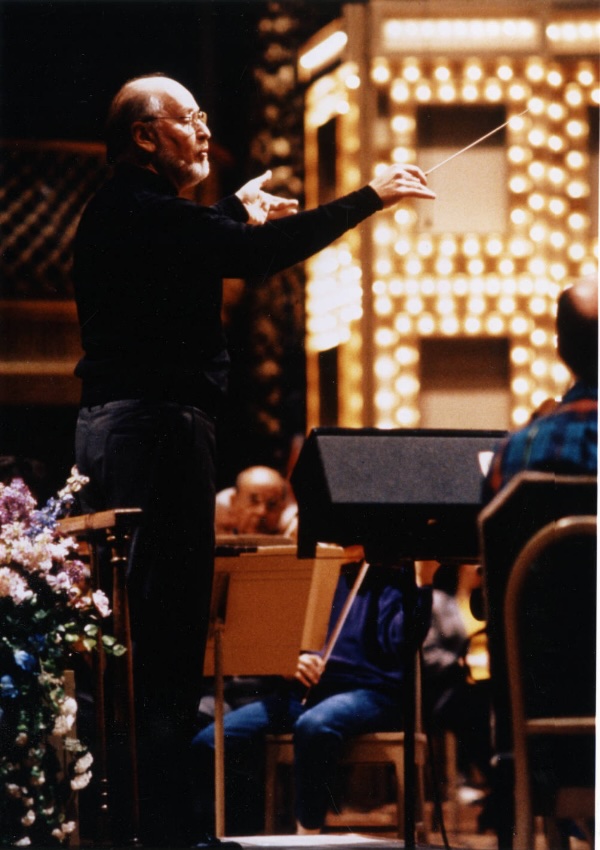
John Williams conducts the Boston Pops Orchestra in a performance of The Olympic Spirit (from a 1988 “Evening At Pops” broadcast)
Bibliography and References
. Burlingame, Jon – Origins of those Olympic themes, TV Update, July 1992
. Dyer, Richard – Williams says Pops well-tempered for upcoming season, The Boston Globe, May 1st, 1988
. Eldridge, Jeff – The Olympic Spirit, johnwilliams.org (retrieved December 2024)
 The Legacy of John Williams