
Table Of Contents
- Film Details
- Music Credits
- Essential Discography
- Awards and Nominations
- In Williams’ Words
- Quotes and Commentary
- Videos
- Bibliography and References
Film Details
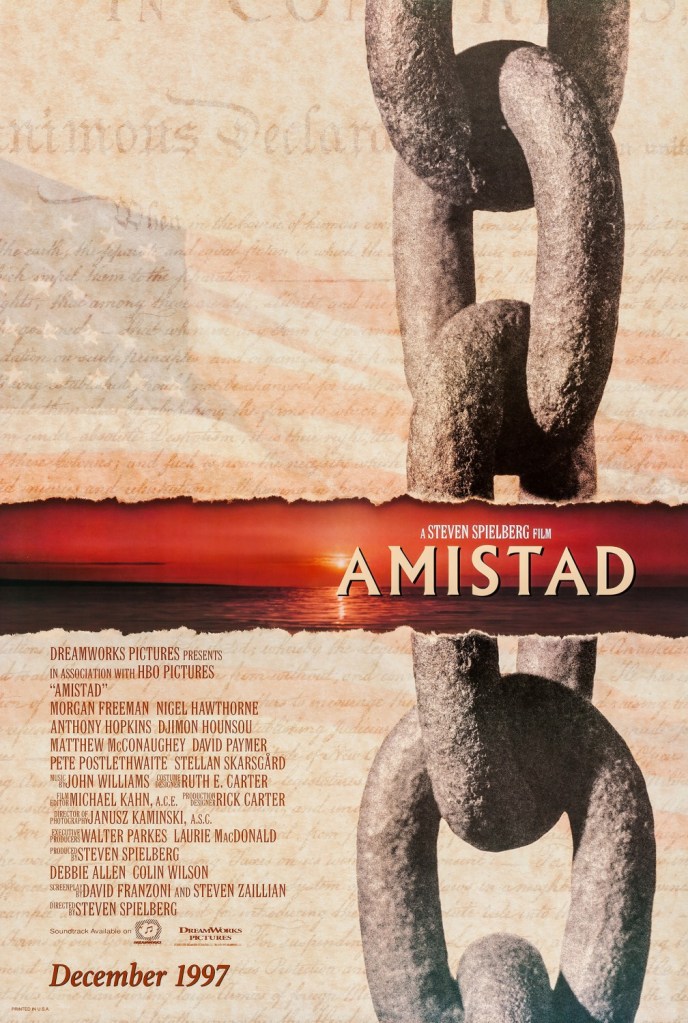
Year: 1997
Studios: DreamWorks Pictures/HBO Pictures
Director: Steven Spielberg
Producers: Steven Spielberg, Debbie Allen, Colin Wilson
Executive Producers: Walter Parkes, Laurie McDonald
Writers: David Franzoni, Steven Zaillian
Main Cast: Morgan Freeman, Nigel Hawthorne, Anthony Hopkins, Djimon Hounsou, Matthew McConaughey, David Paymer, Pete Postlethwaite, Stellan Skarsgard, Anna Paquin, Tomas Milian, Chiwetel Ejiofor
Genre: Drama – History
For synopsis and full cast and crew credits, visit the IMDb page
Music Credits
Music Composed and Conducted by John Williams
Mezzo-soprano Soloist: Pamela Dillard
Trumpet Soloist: Tim Morrison
French Horn Soloist: Jim Thatcher
Flute Soloist: Jim Walker
Music Editor: Kenneth Wannberg
Scoring Mixer: Shawn Murphy
Assistant Engineer: Sue McLean
Music Preparation: JoAnn Kane Music Service
Orchestra Contractor: Sandy DeCrescent
Vocal Contractor: Sally Stevens
Concertmaster: Bruce Dukov
Orchestrators: John Neufeld, Conrad Pope
Recorded at Sony Pictures Scoring Stage, Culver City, California
Recording Dates: October 6, 7, 9, 10, 13, 14, 16, 17, 20, 22 and 26, 1997
Essential Discography
Original Soundtrack Album and Expanded Reissues

Original Motion Picture Soundtrack (CD 1997)
DreamWorks Records – DRMD-50035
Produced by John Williams
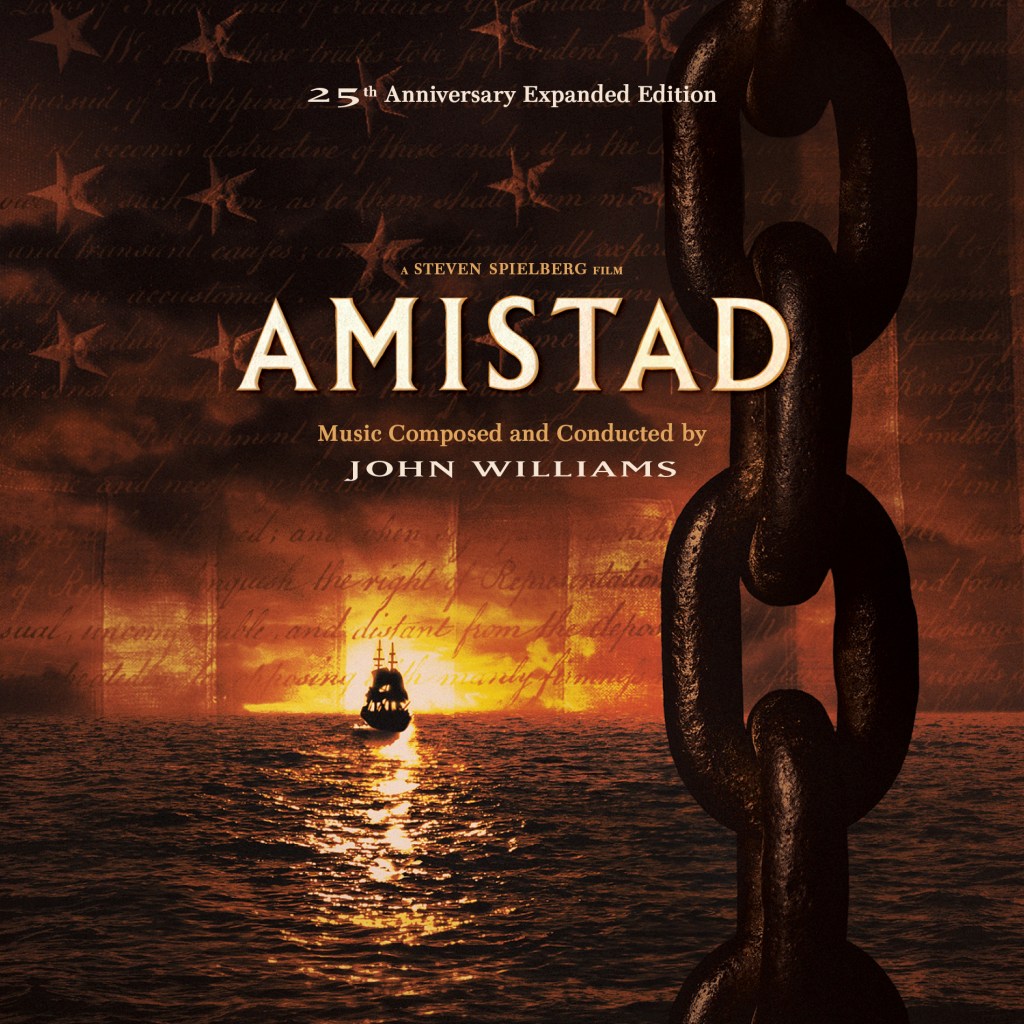
25th Anniversary Expanded Edition (2022)
Limited Edition 2-CD set
La-La Land Records LLCD 1612
Produced, Edited and Mastered by Mike Matessino
Liner Notes: Jeff Bond
Expanded film score presentation plus additional music
Selected Re-recordings
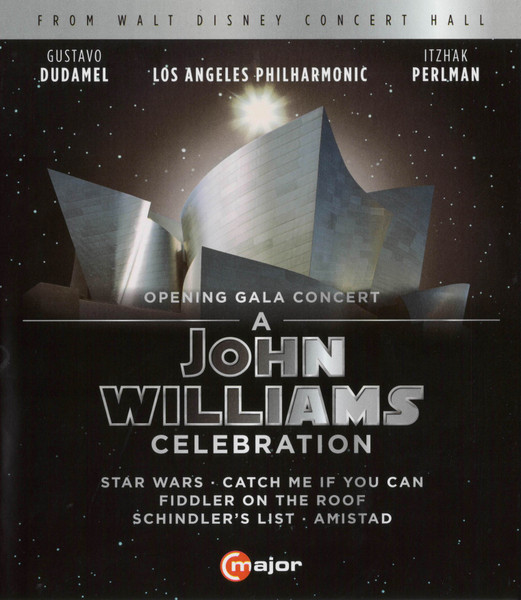
A John Williams Celebration: Opening Gala Concert (2015)
C Major – 730404 (Blu-ray)
contains “Dry Your Tears, Afrika” from Amistad
Los Angeles Philharmonic and Los Angeles Children’s Chorus conducted by Gustavo Dudamel
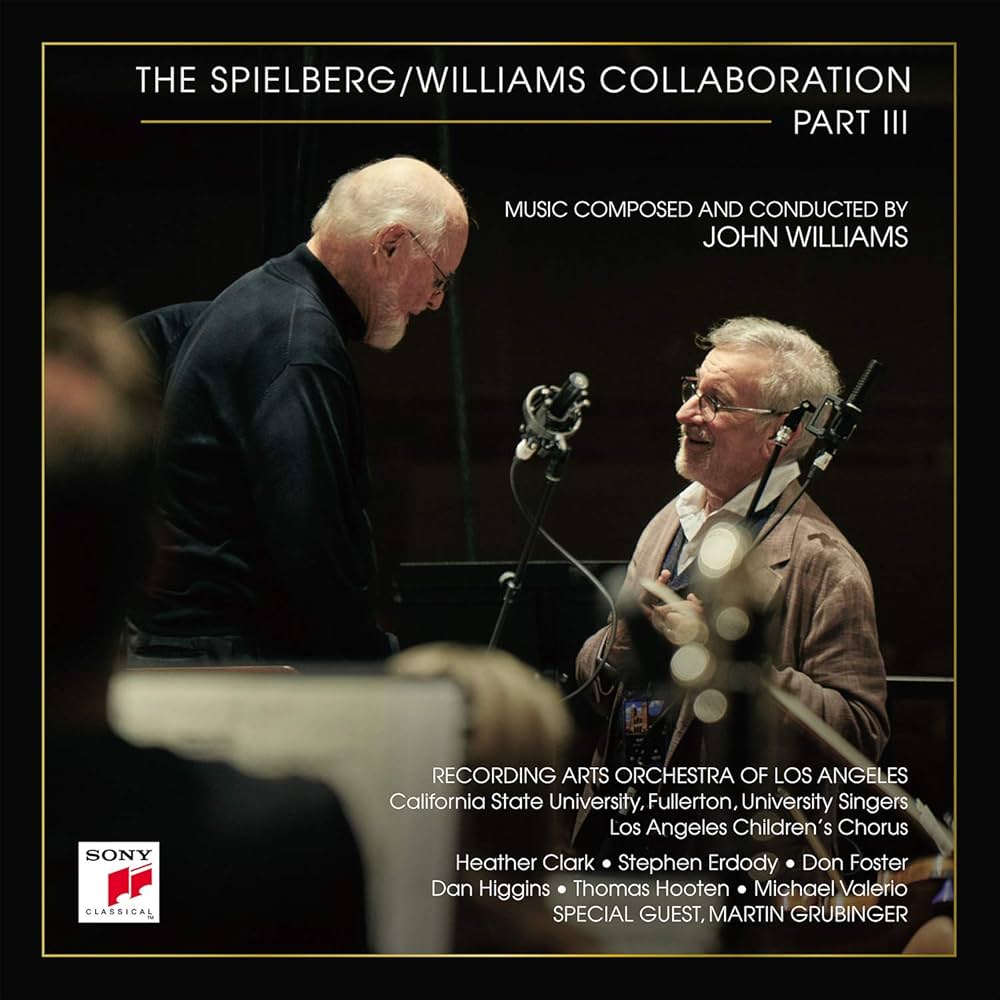
The Spielberg/Williams Collaboration Part III (2017)
Sony Classical – 88985 37458 2 (CD, part of the boxset Steven Spielberg/John Williams: The Ultimate Collection), MOVATM199 (Vinyl)
contains “Dry Your Tears, Afrika” from Amistad
Recording Arts Orchestra of Los Angeles, California State University, Fullerton, University Singers, Los Angeles Children’s Chorus conducted by John Williams
Awards and Nominations
Academy Awards
Nomination: Best Original Dramatic Score
Grammy Awards
Nomination: Best Instrumental Composition Written for a Motion Picture or for Television

In Williams’ Words
“When you’re working on a big movie like this, you can go for inspiration really what you see on the screen.
“The score for Amistad is still vastly instrumental, but vocal performances are more important, frequent and efficient than has been the biggest part of my work for cinema.
“Africans show dignity and determination, and there is the beauty of their memories of home. But his American experience is a difficult exam. Musically there are rhythms of African drums and music on the other side of the principle of the American century XIX, which has its origins in the Quakers, as was the abolitionist movement. The music will run to highlight the aspects of this ennobling and heroic fight.” 1
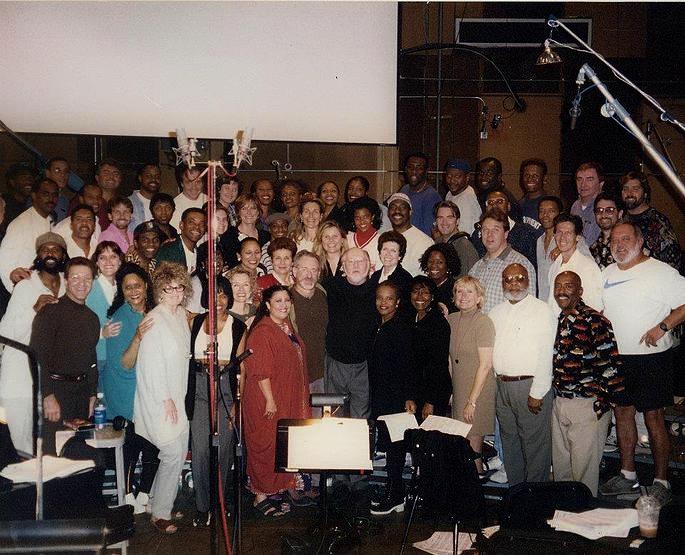
“Composing the musical score for Steven Spielberg’s very moving film, Amistad presented a particular challenge. The story required that the music form a connecting bridge between the rich oral traditions of African tribal culture and Quaker-inspired music of early 19th century America.
For some of the scenes requiring an African texture, I felt that the use of children’s voices would be particularly effective. This seemed especially true in the final “boat” scene when the Africans, now free, were returning home. As I searched for a text of what the children might sing, I discovered in a volume of West African poetry, a poem by Bernard Dadié written decades ago, which was entitled “Dry Your Tears, Africa Your Children Are Coming Home.” I was thrilled to discover this, however accidentally, as it seemed ideal for the final scene of this film. I was especially excited to learn that Bernard Dadié is alive, well, living in Africa, and pleased that we wished to use his poem for the film’s musical score.
The words of the song that I wanted to write would of course, have to be sung in Mende, the native tongue of the Africans associated with this true story, and so with the help of a translator at the Sierra Leone embassy in Washington D.C., I arranged to have the poem translated from English into Mende.
After slightly adjusting some of the text to fit the musical phrases, and with Mr. Dadié’s permission, and adding some generic phrases such as… “sing a song of joy…hush child don’t cry”, it only remained to teach our children’s choir to phonetically sing the song.
I was particularly pleased that after we had completed the film and music I had the pleasure of meeting Bernard Dadié’s family at the Washington D.C. premiere of the film. It was wonderful to realize once again how music has the power to join people together who are otherwise separated by oceans and continents.” 2
Quotes and Commentary
Music is not only an integral but an essential part of my life.
Sometimes listening to a good film score inspires my imagination even more often than seeing someone else’s movie. That’s because music allows free association. Sometimes film music is so specific to the identity of a cultural phenomenon like STAR WARS, JAWS or THE GODFATHER that there is no way to listen to those scores and not see robots, fish and cannolis. Other scores are less remembered for their perfect fit, and like classical music, allow the listener his or her own personal interpretations. Fortunately, John Williams has written both kinds of music and inspired all of us along the way.
Early favourite composers of mine like Bernard Herrmann, Alex North and Dimitri Tiomkin were so defined by their musical habits that you could clearly imagine the films they wrote for: Bernard Herrmann’s NORTH BY NORTHWEST was vintage Hitchcock. Alex North’s SPARTACUS could not be mistaken for anything less than tortured genius. Dimitri Tiomkin’s scores for THE RISE AND FALL OF THE ROMAN EMPIRE, THE HIGH AND THE MIGHTY and THE ALAMO sounded like Tiomkin pictures.
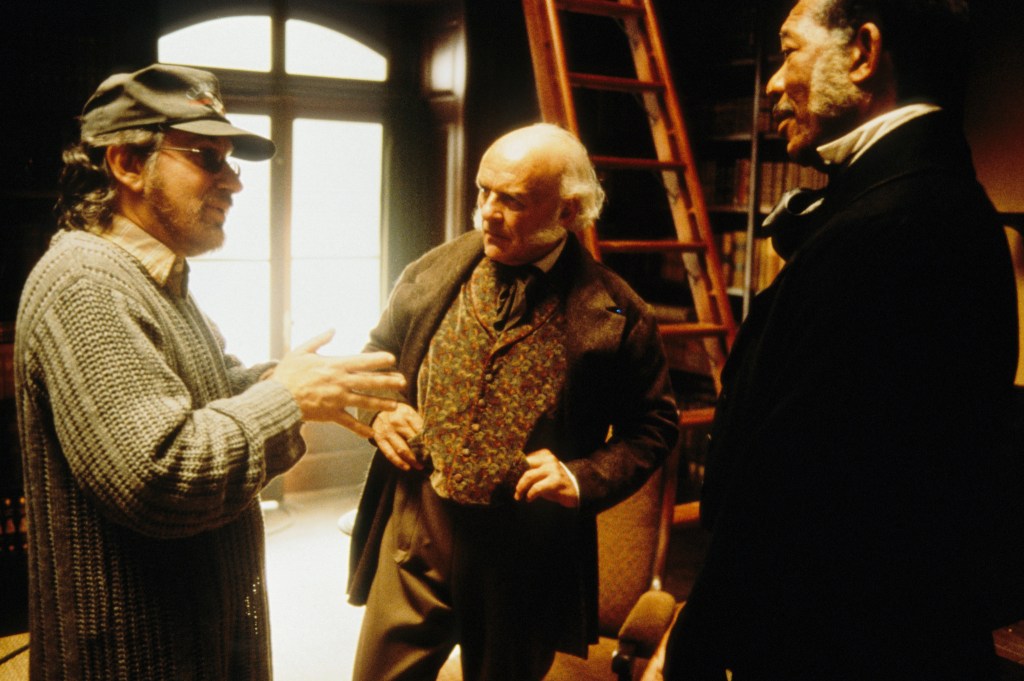
The outstanding virtue of John Williams‘ gifts has always been John’s selfless ability to create unprecedented sounds. Like the great character actors John Barrymore, Paul Muni and Dustin Hoffman, who would never impose a single personality on multiple roles, John Williams has the gift to become any character necessary to retell with music the story of the film he is working on. AMISTAD marks our 24th year in partnership and our 15th film together. And after all that time, John has never failed to surprise me, uplift me or make me look good.3
– Steven Spielberg
Many of Williams’ choices in the film were cerebrally motivated, particularly in regards to his characterization of the Africans and their plight to regain their freedom. This slant is especially noteworthy, because Williams usually works as an unabashed Romantic. Here, he leads with his (considerable) intellect. For example, I loved the way the humming female voice came in to play only once the Africans encountered the Americans. Not only did it act as a wonderful representation of the communication barrier (the Africans spoke no English), but it also was very telling of the race struggles present–the blacks were closed off and not allowed to express themselves externally. There was a real urgency to the writing in these spots, but when sung with a closed mouth, it became not only an emphatic voice, but an oppressed voice. It reminded me slightly of the spirituals in Rosewood, but it took that raw emotional content and negated its ability to be articulate. A sort of a stifled message.4
– Doug Adams
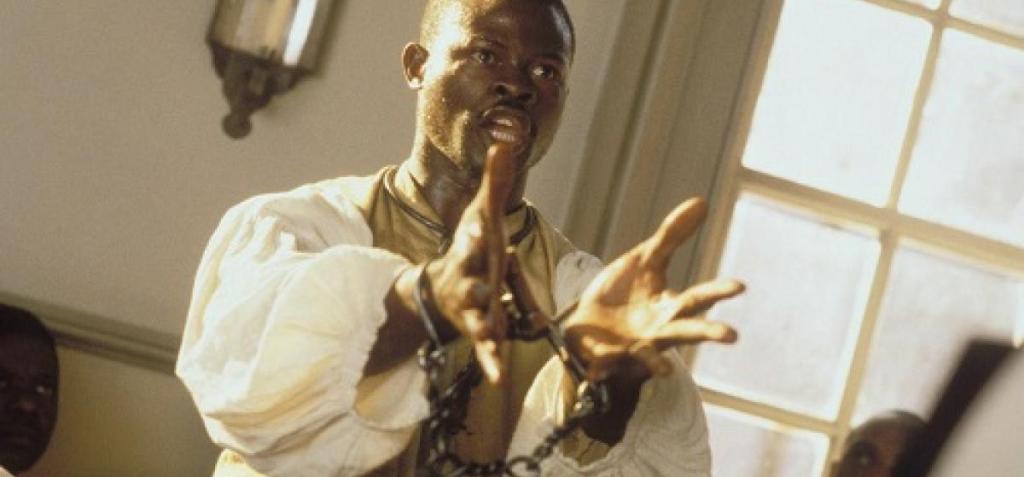
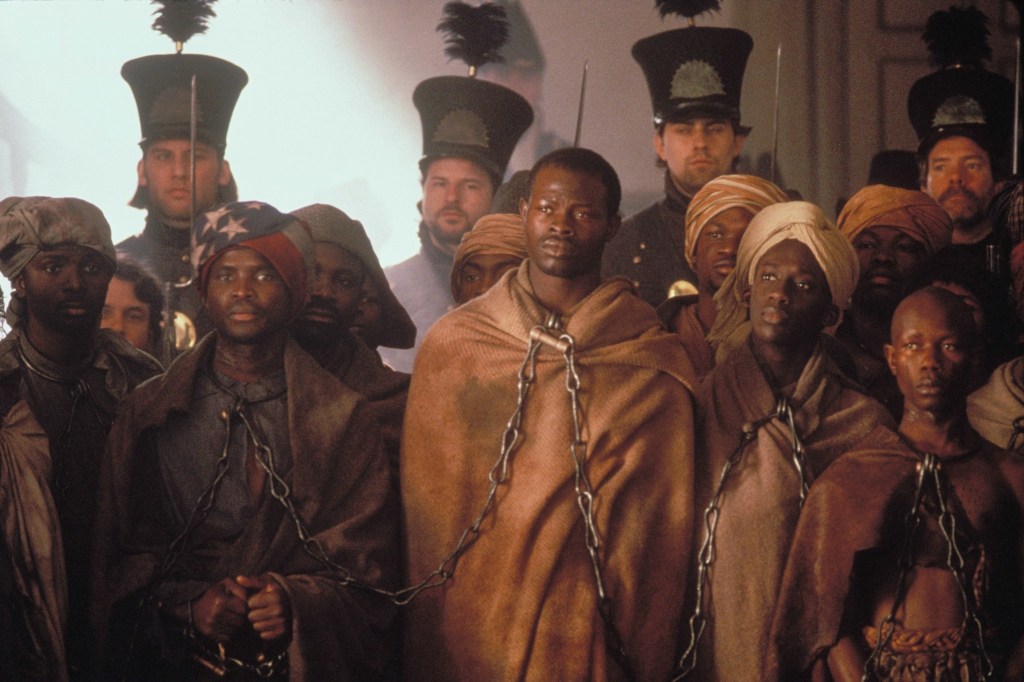
Amistad provided a unique opportunity to combine an Americana sound, which had been a familiar element of Williams’ style for decades, with a blend of regional African percussion rhythms, instrumentation and vocal chanting. Williams’ haunting Amistad score is largely an undercurrent rather than a dominating force in the film. But when it does burst forth in unforgettable moments of anguish and uplift, the effect is as powerful as anything in the composer’s output. The score opens with an evocative theme for Cinqué, its beautiful simplicity bookending the score and speaking to Cinqué’s decency, to the challenge of his struggle to communicate with his captors and his potential benefactors during the trial, and ultimately to the haunting tragedy, anguish and loneliness of the slave experience. Like Cinqué himself, the character’s theme is a constant presence in the film, often sung in soulful performances by mezzo soprano Pamela Dillard, creating a through-line for the character and the score from the intense opening closeup on Cinqué as he struggles to free himself from his chains in the hold of the Amistad. 5
– Jeff Bond
Videos
The “Give Us Free” scene from Amistad (1997) | DreamWorks Pictures
The “Call To Ancestors” scene in Amistad (1997) | DreamWorks Pictures
John Williams and Steven Spielberg talk about Amistad and the song “Dry Your Tears, Afrika” | Sony Classical | 2017
Gustavo Dudamel conducts the Los Angeles Philharmonic and the Los Angeles Children’s Chorus in “Dry Your Tears, Africa” from Amistad | John Williams Celebration | LA Phil Opening Gala Night | 2014
Bibliography and References
. Adams, Doug – “Heart and Soul: Amistad,” Film Score Daily, December 23, 1997
. Bond, Jeff – “Another Unfinished Journey,” Amistad – 25th Anniversary Expanded Soundtrack liner notes, La-La Land Records, 2022
. Burlingame, Jon – “Fanfare for the Uncommon Score,” Variety, January 25, 1998
. Moorman, Peter – Spielberg-Variationen: Die Filmmusik von John Williams, Nomos Verlagsgesellschaft, 2010
. Swed, Mark – “The Transcendent Sounds of ‘Kundun’,” Los Angeles Times, January 9, 1998
. Trudeau, Andy – “Oscar-Nominated Music: Amistad,” NPR Weekend Edition, March 1, 1998
Legacy of John Williams Additional References
John Williams and the American Sound, essay by Maurizio Caschetto
Footnotes
- Quoted in Amistad Soundtrack – Press Release, March 1997 ↩︎
- Introductory note to “Dry Your Tears, Afrika,” John Williams Signature Edition Orchestra, Hal Leonard HL 04490085 ↩︎
- Amistad – Original Motion Picture Soundtrack liner notes, 1997 ↩︎
- Adams, Film Score Daily, December 1997 ↩︎
- Bond, Amistad – 25th Anniversary Expanded Soundtrack liner notes, 2022 ↩︎
 The Legacy of John Williams