

Table Of Contents
- Film Details
- Music Credits
- Essential Discography
- In Williams’ Words
- Quotes and Commentary
- Videos
- Bibliography and References

Film Details
Year: 1976
Studio: Universal Pictures
Director: Alfred Hitchcock
Writer: Ernest Lehman, from the novel “The Rainbird Pattern” by Victor Canning
Main Cast: Karen Black, Bruce Dern, Barbara Harris, William Devane, Ed Lauter, Cathleen Nesbitt, Katherine Helmond
Genre: Comedy – Crime – Mystery – Thriller
For synopsis and full cast and crew credits, visit the IMDb page
Music Credits
Music Composed and Conducted by John Williams
Music Supervisor: Hal Mooney
Scoring Mixer: Edwin J. Somers Jr.
Orchestra Contractor: Sandy DeCrescent
Concertmasters: Erno Neufeld, Paul Shure
Orchestrators: Herbert W. Spencer, Al Woodbury
Recorded at Universal Studios Stage 10, Studio City, California
Recording Dates: January 12, 13 and 14, 1976

Essential Discography
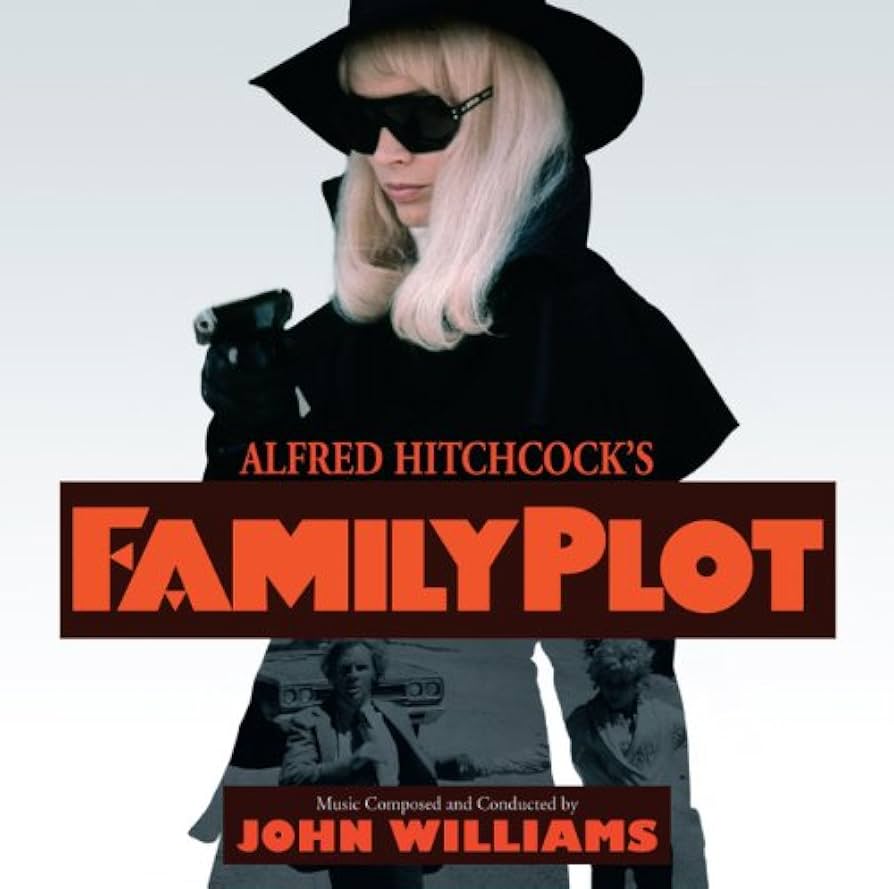
Original Motion Picture Soundtrack – Limited Edition (2010)
Varèse Sarabande VCL 1110 1115
Produced by Robert Townson and Mike Matessino
Restored, Mixed and Edited by Mike Matessino
Mastered by Erik Labson
Premiere release of the original motion picture score
Selected Re-recordings
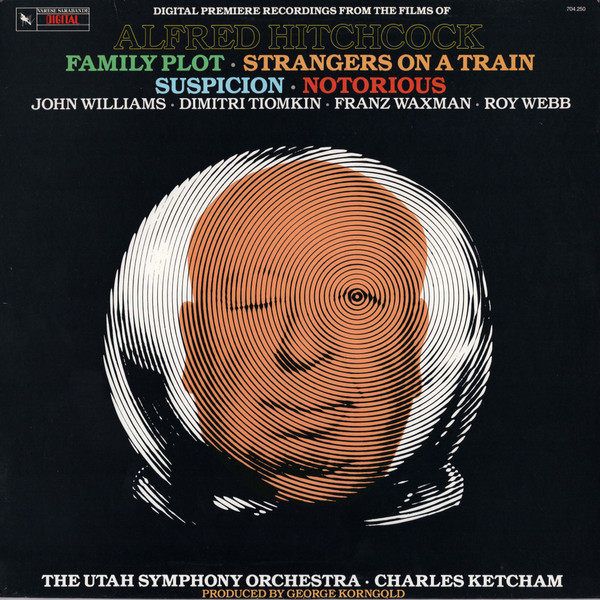
Music From Alfred Hitchcock’s Films (1985)
Varèse Sarabande – 704 250 (LP) – VCD47225 (CD)
Produced by George Korngold
contains “End Credits” from Family Plot
Utah Symphony Orchestra and University of Utah A Cappella Choir conducted by Charles Ketcham
In Williams’ Words
“The business of working with Alfred Hitchcock was really very professional and very strong. We had a few meetings as I was writing the music; he didn’t ask to hear any of it. I’d tell him what I was doing for this or that scene, and then the conversation might change to Edward Elgar or some other musical interest of his. So on the one hand it was very professional and very specific, but on the other hand it was very easy and very congenial.”1
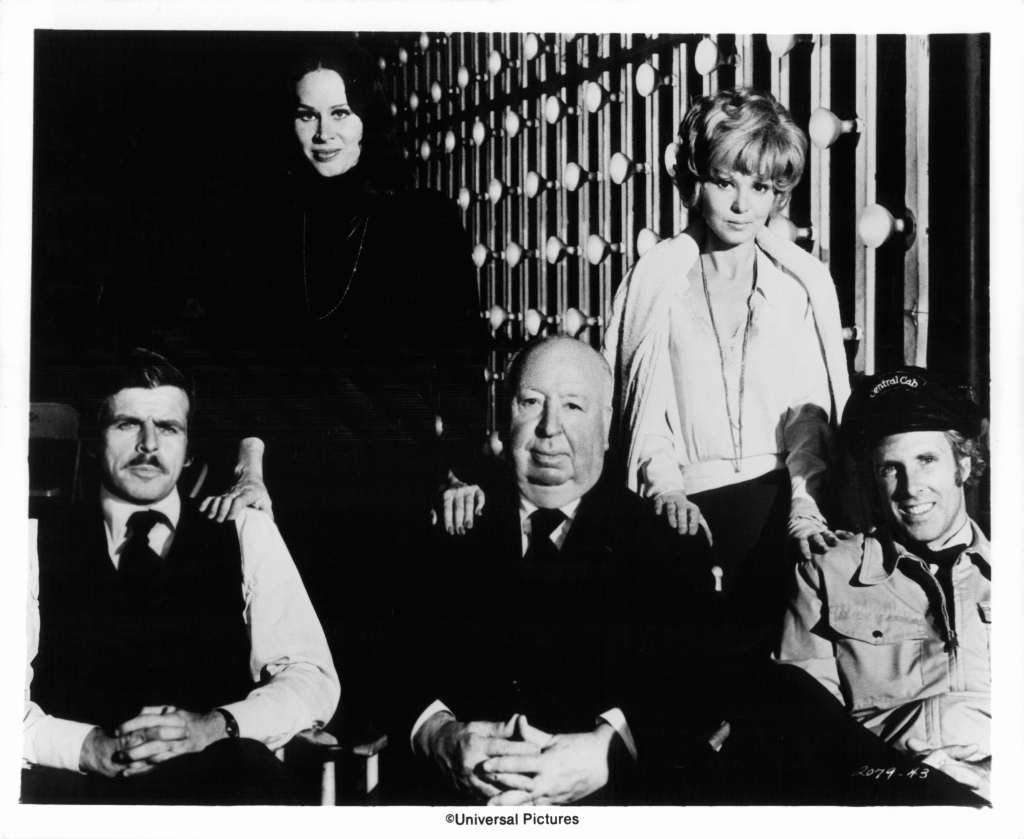
“He told me a story — having nothing to do with Bernard Herrmann, but some other composer — about a film that he’d made about a murder. And he’d instructed the composer to make the music light. So he said he went to London to record the music and this composer had every double bass and bassoon and timpani, and every instrument in the city of London capable of making an ominous, lugubrious sound — just the opposite of what he wanted.
So I said to him, ‘Mr. Hitchcock, it seems for a murder that’s very appropriate.’ And I always quote him because I remember his words exactly: He said, ‘Mr. Williams… murder can be fun.’”2

“Alfred Hitchcock is interesting: very formal, in the sense that his pictures are almost scientifically plotted out, and while he isn’t overly demanding about where you spot music he nevertheless has his own ideas-especially from a technical point-of-view, I can give you one example. In Family Plot there’s a scene in which a conversation is taking place between a policeman and a criminal, and in another room off-stage there’s apother criminal waiting for his mate to rejoin him. The policeman forces his way into the room where the criminal is hiding and we cut to an open window with the curtains waving in the breeze, indicating that the criminal, hearing the footsteps of the policeman coming towards the door, leapt out and escaped. We had music in the dialogue scene in the other room between the policeman and the thief, followed by a crescendo, then cut to the open window, where I suggested we had a musical accent of some sort. Hitchcock said, ‘But why don’t you abruptly stop the music there? The silence will equal the absence of the criminal; we’ll just have a faint breeze blowing.’ That kind of thing . . . Hitchcock’s very good at the nuts and bolts of a film, in the same way that he’s very precise about the way he edits, knowing exactly how much he wants of anything.”3
Quotes and Commentary
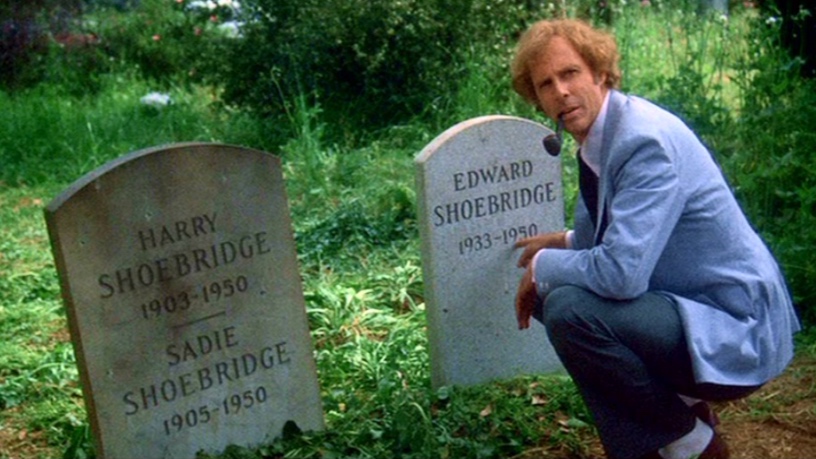
Near the end of his career (after the lamentable break-up of his relationship with Herrmann), Hitchcock never settled on a consistently preferred composer. John Addison (Torn Curtain), Maurice Jarre (Topaz), Ron Goodwin (Frenzy) and others all came and went. One of the most interesting of these latter-day collaborations was with John Williams on Family Plot. Williams’ End Credits music, compact, allusive, crisply elegant and (as always with this composer) fluently crafted and highly polished, makes the perfect envoi for a light comedy-thriller. The wordless female voices represent the “mystical” aura – complete with phony crystal ball – which surrounds Blanche (Barbara Harris), the professional medium heavily dependent on inside information about her clients.4
-Christopher Palmer

In screening and spotting the picture, Williams found, as audiences would a few months later, that Hitchcock’s final film was quite different from his previous work. While the story featured several evocative mystery elements – séances, cemeteries, hidden rooms, mistaken identities and the like — the overall tone was breezy, motivated by plot rather than by the melodramatic obsessions and guilt-ridden characters that drove some of the master’s most memorable films. Hitchcock was very specific about having a score that meshed with this approach.[…]
In Hitchcock’s Music, [author Jack] Sullivan accurately summarizes Family Plot as a “frenetic ballet of crisscrossing con artists,” and points out that Williams depicts this musically by developing two polarized moods that gradually blend together. Instruments were carefully selected to achieve the desired effect. Brass is used minimally (in fact, there are no trumpets or tuba in the score) and Williams creates a deliberate imbalance of just a few woodwinds facing a huge string section (over 20 violin players alone), but the thematic material is, for much of the score, conveyed by prominent solo instruments. Harpsichord takes up all of the themes, while a darker motif for the antagonists is distinguished by ominous timbres from an ARP synthesizer. Solo timpani is also employed generously during action and suspense sequences.
In developing specific cues, Williams found that Hitchcock’s “ideas about music were very closely linked to a very methodical editorial process. The precision of the editing reflected the precision of the shooting.” Indeed, careful scrutiny of the film reveals that the music, while not quite achieving a “Mickey Mousing” cartoon approach, spends as much time accenting physical gestures within the frame as it does augmenting atmosphere. The result is a score that defines the film’s rhythm as well as its mood. […]
Hitchcock’s influence on Williams is most prominent in its opening moments, when during “The First Séance” [track 1] between Blanche and Julia Rainbird, Williams employs a wordless female chorus in the tradition of “Sirénes” from Claude Debussy’s Nocturnes. “In the opening scene, the séance, he wanted to hear voices,” Williams explained. “That was his idea, that we should have a chorus of women’s voices or otherworldly sounds that could be produced only vocally. That was definitely from his direction.” It was a sound that Williams would explore in Close Encounters and return to in Superman, Heartbeeps, Empire Of The Sun, Hook and other scores.5
– Mike Matessino
Videos
“Composer John Williams shares Alfred Hitchcock’s masterclass sound tip,” from the TV program Personal Notes: André Previn and John Williams, BBC, 1988
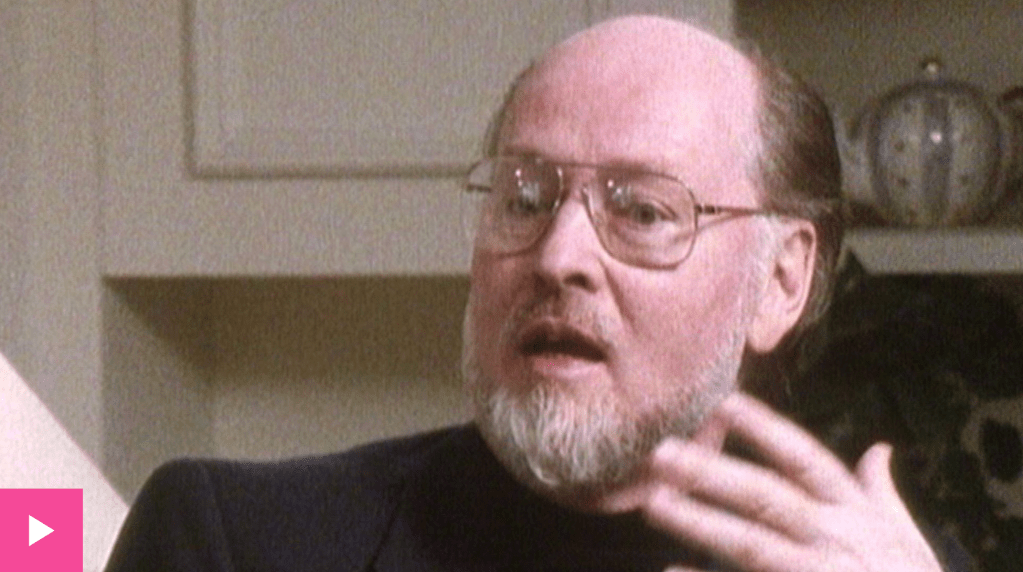
https://www.bbc.co.uk/programmes/p04s85d9
Music discussion excerpt from Plotting ‘Family Plot,’ DVD bonus feature, Universal Home Entertainment, 2001
“The Mystery Woman” scene, from Family Plot, 1976
“Maloney’s Exit” scene, from Family Plot, 1976
Brett Mitchell performs his original piano arrangement of “Love Theme from Family Plot”
Bibliography and References
. Bouzereau, Laurent – Plotting ‘Family Plot,’ DVD documentary, Universal Home Entertainment, 2001
. Dyer, Richard – “Where is John Williams coming from?,” The Boston Globe, June 29th, 1980
. Elley, Derek – “The Film Composer: John Williams – Pt. 1 and Pt. 2”. Films and Filming, July/August 1978
. Matessino, Mike – “Mr. Williams… Murder Can Be Fun.” Liner notes for Family Plot Original Soundtrack Album CD, Varèse Sarabande, 2010
. Sullivan, Jack – “Hitchcock’s Exuberant Finale,” Hitchcock’s Music, Yale University Press, 2006
Footnotes
- Bouzereau, Plotting ‘Family Plot’ – DVD featurette, Universal Home Entertainment, 2001 ↩︎
- Quoted in Sullivan, Hitchcock’s Music, 2006 ↩︎
- Quoted in Elley, Films and Filming, 1978 ↩︎
- Excerpt from liner notes by Christopher Palmer for Music For Alfred Hitchcock’s Films, Varèse Sarabande, 1985 ↩︎
- Matessino, excerpt from liner notes for Family Plot Original Soundtrack Album CD, 2010 ↩︎
 The Legacy of John Williams