

Table Of Contents
- Film Details
- Music Credits
- Essential Discography
- Awards and Nominations
- In Williams’ Words
- Quotes and Commentary
- Videos
- Bibliography and References

Film Details
Year: 1970
Studio: Omnibus/Sagittarius Productions Ltd.
Director: Delbert Mann
Writer: Jack Pulman, from the novel by Charlotte Brontë
Producer: Frederick Brogger
Main Cast: Susannah York, George C. Scott, Ian Bannen, Rachel Kempson, Nyree Dawn Porter, Jack Hawkins, Kenneth Griffith, Peter Copley
Genre: Drama – Mystery
The film had its theatrical debut in the United Kingdom in December 1970 and was released on television by NBC in the United States on March 24, 1971. International theatrical distribution rolled out throughout 1971.
For synopsis and full cast and crew credits, visit the IMDb page
Music Credits
Music Composed, Conducted and Arranged by John Williams
Music Editor: Bob Hathaway
Scoring Mixer: Eric Tomlinson
Orchestra Contractor: Sidney Sax
Featured instrumentalists: Peter Lloyd (flute), Les Pearson (harpsichord), Derek Wiggins (oboe), Bob Docker (piano), Pat Halling (violin – leader)
Recorded at Anvil Film Recording Group, Denham, Middlesex, Bucks, England
Recording Dates: October 23, 30, 31 and November 2, 1970

Essential Discography

Music from the Omnibus/Sagittarius Production – LP (1971)
Capitol Records – SW-749
Produced by John Williams
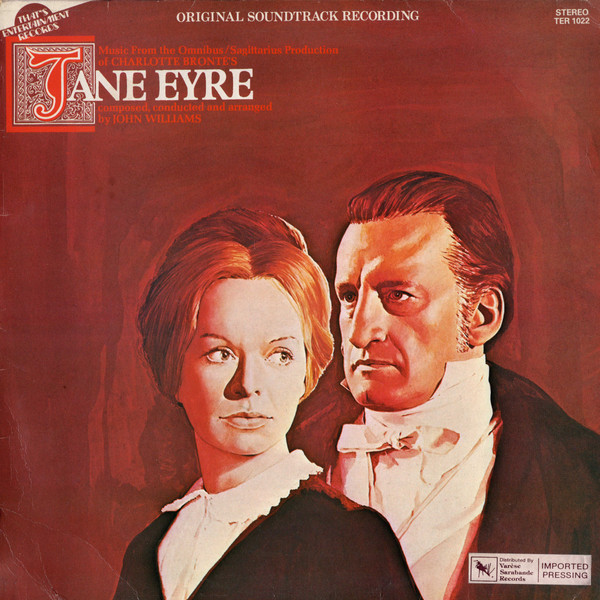
Original Soundtrack Recording – LP Reissue (1982)
That’s Entertainment Records – TER 1022

Original Motion Picture Score – CD Reissue (1988)
Silva Screen – FILMCD 031
Executive Producer: Reynold da Silva
Reissue Supervised by David Stoner and James Fitzpatrick
Mastered by Miles Showell (Utopia Studios)
Premiere CD reissue of the original 1971 soundtrack album

CD Reissue (1999)
Silva Screen – FILMCD 204
Executive Producer: Reynold da Silva
Reissue Supervised by David Stoner and James Fitzpatrick
CD reissue of the original 1971 soundtrack album

Music from the Omnibus/Sagittarius Production – CD Reissue Limited Edition (2012)
La-La Land Records – LLLCD 1214
Reissue Produced by Lukas Kendall
Mastered by Doug Schwartz
Liner notes: Jeff Eldridge
Newly remastered CD reissue of the original 1971 soundtrack album with new liner notes

Original Soundtrack – Limited Edition 2-CD (2023)
Quartet Records QR539
Produced, Restored and Remastered by Mike Matessino
Executive Producer: Josè M. Benitez
Liner notes: John Takis
Newly remastered CD reissue of the original 1971 with four unreleased bonus tracks and new liner notes; the release also contains the remastered edition of Heidi (1968)
Selected Re-recordings
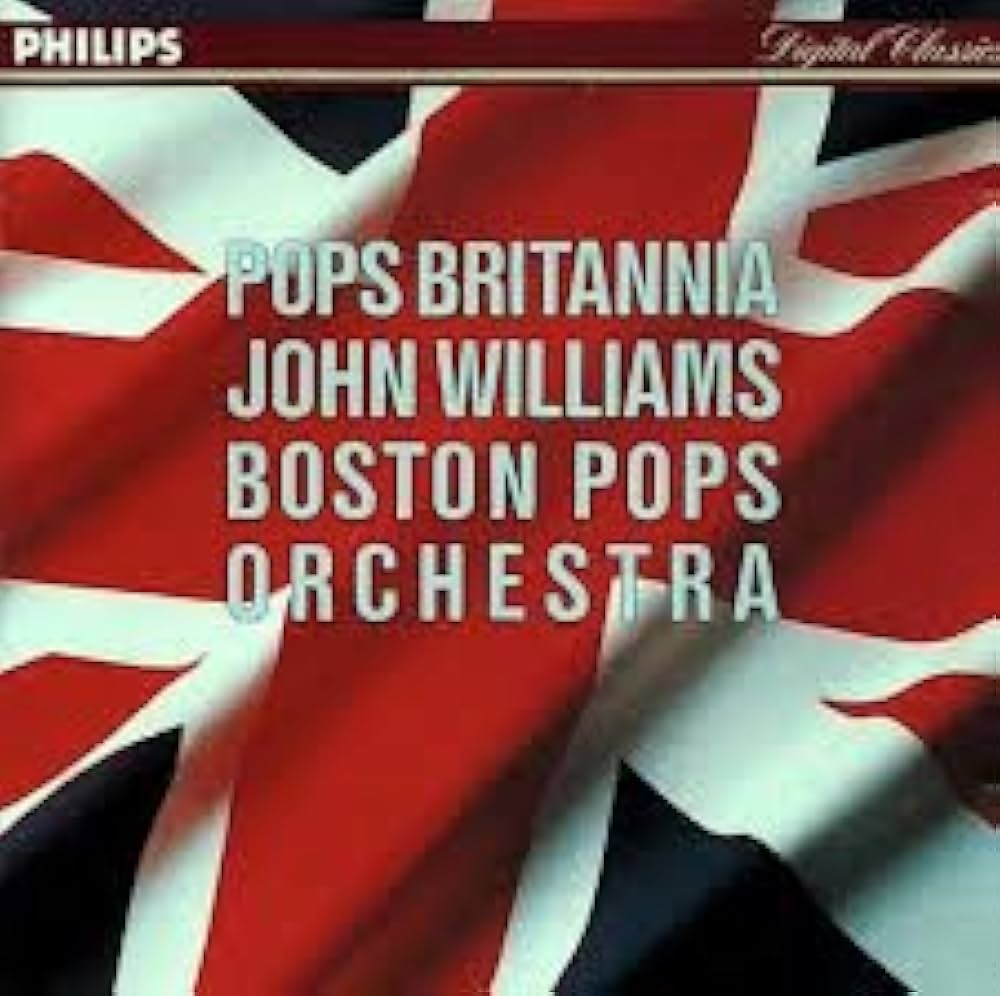
Pops Britannia (1988)
Philips – 420 946-2
contains a 3-movement concert suite from Jane Eyre
Leone Buyse, flute
Boston Pops Orchestra conducted by John Williams

John Williams Reimagined (2024)
Warner Classics – 5054197942334
contains “To Thornfield” and “The Reunion” from Jane Eyre, arranged for piano, cello and flute by Simone Pedroni
Sara Andon, flute
Cécilia Tsa, violoncello
Simone Pedroni, piano
Awards and Nominations
1972 Emmy Awards
Winner: Outstanding Achievement in Music Composition – For A Special Program

In Williams’ Words
“I went up to Yorkshire while they were shooting around the Brontë country, and I loved it. And, as you’ve probably guessed by now, I love English music – I have a very atavistic feeling towards it – and I poured this love into the score. At least to me, as an American, the score seems very English; I don’t know if it does to English sensibilities in quite the same way. But, for me, something like that is the easiest thing to do and one of the things I love doing more than anything else. I just love the whole English musical idiom: in the end, when all the science is put aside, I guess real music is Greensleeves and suchlike. That’s the spirit of music. Musical phrases like that just seem to come out of the bowels of the earth or something. We’re currently living in this post-Schoenbergian period and unfortunately we’re inhibited about writing in any kind of folk idiom. […]
I loved writing even my American impressions of what Yorkshire music would be! I was here doing Fiddler on the Roof and the company was away in Yugoslavia at the time; so I had this two-month break during which I wrote Jane Eyre down at Pinewood. It worked out beautifully, just the right amount of time. I think it was in the autumn of 1970.” 1

“I think that Jane Eyre is very close to my musical heart. It comes out of Yorkshire. You know the Brontë [Charlotte] book. And it’s created folk music, if you like, and I like to play it because it is gratifying for the orchestra and melodic in a very colorful and atmospheric way. And if one could say that one’s heart lies with one’s own music and still be within acceptable taste, then I can say that something of my heart lies with some of that music.” 2

“I wrote, I felt, in the modalities that gave the ambience of nineteenth-century Yorkshire—somewhat in the same way that Vaughan Williams had incorporated Welsh and Celtic airs into his works. I don’t mean to compare my humble scribblings with his great music, but the process of creating, in the atmosphere and the modality of these folk tunes, new melodies which could then be manipulated and metamorphosed throughout the whole score was a similar approach.” 3

“When director Delbert Mann asked me to compose a score for his exquisite film Jane Eyre, I was enjoying an extended stay in England with my wife and young children. I accepted the assignment with great pleasure, and at Mr. Mann’s invitation, I was able to travel to Yorkshire and to visit the parsonage where Charlotte and Emily Brontë grew up under the tutelage of their preacher father. It was here in the isolation of the parsonage that the two sisters wrote what have long been considered masterpieces of 19th Century British literature, Wuthering Heights and Jane Eyre.
In her story Jane Eyre, Charlotte Brontë introduces the reader to the young girl Jane, who begins her life attending Lowood School, with its liturgical and austere atmosphere, to which girls of her class were routinely subjected. The first movement of the suite attempts to capture the ambience of a vanished but still haunting world.
In “To Thornfield”, the orchestra presents a lively scherzo accompanying a brisk and breathtaking carriage ride across the moors of Yorkshire… and is followed by “Reunion”… a lyrical theme that serves to underscore the love story that is at the core of this enduring and highly romantic tale.” 4
Quotes and Commentary
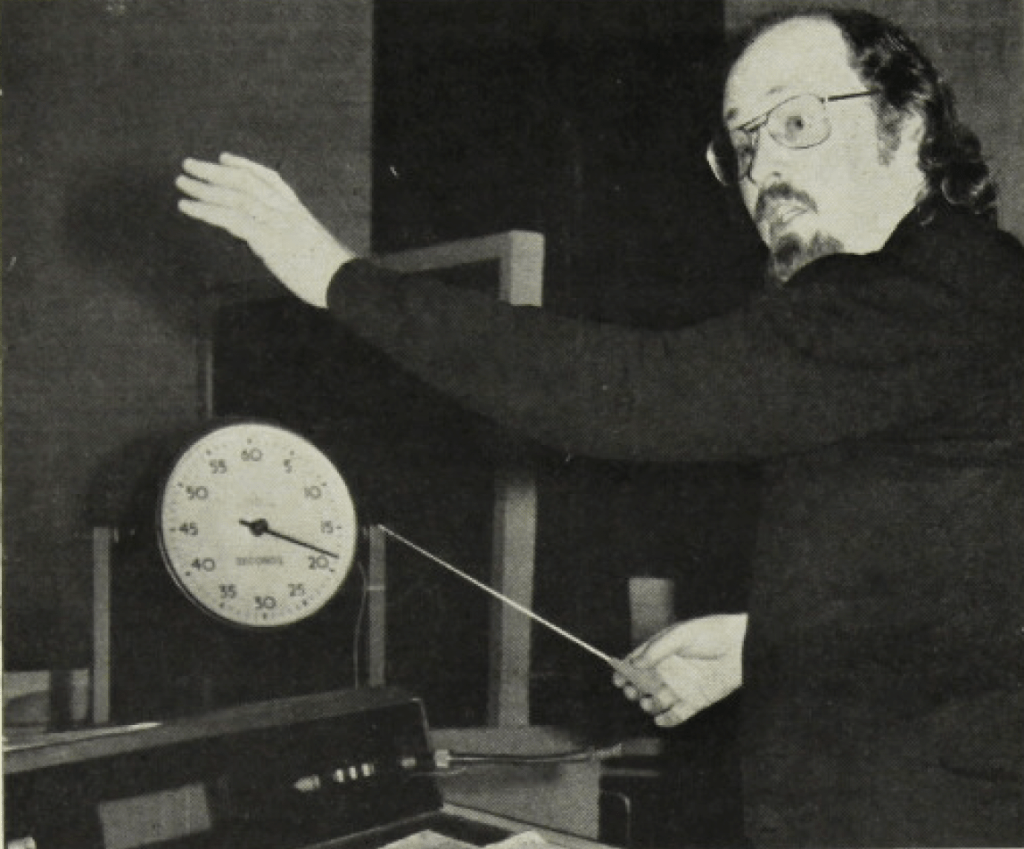
“It is one of [John Williams’] very best pieces of writing, and it may well be the best and richest score written for any of my films. It contributes so much to the atmosphere of the picture and to the characters and their conflicts.” 5
– Delbert Mann
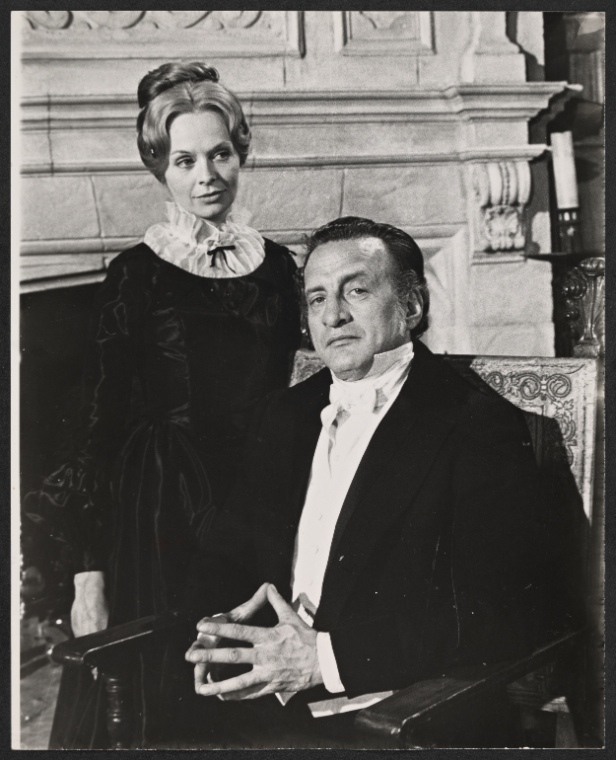
Regarding Jane Eyre, [Williams] has always said that it is a particular favourite and it is not hard to see why. Right from the opening notes, it is obvious that this is a heart-felt work from a composer whose love of English music shines through. In particular, this anglophilic quality coats the St. John Rivers theme heard in “Restoration” with an elegaic English ‘reserve.’
The Orson Welles / Joan Fontaine version of the story is a justifiably more popular film and featured a brooding and thunderous score from Bernard Hermann. The Scott / York remake is much less gothic in appearance and more sunnier and intimate — aspects which are amply reflected in Williams’ beautifully pastoral score.
Jane Eyre was the third adaptation of a literary classic from the Omnibus producer Frederick Brogger and was the second for Williams – he had previously scored Heidi in 1968. Following Heidi was David Copperfield scored by Malcolm Arnold and then, after Jane Eyre, came Kidnapped starring Michael Caine and scored by Roy Budd. Lastly, The Red Pony which boasted an Emmy-award winning score from Jerry Goldsmith.
Jane Eyre was recorded in late October 1970 at Anvil Studios, Denham under the watchful ear of Engineer Eric Tomlinson. 6
– David Stoner
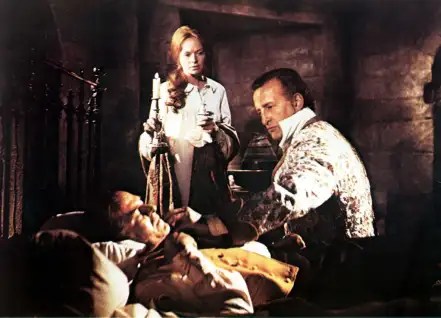
Crafting his themes for Jane Eyre, Williams’ intent was first to evoke the spirit of English folk music, and then to develop these melodies symphonically after the fashion of the British folk revival of the late nineteenth and early twentieth centuries. […] His orchestration would make
only sparing use of brass, highlighting woodwinds, strings and keyboards — including piano, organ, and harpsichord — for a more pastoral and intimate feel.
Nestled at the heart of Jane Eyre is Williams’ elegant love theme for Jane and Rochester. Long-lined and flowing, the melody incorporates wide intervals to suggest an increasing sense of yearning and seeking to the point where its B section includes a leap of a full octave. Williams opens his album program with this theme, introducing it first on piano before guiding the melody into winds and lush strings. The prevalence of piano is especially significant, as Jane herself performs the melody on piano twice during the film. […] In the
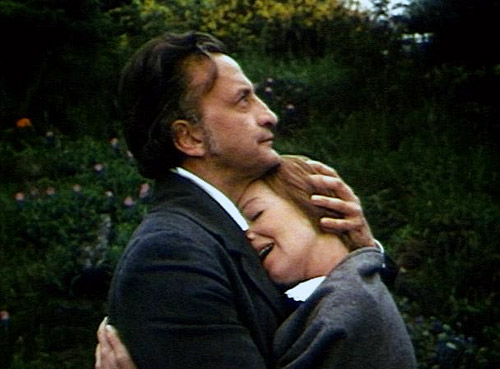
film, the love theme is introduced during the overture and charts the evolving romance between Jane and Rochester—including tempestuous developments as Jane flees across the moors, and tender recapitulations as the lovers reunite. For the album, Williams adds a folk setting of the theme (“Meeting”) in the form of a trio for recorder, guitar and viola.
Rochester himself receives a melancholy, harpsichord-led melody that opens the overture. Variations on this motif form the basis of the album track “To Thornfield,” a bracing scherzo that does not appear in the film, but which the
original LP notes suggest was inspired by “Jane’s excitement as she travels the Yorkshire countryside to a new life.” Much later, as Jane approaches the blind Rochester, Williams treats the theme to more prolonged and sensitive readings.
But Jane Eyre is more than a love story: it is also a Gothic mystery, and Williams captures this exquisitely with his theme for Thornfield. Also introduced in the overture, this melody opens with an unsettling antecedent phrase that repeats before moving into a more pensive and lilting consequent phrase. Though not a motif of horror per se, the theme has an eerie quality that colors Jane’s nocturnal wanderings and her encounters with the tormented Bertha.
Two additional melodies bookend Jane’s time at Thornfield. First is a warped storybook tune for Lowood, where a young Jane loses her sickly best friend due to the wanton neglect of the institute’s administrators. Second is a bucolic melody associated with St. John Rivers and his community, where Jane rediscovers her capacity to love. Beginning simply in woodwinds with pizzicato accompaniment, this theme beautifully encapsulates the rustic spirituality that permeates this stretch of the narrative, and Williams developed it into a sustained piece for the album program. 7
– John Takis
Videos
“Main Title” from Jane Eyre
“The Meeting Scene” from Jane Eyre
“Jane and Rochester Fall In Love” scene from Jane Eyre
“Jane Leaves Rochester” scene from Jane Eyre
“Jane at the Moors” scene from Jane Eyre
“The Reunion and Finale” from Jane Eyre
Bibliography and References
. Burlingame, Jon – Music For Prime Time: A History of American Television Themes and Scoring, Oxford University Press, 2023
. Eldridge, Jeff – Jane Eyre – Original Soundtrack liner notes, La-La Land Records, 2012
. Elley, Derek – “The Film Composer: John Williams – Pt. 1 and Pt. 2,” Films and Filming, July/August 1978
. Palmer, Christopher – “Composer John Williams: A Profile,” Crescendo Music International, April 1972
. Takis, John – Jane Eyre – Original Soundtrack liner notes, Quartet Records, 2023
. Thomas, Tony – “A Conversation with John Williams,” The Cue Sheet, March 1991
Legacy of John Williams Additional References
Footnotes
- Quoted in Elley, 1978 (see bibliography) ↩︎
- Quoted in Thomas, 1991 (see bibliography) ↩︎
- Quoted in Burlingame, 2023 (see bibliography) ↩︎
- Introductory note to Suite from Jane Eyre, Hal Leonard, HL 04490871 ↩︎
- Quoted in Takis, 2023 (see bibliography) ↩︎
- Stoner, David – Liner notes for Jane Eyre – Original Motion Picture Score, Silva Screen, 1988 ↩︎
- Takis, John – Jane Eyre – Original Soundtrack liner notes, Quartet Records, 2023 ↩︎
 The Legacy of John Williams