
Table of Contents
- Film Details
- Music Credits
- Essential Discography
- Awards and Nominations
- In Williams’ Words
- Quotes and Commentary
- Videos
- Bibliography and References

Film Details
Year: 1975
Studio: Universal Pictures
Director: Steven Spielberg
Producers: Richard D. Zanuck, David Brown
Writers: Peter Benchley, Carl Gottlieb (based on the novel by Peter Benchley)
Main Cast: Roy Scheider, Robert Shaw, Richard Dreyfuss, Lorraine Gary, Murray Hamilton
Genre: Adventure – Mystery – Thriller
For synopsis and the full cast and crew credits, visit the IMDb page
Music Credits
Music Composed and Conducted by John Williams
Music Editor: Joseph Glassman
Recording Engineer: Ted Keep
Orchestra Contractor: Sandy DeCrescent
Orchestrator: Herbert W. Spencer
Recording Studio: 20th Century Fox Studio Scoring Stage, Los Angeles, California
Recording Dates: March 3, 4 and 10, 1975
Source Music sessions recorded and mixed at Universal Studio Scoring Stage 10, Universal City, California
Recording Date: March 5, 1975
Original Soundtrack Album sessions
Recording Engineer: John Neal
Recording Studio: The Burbank Studios (Warner Scoring), Burbank, California
Recording Dates: April 17 and 18, 1975

Essential Discography
Orginal Soundtrack Album and Expanded Reissues
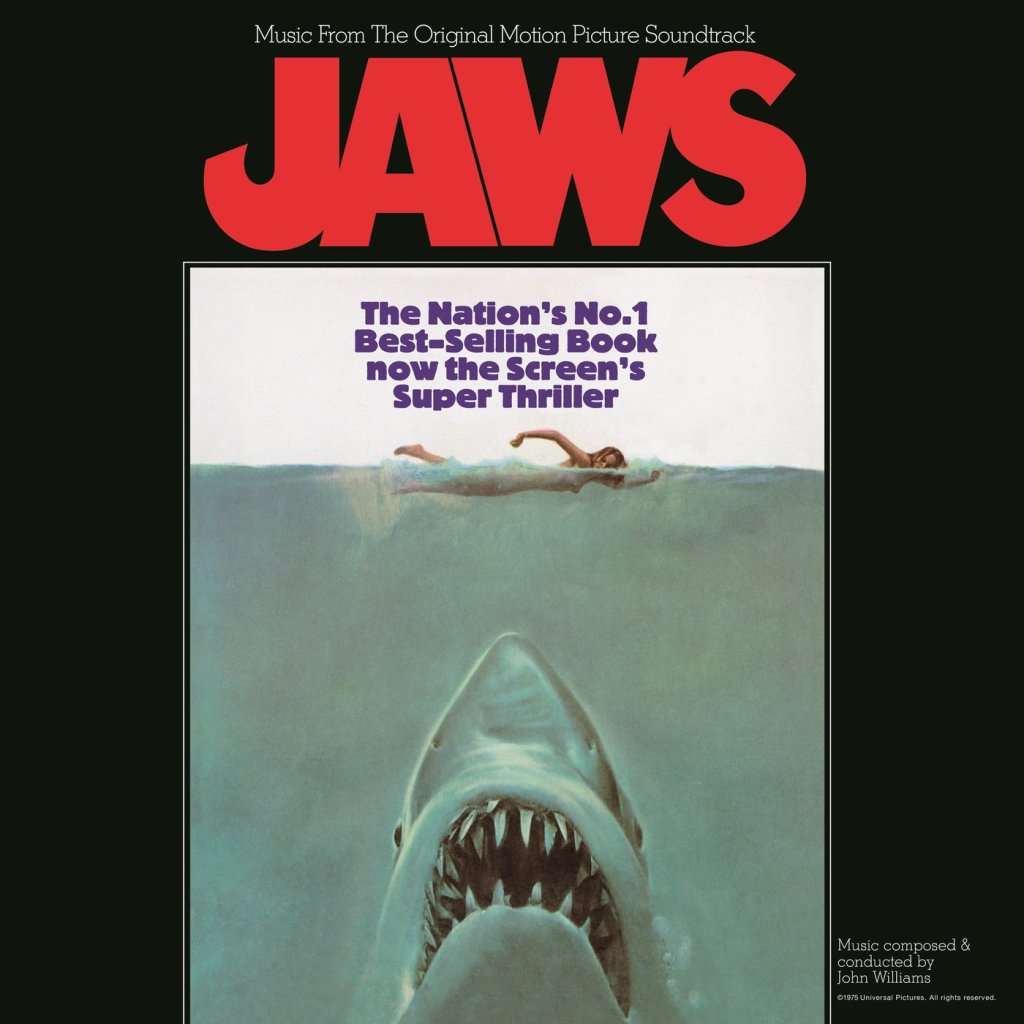
Music From The Original Motion Picture Soundtrack (1975)
MCA Records MCA-2087 – LP
MCAD-1660 – CD Reissue (1992)
The OST is a re-recording of selected film cues, arranged and extended by the composer for the album presentation
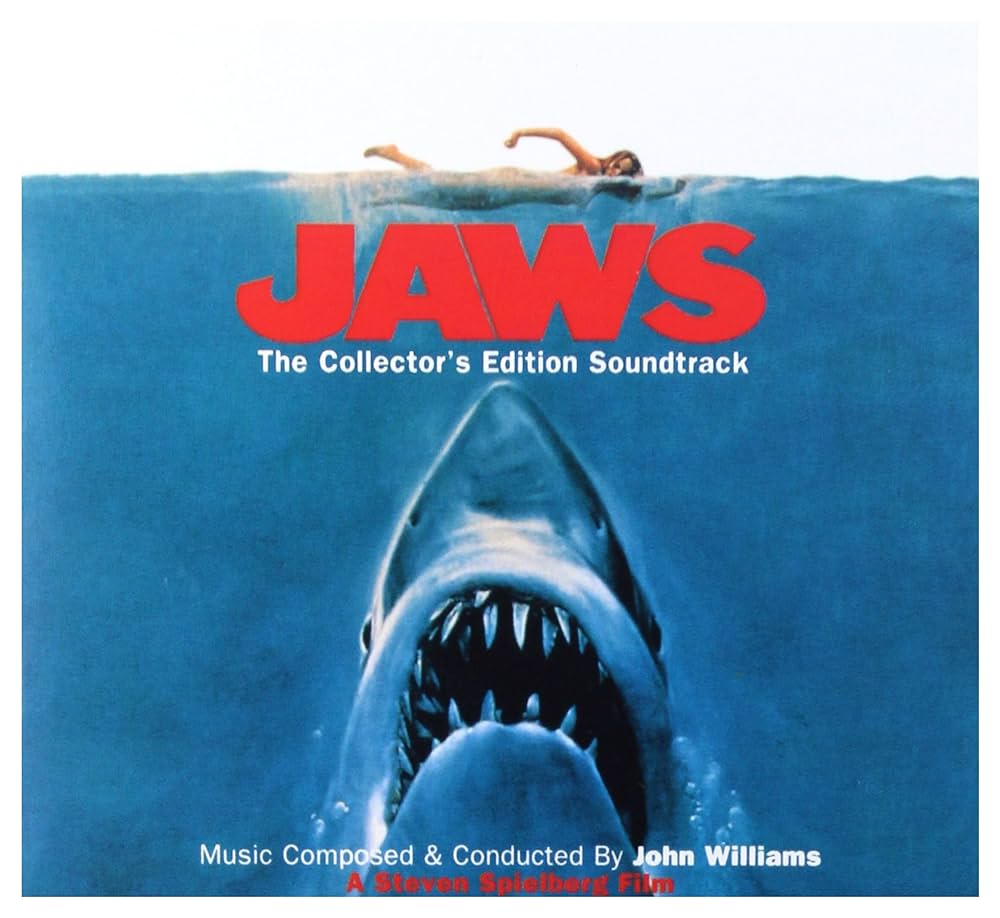
25th Anniversary Collector’s Edition (2000)
Decca/Universal Music 289 467 045-2 – CD
Produced by Laurent Bouzereau
Mastered by Patricia Sullivan Fourstar
First-ever release of the original film soundtrack recording
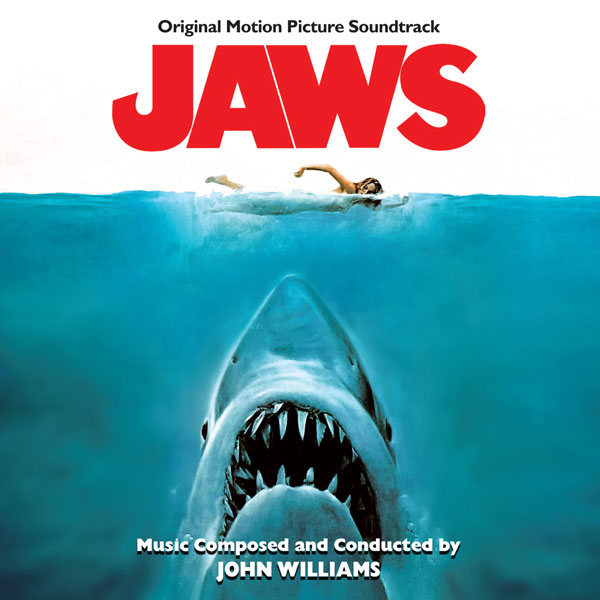
Expanded and Remastered Edition (2015)
Intrada INT 7145 – 2-CD Limited Edition
Produced by Douglass Fake
Assembled and Mastered by Mike Matessino
Remastered film recording plus alternates on Disc 1; remastered 1975 OST album plus source music cues on Disc 2

Music from the Motion Picture (2017)
Mondo Music MOND-115 – 2xLP Vinyl Limited Edition
Produced by Mike Matessino, Mo Shafeek
Original film recording remastered by Mike Matessino
50th Anniversary Expanded Releases
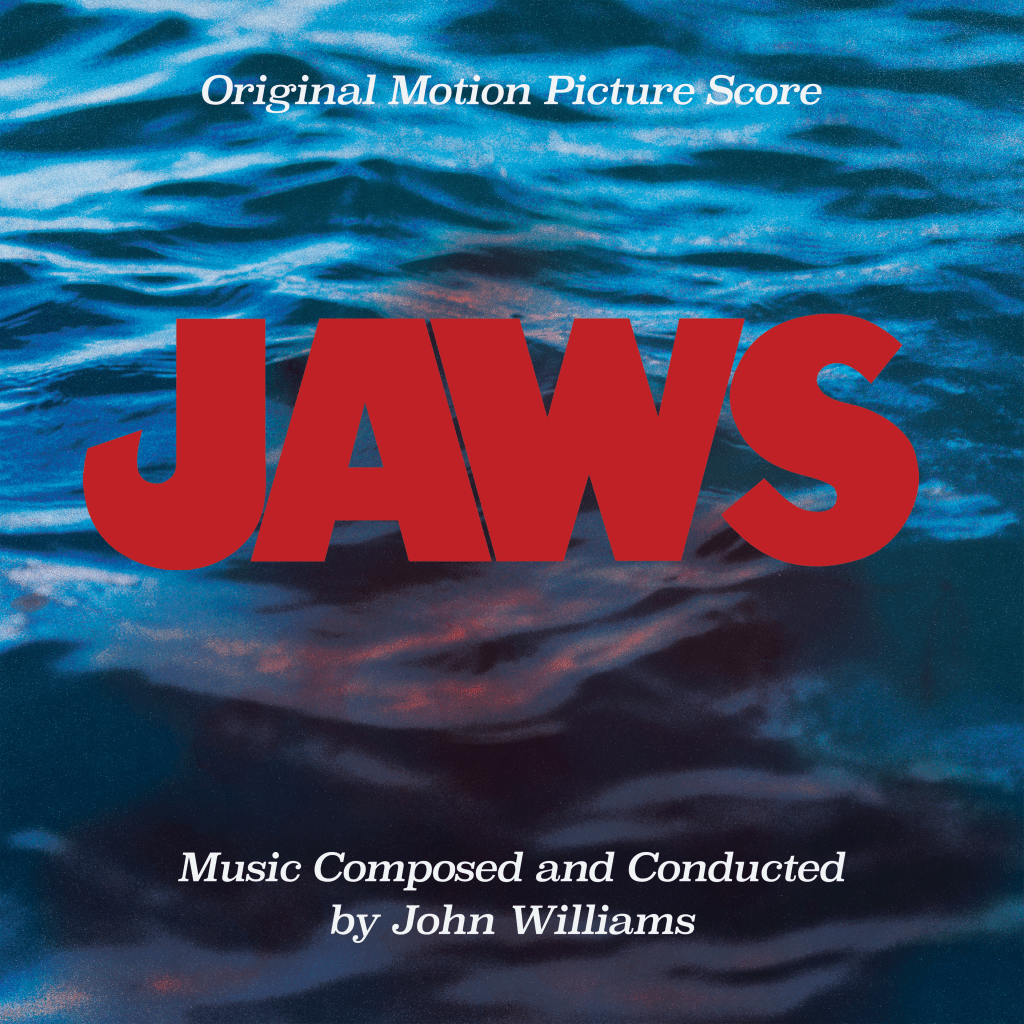
Original Motion Picture Score (2025)
BackLot Music (digital), Mondo (vinyl)
Remixed, Remastered and Produced by Mike Matessino
Original film score recording newly remixed and remastered in 2025 by Mike Matessino
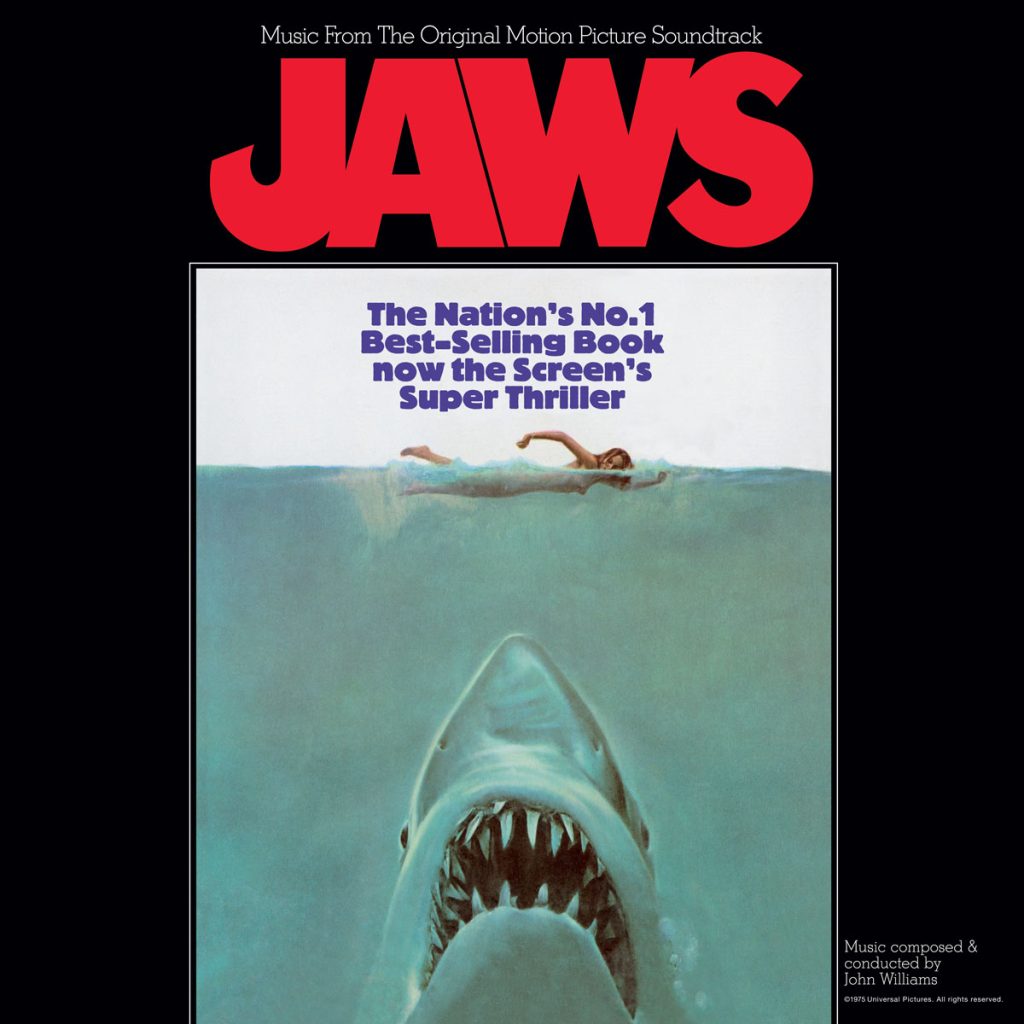
Music From The Original Motion Picture Soundtrack (2025)
UMe/Geffen (digital), UMe/Geffen/Interscope (vinyl)
Remixed, Remastered and Produced by Mike Matessino
Soundtrack album recording newly remixed and remastered in 2025 by Mike Matessino from 16-track multichannel elements

50th Anniversary Special Edition (2025) – 3-CD set
Intrada INT 7186
Remixed, Remastered and Produced by Mike Matessino
Remastered original film score on Disc 1; Remastered original soundtrack recording on Disc 2; bonus tracks and alternate cues from both recordings on Disc 3
Selected Re-recordings

“Theme” and “Out To Sea/The Shark Cage Fugue” (concert suite)
Boston Pops Orchestra conducted by John Williams
The Spielberg/Williams Collaboration (1990)
Sony Classical SK 45997
Produced by Thomas Z. Shepard

“The Barrel Chase”
Boston Pops Orchestra conducted by John Williams
Williams On Williams: The Classic Spielberg Scores (1995)
Sony Classical SK 68419
Produced and Engineered by Shawn Murphy
“Jaws: Theme”
London Symphony Orchestra conducted by John Williams
The Hollywood Sound (1997)
Sony Classical SK 62788
Produced and Engineered by Shawn Murphy
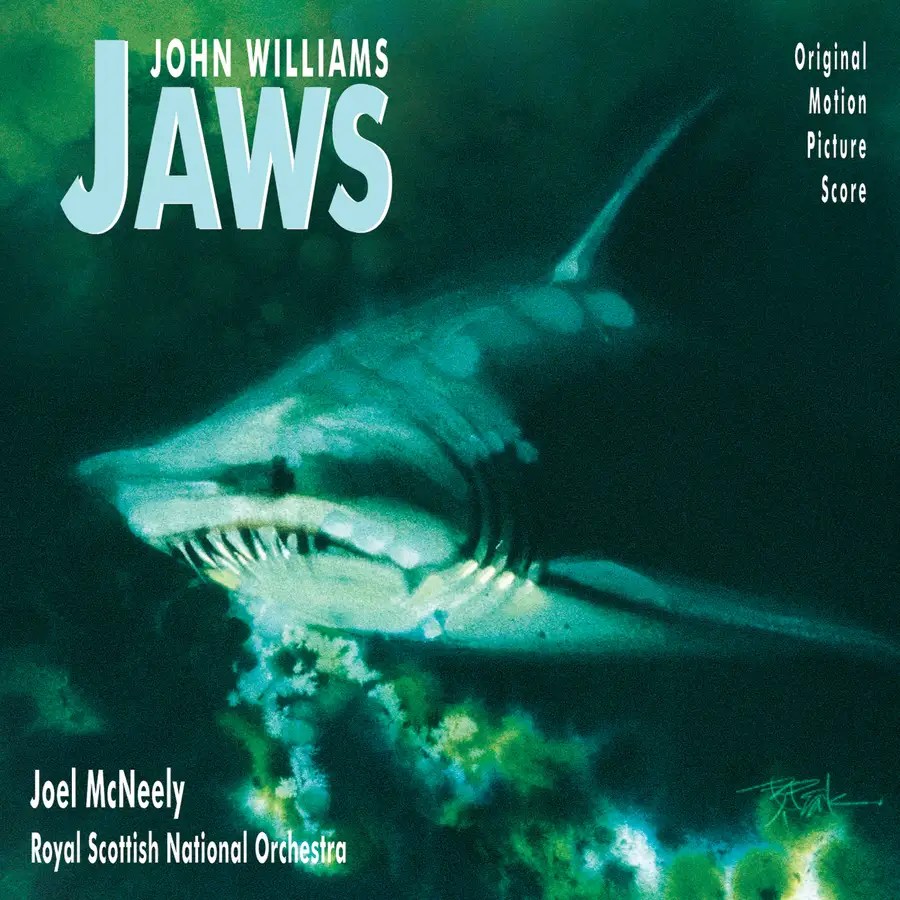
Jaws – Selections from the Original Motion Picture Score (2000)
Royal Scottish National Orchestra; Joel McNeely, conductor
Varèse Sarabande VSD-6078
Produced by Robert Townson
Awards and Nominations
Academy Awards
Winner: Best Original Score
Golden Globe Awards
Winner: Best Original Score
BAFTA Awards
Winner: Anthony Asquith Award for Original Film Music
Grammy Awards
Winner: Best Album of Original Score Written for a Motion Picture or Television Special
In Williams’ Words
“When I first saw Jaws, it was clear to me that it would require an action/adventure score. The film was very different from The Sugarland Express. For Jaws, I imagined something big and operatic, something very theatrical. Most of the discussions I had with Steven at that point were about the shark. The challenge was to find a way to characterize something that’s under water with music rather than with sound effects. These low thumping notes were the result. I thought that altering the speed and volume of the theme, from very slow to very fast, from very soft to very loud, would indicate the mindless attacks of the shark. Steven was a bit skeptical, but when the orchestra performed the piece, it worked better than we had anticipated. Today, at concerts, if I just play two notes of the Jaws theme, people immediately recognize it. I think it’s wonderful when these kinds of musical associations are created and when they make an impression on an audience.
“There were many opportunities in the movie to advertise the shark with music, but also others, such as the scene where kids have put on a fake fin to scare people, where we don’t have any music. Here, the audience experiences a sense of absence, because we’ve conditioned them to expect the predator only when they hear its theme. Then we go a step further for the scenes with the Orca — where we know the shark is there — but his attacks come out of silence, to create further surprise.
“Jaws had several other musical requirements, such as the “montage,” a classically-styled piece for the arrival of the tourists on the island for the Fourth of July; the action pieces taking place at sea with the Orca and the three heroes chasing the shark; a very dark composition for “Quint’s Tale”; the building of the cage; the climax; and finally the “End Titles” music. But my own favorite cue in Jaws has always been the barrel chase sequence, where the shark approaches the boat and the three heroes think they have captured it. The music accelerates and becomes very exciting and heroic. Suddenly, as the shark overpowers them and eventually escapes, the music deflates and ends with a little sea shanty called “Spanish Lady.” The score musically illustrates and punctuates this entire dramatic outline.
“Jaws certainly was a landmark in my career. I had won the Academy Award for Fiddler on the Roof, for which I did all the arrangements, underscoring and conducting. But Jaws was the first Oscar I received for my own music, and that was a significant moment for me. Jaws also firmly established my relationship with Steven Spielberg. Working with Steven has been a delight. He has the most wonderful personality and his goal is always to entertain people while also trying to improve the world. He sees problems as opportunities for solutions. It has been a great privilege to be associated with him.”1

Quotes and Commentary
In doing a score for Jaws, composer John Williams has outdone himself. The soundtrack is a stunning symphonic achievement and a great leap ahead in the revitalization of film music as a foreground component for the total motion picture experience. He has accomplished on Jaws what Korngold did for The Sea Hawk and Bernard Herrmann for Psycho. Simply, he has made our movie more adventurous, gripping and phobic than I ever thought possible. Right up there with Roy Scheider, Robert Shaw, Richard Dreyfuss and 7,000 pounds of hungry shark, John Williams’ musical vision plays a leading role.
Unlike so many traditional composer/conductors, John is an artist of numerous styles. He is chameleon-like and vulnerable to the impulses of the film he is about to score. His music on Jaws is unlike any of his previous works, including The Reivers, The Cowboys, Jane Eyre, The Towering Inferno, Paper Chase, The Sugarland Express, Cinderella Liberty, Images and many others including two full symphonies, a symphony for winds, a flute concerto and more. These concert works have been performed by many major orchestras in the U.S. and abroad.
Being an insatiable collector of film music, I haven’t been this happy with a soundtrack since Dimitri Tiomkin’s The Guns of Navarone. What more can I say. The music fulfilled a vision we all shared.2
-Steven Spielberg
It is humbling to consider that the composer’s self-aware artistic epiphany, sparked by personal loss, was so closely followed by Jaws, which solidified his relationship with Spielberg–to say nothing of the fact that Star Wars, Close Encounters of the Third Kind, Superman, The Empire Strikes Back and E.T. The Extra-Terrestrial followed over the next eight years. It’s something perhaps best contemplated with a listen to Williams’ stirring Concerto for Violin and Orchestra, completed in 1976 and dedicated to his late wife.
Of the creation of this now universally recognized low ostinato, Williams said, “I thought a kind of driving motion in the bottom of the orchestra might indicate the mindless attack of the shark. I began playing around with simple motifs that could be distributed in the orchestra, and settled on what I thought was the most powerful one, which is to say the simplest. Like most ideas, they’re often the most compelling.”
The famous theme is introduced over the film’s “Main Title,” but only after Spielberg leaves the audience in darkness for several seconds, with the distant sounds of water and sonar on the track. The next cue, “The First Victim,” utilizes the shark theme but uses frenetic action writing so that the unseen becomes the worst imaginable terror for the audience. The aggressiveness employed allows the score to present the ostinato more transparently in cues such as “The Empty Raft,” “The Pier Incident,” “Brody Panics,” “Barrel Off Starboard,” and “The Shark Approaches,” demonstrating how, as Williams pointed out, “one could alter the speed of this ostinato and give it any sort of alteration, very slow, very fast, very soft, very loud, depending on the need of the scene. It’s one of the beauties of the film medium… that combination of sound and image forming a memory.” A secondary component to the theme, a three-note motif heard over the Main Title, imbues a sense of mystery and agelessness to the shark. In combination with the mindless ostinato, the effect is primal.3
– Mike Matessino
Videos
Segment from “The Making Of Jaws” (1995)
Universal Pictures Home Entertainment
Produced and Directed by Laurent Bouzereau
John Williams conducts an excerpt from Jaws live to picture
From “Evening At Pops: A Gala Celebration for John Williams” (1993)
PBS
John Williams discusses the music of Jaws with composer Gustavo Santaolalla
From the Academy event “Behind the Score: The Art of the Film Composer”, LACMA’s Bing Theater (July 2014)
Steven Spielberg and John Williams discuss Jaws at an event at the American Cinematheque (January 2023)
Bibliography and References
. Audissino, Emilio – The Film Music of John Williams: Reviving Hollywood’s Classical Style, University of Wisconsin Press, 2021
. Audissino, Emilio – “Due note di credibilità. John Williams e Lo squalo” [Two Notes of Credibility. John Williams and Jaws], Cinergie, 2015
. Burlingame, Jon – “John Williams Recalls Jaws,” The Film Music Society, 2012
. Matessino, Mike – “The Theme is Still Working: The Music of Jaws,” Liner notes for Jaws – Music from the Motion Picture (vinyl release), Mondo Records, 2017
Footnotes
 The Legacy of John Williams