
Table Of Contents
- Film Details
- Music Credits
- Essential Discography
- In Williams’ Words
- Quotes and Commentary
- Videos
- Bibliography and References
Film Details
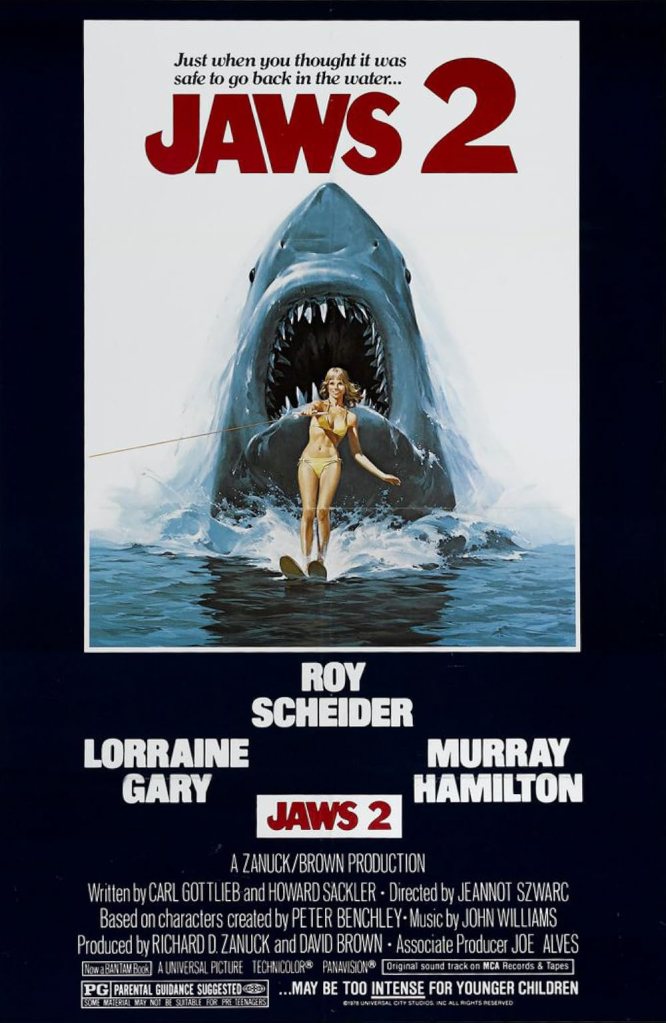
Year: 1978
Studio: Universal Pictures
Director: Jeannot Szwarc
Producers: Richard D. Zanuck, David Brown
Associate Producer: Joe Alves
Writers: Carl Gottlieb, Howard Sackler, based on characters created by Peter Benchley
Main Cast: Roy Scheider, Lorraine Gary, Murray Hamilton, Joseph Mascolo, Jeffrey Kramer, Collin Wilcox, Ann Dusenberry, Mark Gruner, Barry Coe, Gary Springer, Donna Wilkes
Genre: Adventure – Horror – Thriller
For synopsis and full cast and crew credits, visit the IMDb page
Music Credits
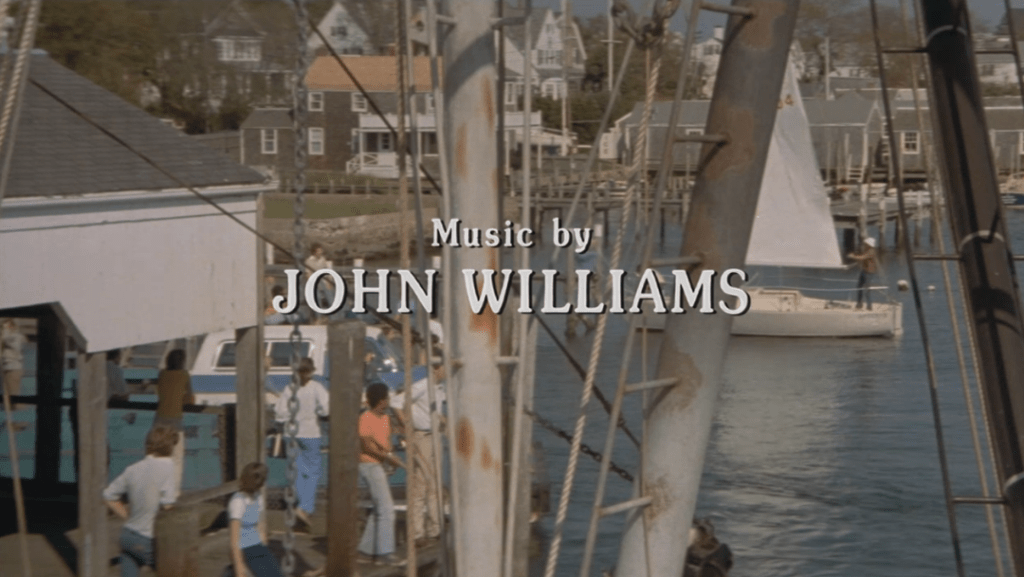
Music Composed and Conducted by John Williams
Music Editor: Stephen A. Hope
Scoring Mixer: John Neal
Orchestra Contractor: Sandy DeCrescent
Concertmasters: Erno Neufeld, Israel Baker
Orchestrator: Herbert W. Spencer
Recorded at 20th Century Fox Studios, Stage 1, Los Angeles, California
Recording Dates: May 1, 3, 4 and 5, 1978
Essential Discography
Original Soundtrack Album and Expanded Reissues

The Original Motion Picture Soundtrack – LP (1978)
MCA Records – MCA-3045
Album Produced by John Williams
Executive Producer: Sonny Burke
Liner Notes: John Fadden
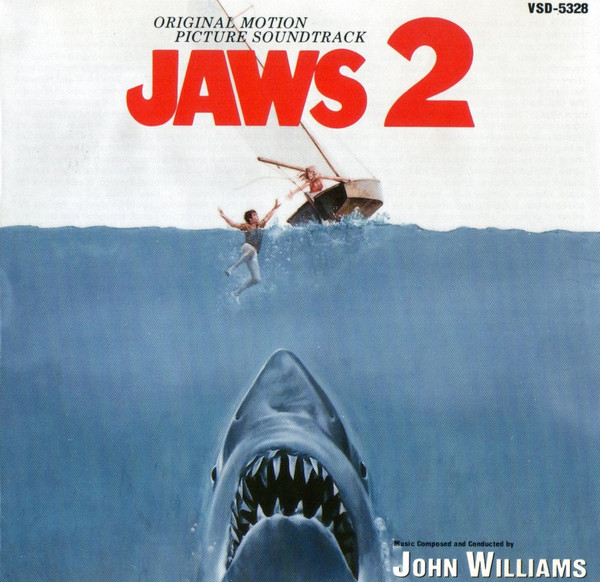
Original Motion Picture Soundtrack – CD Reissue (1990)
Varèse Sarabande VSD-5328
Executive Producer: Robert Townson
Digital Transfer: Tom Null
Liner notes: Kevin Mulhall
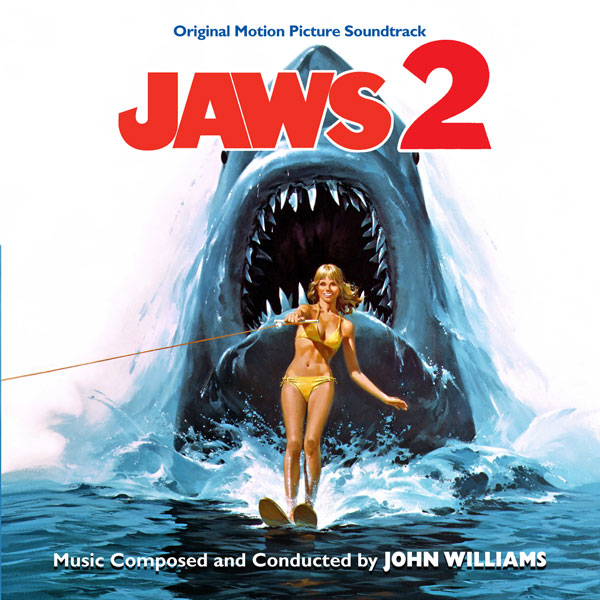
Original Motion Picture Soundtrack – Expanded Edition (2015)
Intrada Special Collection Vol. ISC 331
Produced by Douglass Fake
Music Edited, Mixed and Mastered by Mike Matessino
Liner notes: Scott Bettencourt
Expanded film score presentation and alternate cues on Disc 1; remastered OST album presentation on Disc 2
In Williams’ Words
“I think that it was assumed by everyone who made the film that the music would come back also and be part of the cast, if you like, another shark or another person. It would require new music certainly, but the signature music of Jaws should be used as well. And in a funny way, it’s a little bit like serials, it was used to have always the same music every week, if you had Roy Rogers, or The Lone Ranger, or whatever this would be, you’d always have the same signature music. So there certainly has been a great tradition for that in the serials of Hollywood.
Jaws 2 seemed to be a larger ensemble, it was a bit more expansive in the way that it was done, and the orchestral palette may have been a little bit broader, with longer notes, probably more likely an intuition on my part to sort of fill the space that emerged in the new choreography, if you like, of what the director had made. Certainly some of the original music was used, but I think the large percentage of the score is new music to choreograph and support the action of the new director.”1

Quotes and Commentary
It was only natural that producers Zanuck and Brown would commission John Williams to write the music for Jaws 2 as a follow up to the splendid job he did on the original Jaws and, except for his use of the very dark, rhythmic and ominous theme for Mr. Shark, Williams has composed an all-new and exciting score which enhances and complements the sequel in stunning fashion. His sense of the dramatic, coupled with his exquisite musical taste and knowledge of the orchestra definitely stamp this score as truly one of his best. Brilliantly performed by a mini-symphony made up of the finest instrumentalists to be found anywhere, this original-track recording will perpetuate the memories—the sights and sounds—of a great motion picture for years to come.
As you listen to the Williams’ sea-scapes—especially a delightful sea chanty which is woven into the fabric of the score in theme-and-variations treatment—you can almost smell the salt in the air and see and feel the splashes and spray of the waves. You’re momentarily carried away by lovely images of the wonder and mysteries of the sea. Then, suddenly, you’re aware of something sinister about to happen as the low basses begin their dark rhythmic pattern—dum…dum…dum, dum, dum, dum… and then the trombones, brass, strings and finally the full orchestra join in, building up the level with a tremendous crescendo-you know by now that something—something huge and foreboding—is about to come into vision—Guess What? Guess Who?2
– John Fadden
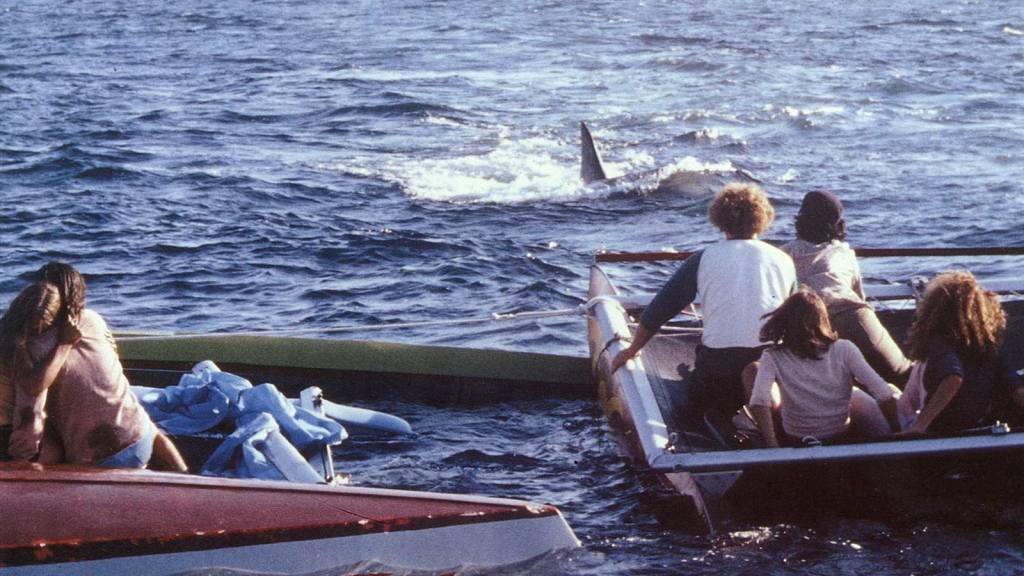
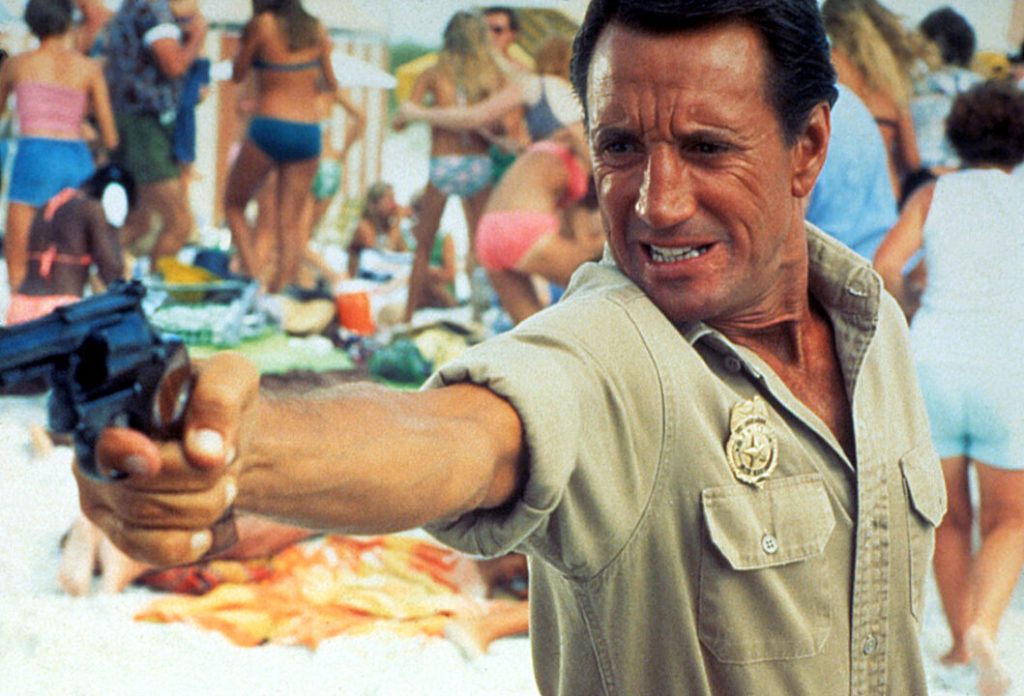
In 1978, Universal released the sequel to the phenomenally successful Jaws (1975), which thrust director Steven Spielberg into the spotlight. Although Spielberg did not return to direct the sequel, actors Roy Scheider (Chief Martin Brody), Lorraine Gary (Ellen Brody), and Murray Hamilton (Mayor Larry Vaughan) reprised their original roles for the picture (two more sequels, Jaws 3-D (1983) and Jaws: The Revenge (1987), were released to justifiably less-than-enthusiastic receptions). Producers Richard Zanuck and David Brown (who produced Jaws) enlisted the services of Jeannot Szwarc to direct the sequel. The screenplay, written by Carl Gottlieb (who co-wrote Jaws with author Peter Benchley) and Howard Sackler, details the anxieties of vacation town Amity when another shark arrives in time for the summer season. Although the first shark met with a grisly demise, a scientist in Jaws 2 rules out revenge as a motivating force in the appearance of the new shark: “Sharks don’t take things personally, Mr. Brody.” The lack of dramatic motivation (outside of profit) in the screenplay is regrettably evident on screen. The shark scenes generate tension, but the film lacks the entertaining interplay between the characters in the first film (Robert Shaw as Quint was killed at the end of Jaws, and Richard Dreyfuss as Matt Hooper was written out). Fortunately, John Williams was brought back to compose music for the sequel. Although there is an abundance of quality in Williams’ canon of scores, Jaws 2 contains some of his finest pages. In writing the new score, Williams retained little of his Oscar-winning score for Jaws. The shark motif was an obligatory inclusion, but the overall musical style and focus, apart from its symphonic scope, has been altered for the sequel. Even so, the impact of the score remains comparable: Steven Spielberg commented that Williams’ music for Jaws made the movie “more adventurous, gripping and phobic than I ever thought possible,” and similar sentiments could be used to express the effect of Williams’ all-new score. 3
– Kevin Mulhall
John Williams, who returned to score Jaws 2, had not only won an Oscar and a Grammy for his original Jaws, but had since achieved even greater success with his score for Star Wars, with a bestselling album and another Oscar for the film that toppled Jaws‘ position on the all-time box-office chart and served to inaugurate a renaissance of the symphonic score.
Williams could hardly compose a new Jaws score without incorporating
his already classic shark theme, but apart from that famous motif and a brief taste of the Orca theme during the main title sequence, he composed a wealth of new material for the score, which was dominated by two new principal themes. His main title began not with the shark theme but with his new underwater theme, a delicate harp melody reminiscent of Bernard Herrmann’s music for Beneath the 12-Mile Reef. The gentle theme turns harsh and strident when the title JAWS 2 appears on screen (his shark theme doesn’t make its first appearance until the shark itself does). Unlike in the original Jaws, where he scrupulously used the shark motif only for scenes actually featuring the shark, in Jaws 2 he uses it as a musical red herring for the startling scene where Chief Brody finds a burned corpse floating just offshore.
To fit Szwarc’s “sunny” approach to the material, Williams’ sailing theme is bright and energetic, full of youthful enthusiasm. Though he includes a teasing use of the shark motif in one sailing cue, overall he avoids the swashbuckling quality of his shark-hunting music from the first film, as the focus here is on innocent teenagers fighting for their lives.
He supplied his usual strong stand-alone cues, such as the humorous montage “The Menu” (a companion piece to “March of the Villains” from Superman, released later that year) and the moving and subdued
“Brody Misunderstood.” His end title, quite different from Jaws‘ subdued closing, is an especially triumphant rendition of the sailing theme.4
– Scott Bettencourt
Videos
Opening Credits from Jaws 2 (1978) | Universal Pictures
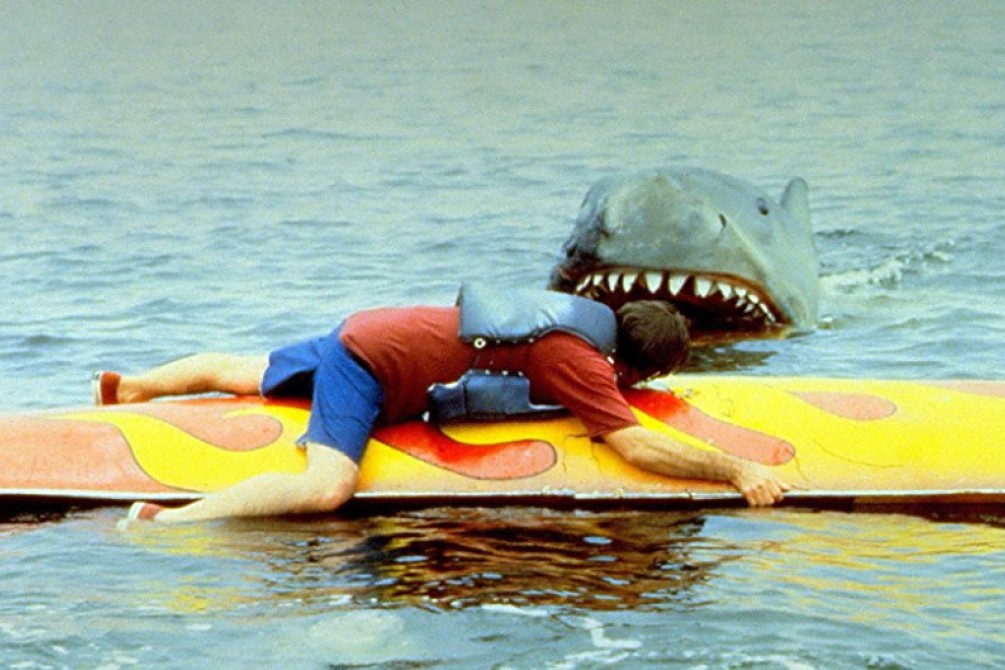
“Attack On The Water Skier” scene from Jaws 2 (1978) | Universal Pictures
The Music of Jaws 2 | DVD Featurette | Produced and Directed by Laurent Bouzereau
Brett Mitchell plays his original piano solo arrangement of “End Titles” from John Williams’ Jaws 2
Bibliography and References
. Bettencourt, Scott – Liner notes for Jaws 2 – Original Motion Picture Soundtrack Expanded and Remastered Edition, Intrada Records, 2015
. Bouzereau, Laurent – The Music of Jaws 2 DVD Featurette, Universal Home Entertainment, 2000
. Fadden, John – Jaws 2 – Original Motion Picture Soundtrack sleeve notes, MCA Records, 1978
. Mulhall, Kevin – Liner notes for Jaws 2 – Original Motion Picture Soundtrack CD reissue, Varèse Sarabande, 1990
Footnotes
- The Music of Jaws 2 DVD Featurette, 2000 ↩︎
- Fadden, excerpt from Jaws 2 – Original Motion Picture Soundtrack sleeve notes, 1978 ↩︎
- Mulhall, excerpt from Jaws 2 – Original Motion Picture Soundtrack CD reissue liner notes, 1990 ↩︎
- Bettencourt, excerpt from Jaws 2 – Original Motion Picture Soundtrack Expanded Remastered Reissue, 2015 ↩︎
 The Legacy of John Williams