
Table Of Contents
- Film Details
- Music Credits
- Essential Discography
- Quotes and Commentary
- Videos
- Bibliography and References
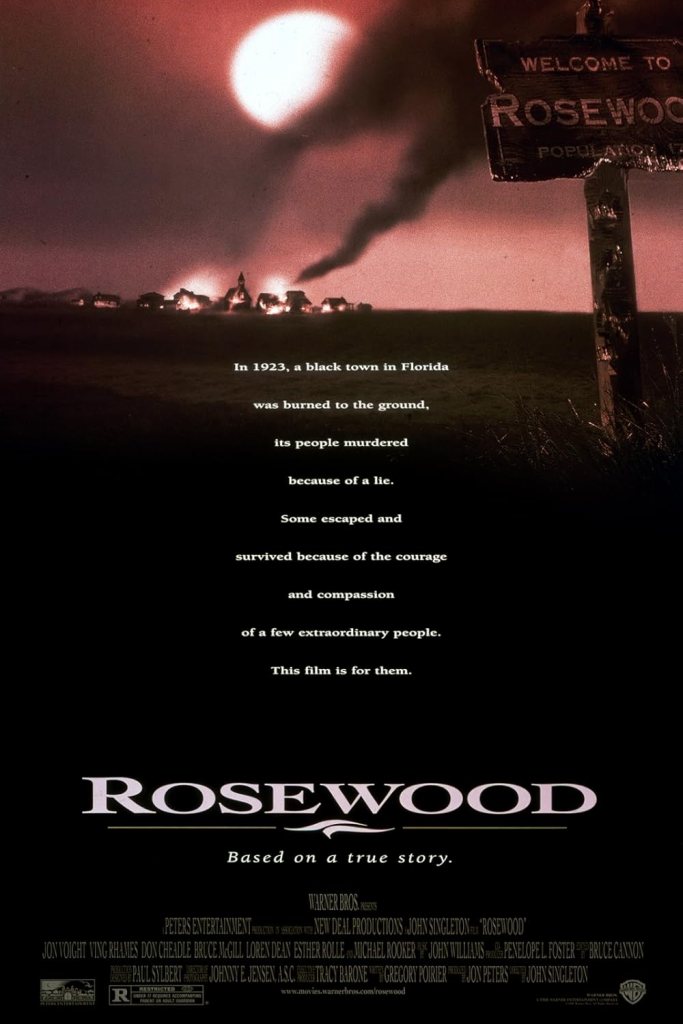
Film Details
Year: 1997
Studios: Warner Bros.
Director: John Singleton
Producer: Jon Peters
Executive Producer: Tracy Barone
Writer: Gregory Poirier
Main Cast: Jon Voight, Ving Rhames, Don Cheadle, Bruce McGill, Loren Dean, Esther Rolle, Elise Neal, Robert Patrick, Michael Rooker
Genre: Drama – History
For synopsis and full cast and crew credits, visit the IMDb page
Music Credits
Music Composed and Conducted by John Williams
Vocal Soloist: Shirley Caesar
Guitar Soloist: Dean Parks
Harmonica Soloist: Tommy Morgan
Music Editor: Kenneth Wannberg
Scoring Mixer: Dennis Sands
Assistant Engineer: Sue McLean
Music Preparation: JoAnn Kane Music Service
Music Contractor: Sandy DeCrescent
Concertmaster: Bruce Dukov
Orchestrator: John Neufeld
Recorded at Sony Pictures Scoring Stage, Culver City, California
Recording Dates: December 1, 2, 4, 5 and 6, 1996
Essential Discography
Original Soundtrack Album and Expanded Reissues
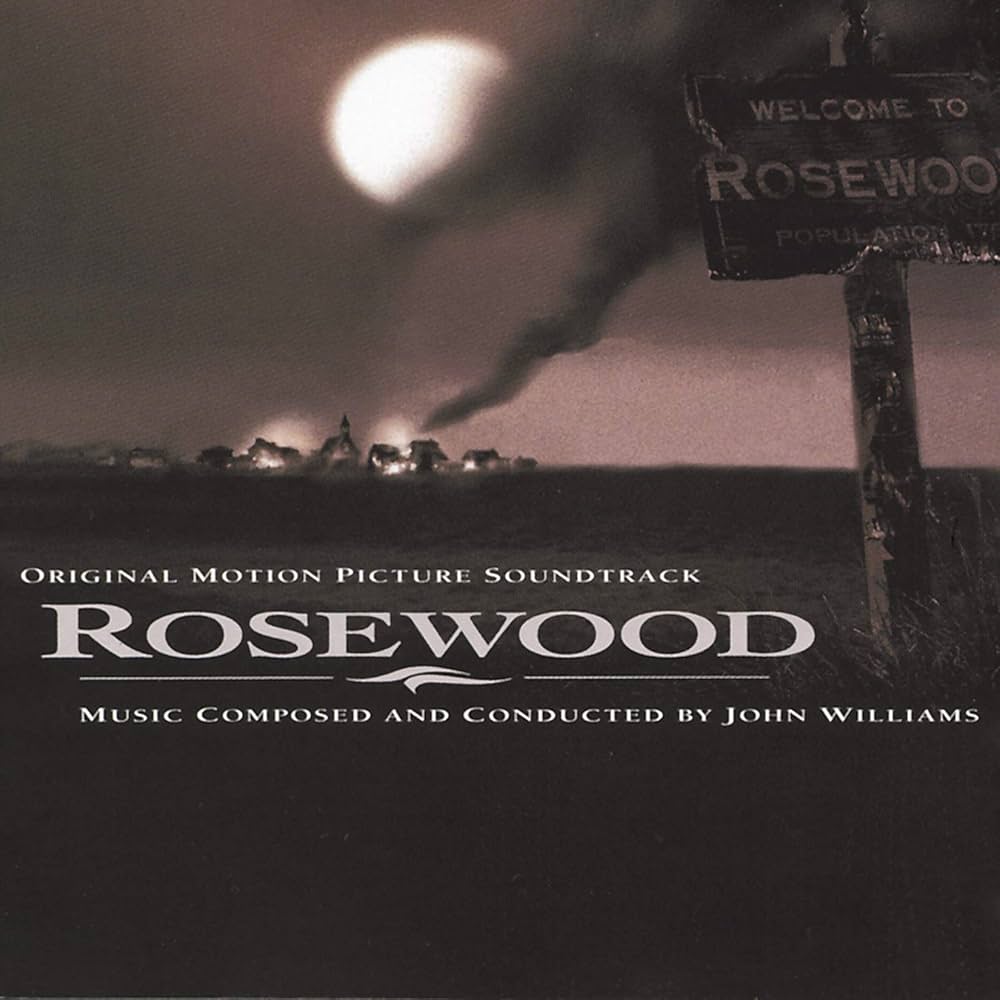
Original Motion Picture Soundtrack (CD, 1999)
Sony Classical – SK 63031
Produced by John Williams
Mastered by Ramòn Bretòn
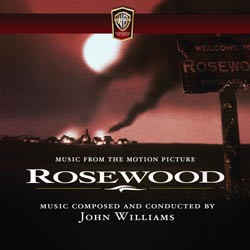
Music From The Motion Picture (2013)
Limited Edition 2-CD set
La-La Land Records LLCD 1244
Produced, Edited and Mastered by Mike Matessino
Executive Producer for Sony Music: Didier C. Deutsch
Liner Notes: Jeff Bond
Instrumental film score presentation on Disc 1; Reissue of the 1997 soundtrack album on Disc 2
Quotes and Commentary
As a child fascinated with the world of film and cinema, I would constantly listen to the recorded music of my favorite motion pictures. Listening to certain portions of the original soundtrack of a film often gave me the same joy or reminded me of the feeling I had when watching a movie.
As an eleventh grader, I can remember waking in the morning, washing my face, brushing my teeth and combing my hair to the enormous sounds of the London Symphony Orchestra as I would blast the music to the last scene in Star Wars where my heroes get their medals. In high school, my day-long Sunday study sessions were filled with music from Raiders of the Lost Ark and the moving piano music from E.T. I could remember what action Indiana Jones was doing by the way the music changed and still get charged by his daring adventures. Sometimes I would close my eyes and visualize these movies which I’d seen so many times using the soundtracks as my guide. In doing so, I would feel the very soul of the film—the rhythm, the pace, the themes, all these would come to me in pure form without any visuals. As my collection of tapes accumulated I noticed that all of the film scores I had purchased were the work of one man—without realizing it I had grown up listening and studying the film music of John Williams.
Now in my adulthood, I’ve had the opportunity to realize a boyhood dream. To have John Williams compose the score for one of my films. Working with Mr. Williams, I felt like a teenager again, privileged this time to not only hear, but to witness the process of his creativity. He is a consummate craftsman, writing music that magnifies the power of the film. I can truly say Mr. Williams’ score embodies the soul of Rosewood.1
– John Singleton
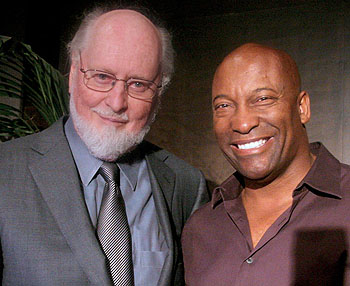
John Singleton had immersed himself in blues music of the era in preparation to film Rosewood, listening to performers like Bessie Smith and Ma Rainey. He originally hired jazz artist Wynton Marsalis to write an authentic, folk-inspired score for the film, but the director eventually realized that Marsalis’ documentary-style approach didn’t support the theatrics of the film’s major set pieces and the heroic character of Mann. Singleton found himself returning to another of his early inspirations, Steven Spielberg’s Schindler’s List, in searching for a new composer for the film. He had always been an admirer of John Williams and had been impressed by the composer’s ability to write music for Spielberg’s harrowing vision of the Holocaust. But could Williams capture the feeling of a black community circa 1923?
When Singleton expressed his concerns during early discussions about Williams being able to find “the soul of the African-American experience,” Williams reminded him that he had arranged and conducted for famed gospel singer Mahalia Jackson in the early 1960s.
Williams got the assignment, and Singleton impressed on him the importance of capturing the authentic sounds of music of the period as an element of his score (some of Marsalis contributions would remain in the film as source cues). “We wanted American folk music, black and white, to be played, so that you really get into the texture of the time period,” Singleton said in press materials for the film at the time. In fact, while Williams had built a tremendous reputation as a composer of rich, symphonic scores for Steven Spielberg, Oliver Stone and other major filmmakers over the previous two decades before working on Rosewood, he had always had a facility with folk and blues music that went back to his early days as a jazz pianist and arranger. He had worked expressive folk music performances for guitar and harmonica into scores like The Reivers, Conrack, The Sugarland Express, The Missouri Breaks, The River and other works over the years, and with Rosewood he would answer Singleton’s needs for authenticity along with the filmmaker’s desire for a powerful symphonic work that could support the film’s explosive dramatic sequences. 2
– Jeff Bond
Videos
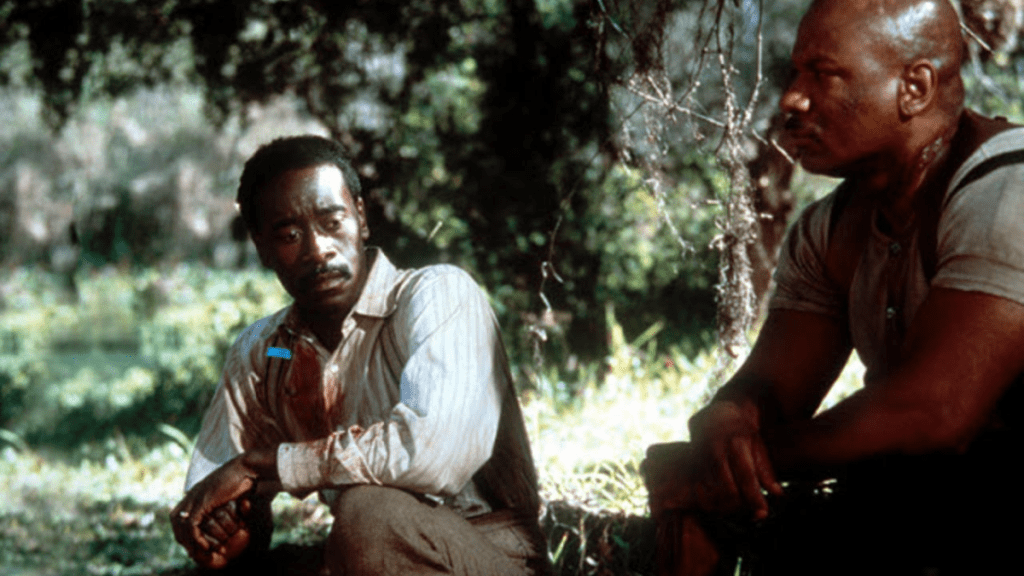
“Look Down, Lord” scene from Rosewood (1997) | Warner Bros.
“Aunt Sarah’s Death” scene from Rosewood (1997) | Warner Bros.
“After the Fire” scene from Rosewood (1997) | Warner Bros.
Brett Mitchell performs his solo piano arrangement of “Look Down, Lord” and “Finale” from John Williams’ Rosewood
Bibliography and References
. Bond, Jeff – “Singleton’s List,” Rosewood – Music from the Motion Picture liner notes, La-La Land Records, 2013
. Burlingame, Jon – “Fanfare for the uncommon score,” Variety, 25 January 1998
. Crouch, Stanley – “A Lost Generation and Its Exploiters,” The New York Times, 26 August 2001
. Ebert, Roger – Rosewood: Film Review, 1997
. Poirier, Gregory – “John Singleton and the Making of Rosewood: Memories and Regrets,” – Deadline.com, 12 July 2020
Legacy of John Williams Additional References
John Williams and the American Sound, essay by Maurizio Caschetto
Footnotes
 The Legacy of John Williams