

Table Of Contents
- Film Details
- Music Credits
- Essential Discography
- In Williams’ Words
- Quotes and Commentary
- Videos
- Bibliography and References
Film Details
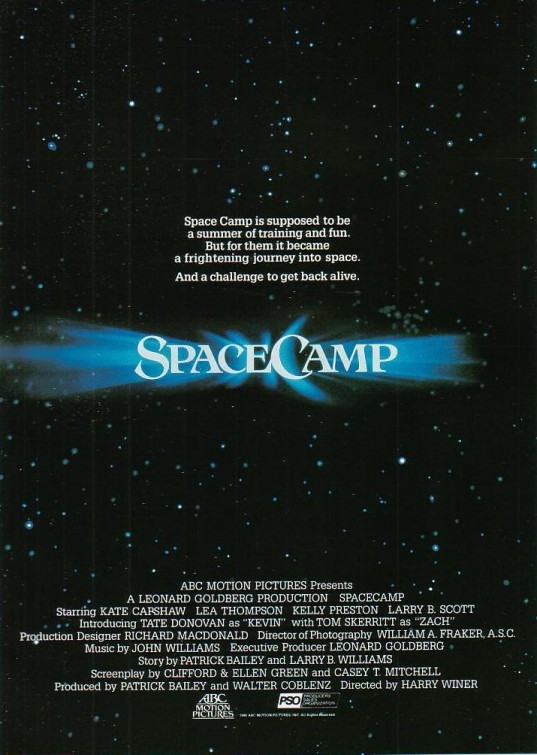
Year: 1986
Studio: ABC Motion Pictures/20th Century Fox
Director: Harry Winer
Producers: Patrick Bailey, Walter Coblenz
Executive Producer: Leonard Goldberg
Writers: Patrick Bailey, Larry B. Williams (story), Clifford & Ellen Green, Casey T. Mitchell (screenplay)
Main Cast: Kate Capshaw, Lea Thompson, Kelly Preston, Larry B. Scott, Tate Donovan, Tom Skerritt, Joaquin Phoenix, Barry Primus, Terry O’Quinn, Mitchell Anderson
Genre: Adventure – Science-Fiction
For synopsis and full cast and crew credits, visit the IMDb page
Music Credits
Music Composed and Conducted by John Williams
Music Editor: Kenneth Wannberg
Music Supervisor: Lionel Newman
Recording Engineer: Armin Steiner
Orchestra Contractor: Meyer Rubin
Concertmasters: Israel Baker, Paul Shure
Orchestrators: Alexander Courage, Herbert W. Spencer
Recorded at 20th Century Fox Scoring Stage, Century City, California
Recording Dates: March 27, 31, April 1, 2 & 4, 1986

Essential Discography
Original Soundtrack Album and Expanded Reissues

Original Motion Picture Soundtrack – LP (1986)
RCA – ABL1-5856
Produced by Lionel Newman
Music Remixed and Edited by Len Engel
Sleeve Notes: John Williams
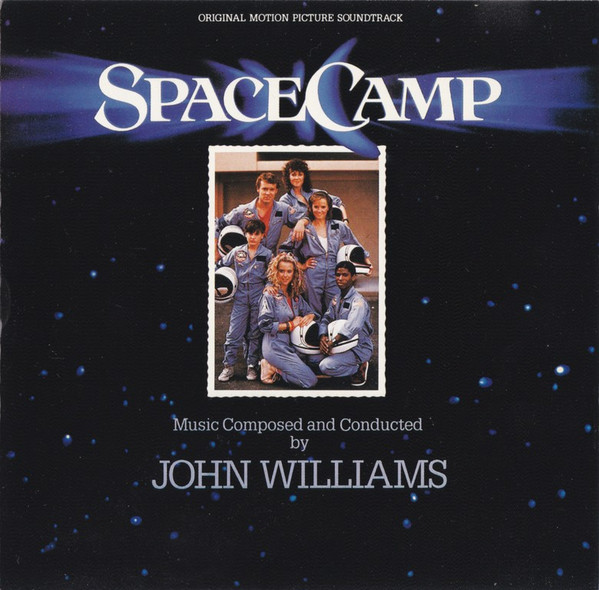
Original Motion Picture Soundtrack – CD Reissue (1992)
RCA – SCC-1016, SLC CD Club – SCC-1016 (Japan-only pressing)
Reissue Producer: Yasuhiro Wada
Original Motion Picture Soundtrack – Remastered CD Reissue (2010)
Intrada Special Collection Vol. 140
CD Reissue Produced by Douglass Fake
Liner Notes: Mike Matessino
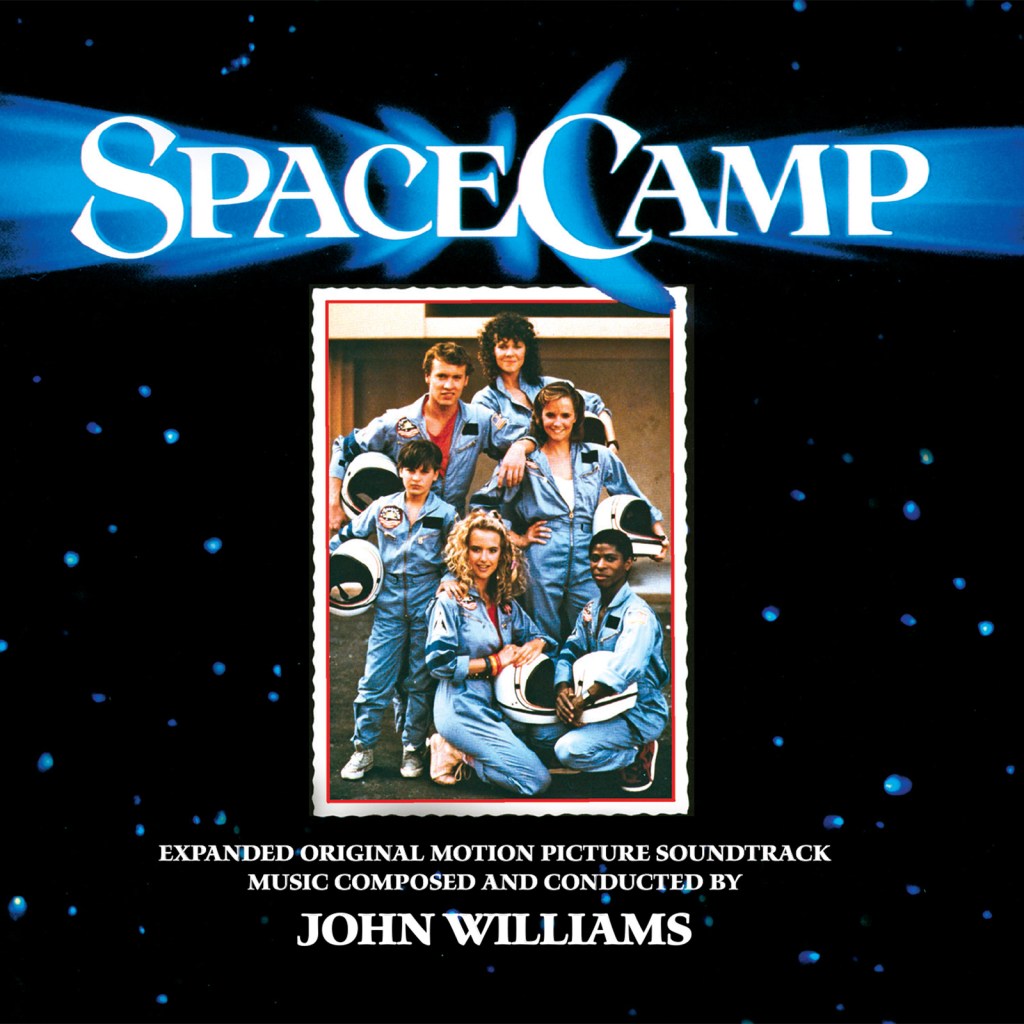
Expanded Original Motion Picture Soundtrack – 2-CD (2022)
Intrada Special Collection Vol. 474
Expanded Edition Produced and Mastered by Mike Matessino
Executive Producers: Douglass Fake, Roger Feigelson
Liner Notes: Mike Matessino
Expanded film score presentation and alternate cues on Disc 1; remastered 1986 OST album on Disc 2
Selected Re-recordings
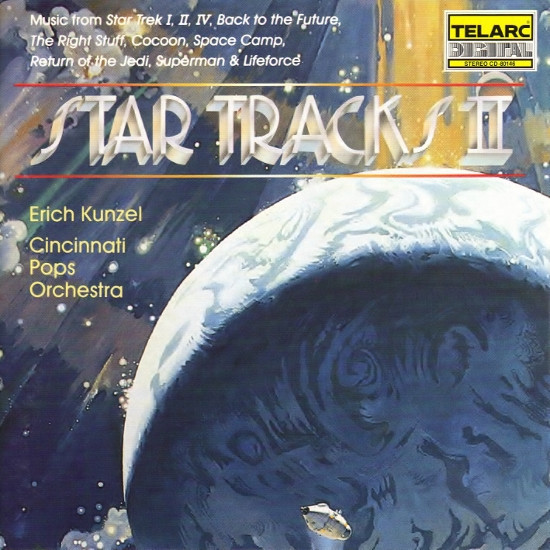
Star Tracks II (1987)
Telarc Digital – CD-80146
contains “SpaceCamp” from SpaceCamp
Cincinnati Pops Orchestra conducted by Erich Kunzel
Produced by Robert Woods
In Williams’ Words
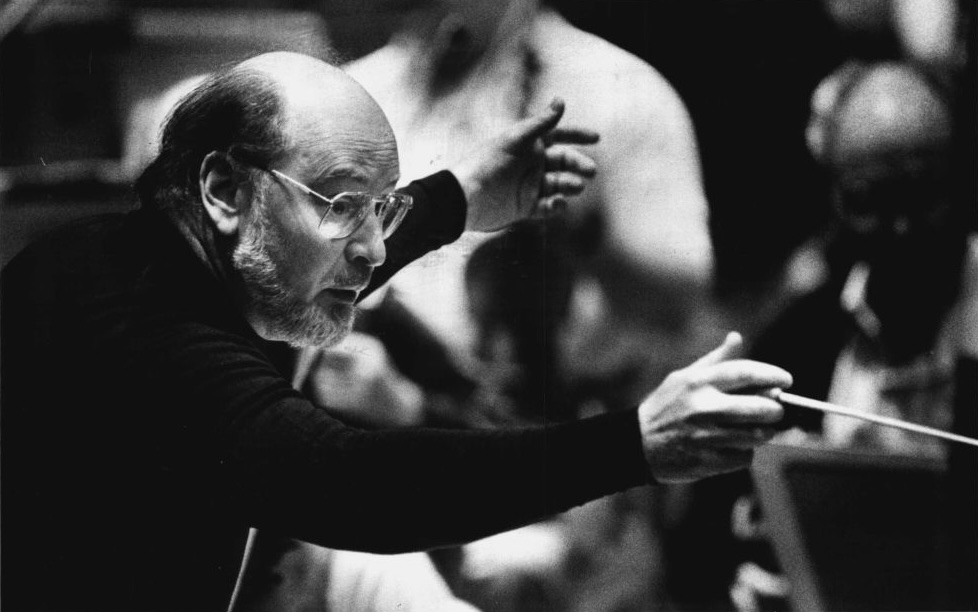
“In the creation of SpaceCamp, Director Harry Winer and Executive Producer Leonard Goldberg have given us a marvelous movie! The film succeeds as pure entertainment while simultaneously succeeding on several other levels.
The story embraces the excitement of discovery and the exultation of being on the edge of a great new frontier–a frontier which presents unparalleled opportunity for all of us.
In the film our student astronauts are presented a daunting challenge as they make their first flight into space. They rise to this challenge brilliantly and experience that first great flush of success that is the result of their hard work and courage.
The movie also brings us some of the wonderful atmosphere and ambience of NASA and of the great effort involved in the exploration of space. Our entire country–the whole world, in fact–feels a sense of inspiration from this great endeavor and, despite setbacks and growing pains, the space program continues to be one of our country’s most lustrous success stories.
In composing the music for the film, I’ve tried to express the exhilaration of this adventure in an orchestral idiom that would be direct and accessible…speaking directly to the “heart” of the matter. I feel honored to have been asked to compose this score, and I feel particularly proud of my association with SpaceCamp and its creators.” 1
Quotes and Commentary
There’s a reason why anyone who’s a legend is a legend. He always finds a way to create feeling of the adventure of a lifetime in the music he generates, and John Williams is the most gratifying and rewarding creative collaboration I’ve had in my entire career. He would analyze a story and consider when there was a need for silence. He understood your creative intentions and found a way in a very poetic medium of music to interpret and enhance your vision. It was literally remarkable.2
– Harry Winer, director
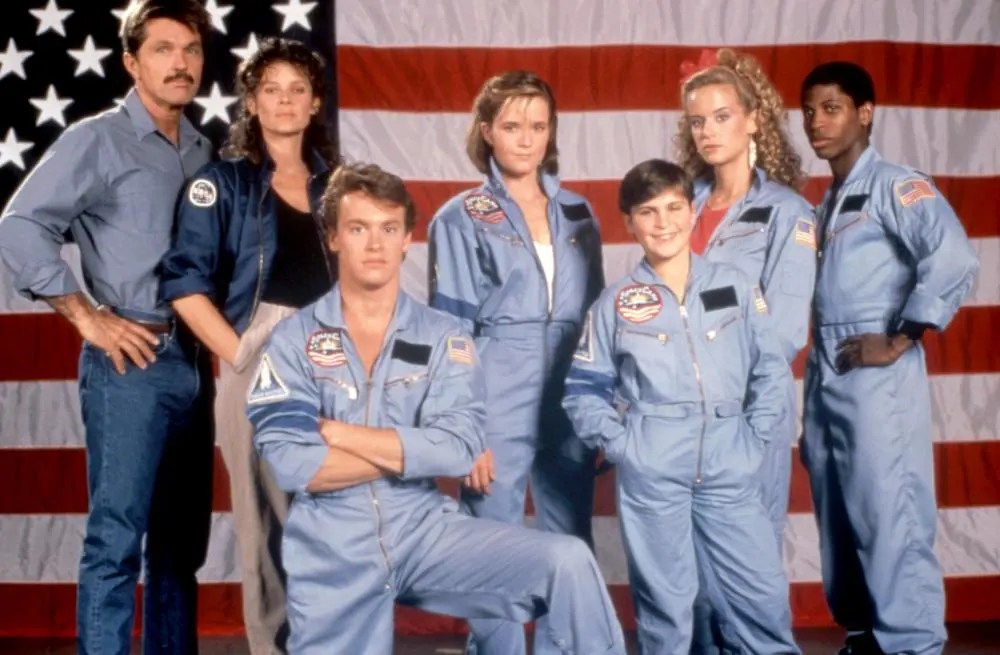
While remembered fondly by the generation that embraced such fare as WarGames, D.A.R.Y.L., Explorers, Weird Science, The Last Starfighter, Short Circuit and Flight of the Navigator, SpaceCamp unfortunately suffered from ill-timing due to the fatal Challenger tragedy. But it remains noteworthy for a number of reasons, not least of which is its uplifting score by John Williams, already the best-known film composer in history. […]
Williams had arguably become “America’s composer,” a notion reinforced by his commission to write “Liberty Fanfare” for the Statue of Liberty centennial in the summer of 1986, yet ironic in that he was, at the time, keeping his film composing schedule free for a very British project: Spielberg’s proposed musical version of Peter Pan. But in mid-1985, shortly after becoming a first-time father while filming the adult drama The Color Purple, the filmmaker canceled Peter Pan. While it would later be partially metamorphosed into 1991’s Hook, the course change created an opening in Williams’ schedule at a fortuitous moment. At the end of 1985 he was set to move offices from 20th Century Fox, where he’d been based since 1964, to the newly built Amblin Entertainment complex at Universal, a change precipitated by the retirement of his longtime colleague, Lionel Newman, head of the Fox music department. Upon hearing about the opening in Williams’ schedule, Newman suggested SpaceCamp, which the studio was set to release, as a final project they might work on together. […]

In lieu of different themes for the human characters in SpaceCamp, Williams opted to develop a series of motifs that reflect the setting and the emotions surrounding the adventure of orbital flight. The main theme is constructed of ascending phrases, as were the composer’s principal melodies for Star Wars, Superman and E.T., but while those earlier themes depicted a superhuman, heroic sense of flight with an immediate upward perfect-fifth leap, SpaceCamp’s theme opens with a mere whole tone, reaching toward a goal with humility and tenuousness. The impact of the theme is amplified by its frequent association with a fanfare-like motif. Each is used in a variety of moods, from the contemplativeness of the “Main Title,” to the grandeur of “In Orbit,” to suspense in “Viewing Daedalus,” fully dramatic treatment in “Re-Entry” (a cue heavily edited in the film), and triumph for the story’s conclusion in “Home Again” and for the end credits, “SpaceCamp.”3
– Mike Matessino
Videos
“The Shuttle” and “In Orbit” scene from SpaceCamp (1986) | ABC Motion Pictures/20th Century Fox
Music from SpaceCamp 1976 | Cincinnati Pops Orchestra conducted by Erich Kunzel
Bibliography and References
. Dyer, Richard – “Getting ready for a big date,” The Boston Globe, April 22, 1986
. Matessino, Mike – Liner notes for SpaceCamp – Expanded Original Motion Picture Soundtrack 2-CD, Intrada, 2022
. Wake, Matt – Secrets of the ‘80s SpaceCamp movie, revealed, AL.com, 2016
Legacy of John Williams Additional References
. Soundtrack Spotlight podcast with Mike Matessino on SpaceCamp and Presumed Innocent
Footnotes
 The Legacy of John Williams