

Table Of Contents
- Film Details
- Music Credits
- Essential Discography
- In Williams’ Words
- Quotes and Commentary
- Videos
- Bibliography and References
Film Details
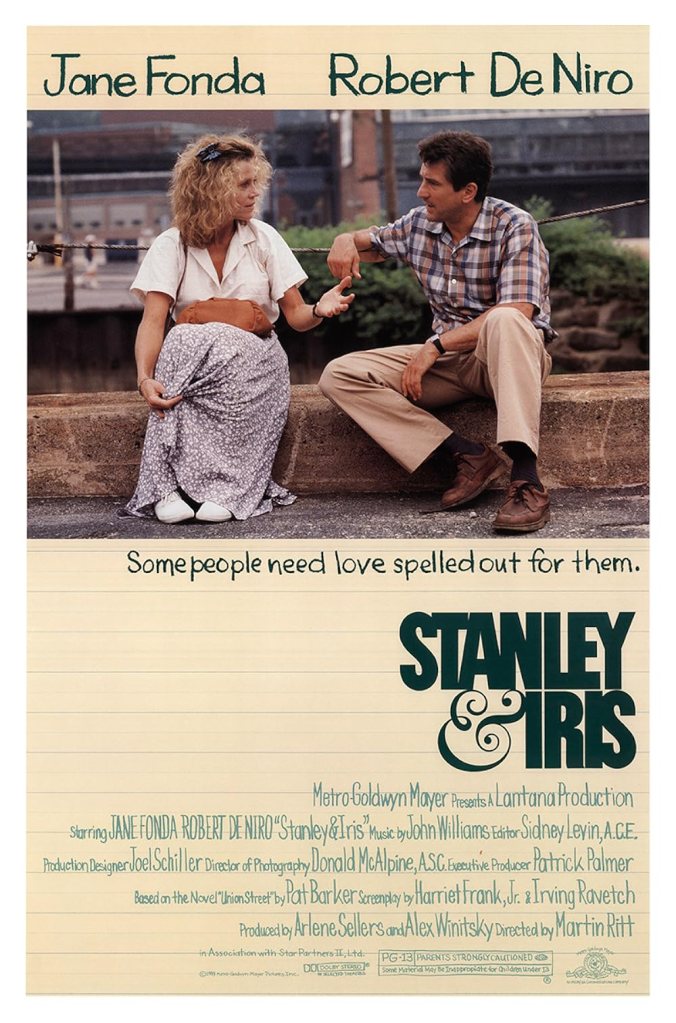
Year: 1990
Studio: Metro-Goldwyn Mayer
Director: Martin Ritt
Producer: Arlene Sellers, Alex Winitsky
Executive Producer: Patrick Palmer
Writer: Harriet Frank, Jr., Irving Ravetch, based on the novel “Union Street” by Pat Barker
Main Cast: Jane Fonda, Robert De Niro, Swoosie Kurtz, Martha Plimpton, Harley Cross, Jamie Sheridan, Feodor Chaliapin, Zohra Lampert
Genre: Drama – Romance
For synopsis and full cast and crew credits, visit the IMDb page
Music Credits
Music Composed and Conducted by John Williams
Music Editor: Ken Wannberg
Scoring Mixer: Dan Wallin
Assistant Engineer: Sue McLean
Orchestra Contractor: Meyer Rubin
Concertmaster: Paul C. Shure
Orchestrators: Herbert Spencer, John Neufeld
Recorded at Lorimar Music Scoring Stage, Culver City, California
Recording Dates: April 17, 18 and 21, 1989
Essential Discography
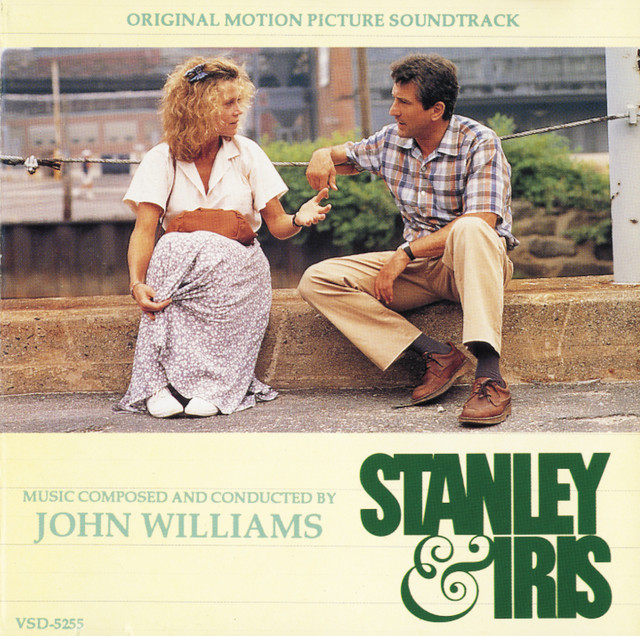
Original Motion Picture Soundtrack – LP / CD (1990)
Varèse Sarabande – VSD-5255
Produced by John Williams
Executive Producer: Robert Townson
Associate Producer: Tom Null
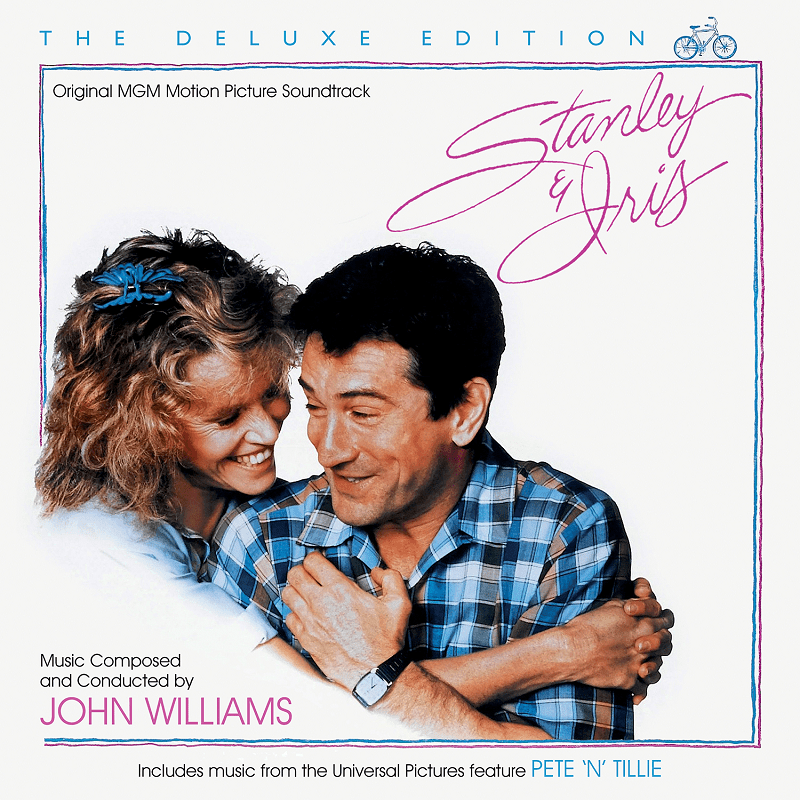
The Deluxe Edition – CD (2017)
Varèse Sarabande – VCL 0317 1178
Produced by Mike Matessino and Robert Townson
Mixed and Edited by Mike Matessino
Mastered by Patricia Sullivan
Liner notes: Mike Matessino
Expanded film score presentation with additional bonus tracks; also contains music from the Universal Pictures feature Pete ‘n’ Tillie (1972)
In Williams’ Words
“[Director] Martin Ritt […] is tough, serious, realistic, theatrically orientated–if you have ten minutes of music in one of his films you’ve done well, because he doesn’t like the cosmetic distraction of music.” 1

Quotes and Commentary
1989 marks John Williams’ most prolific year of film composition since assuming conductorship of the Boston Pops Orchestra in 1980. In addition to scoring Steven Spielberg’s two films, Indiana Jones And The Last Crusade and Always, plus Oliver Stone’s Born On The Fourth of July, he has composed
one of the most subtle and compassionate scores of his career for MGM’s new film Stanley & Iris.
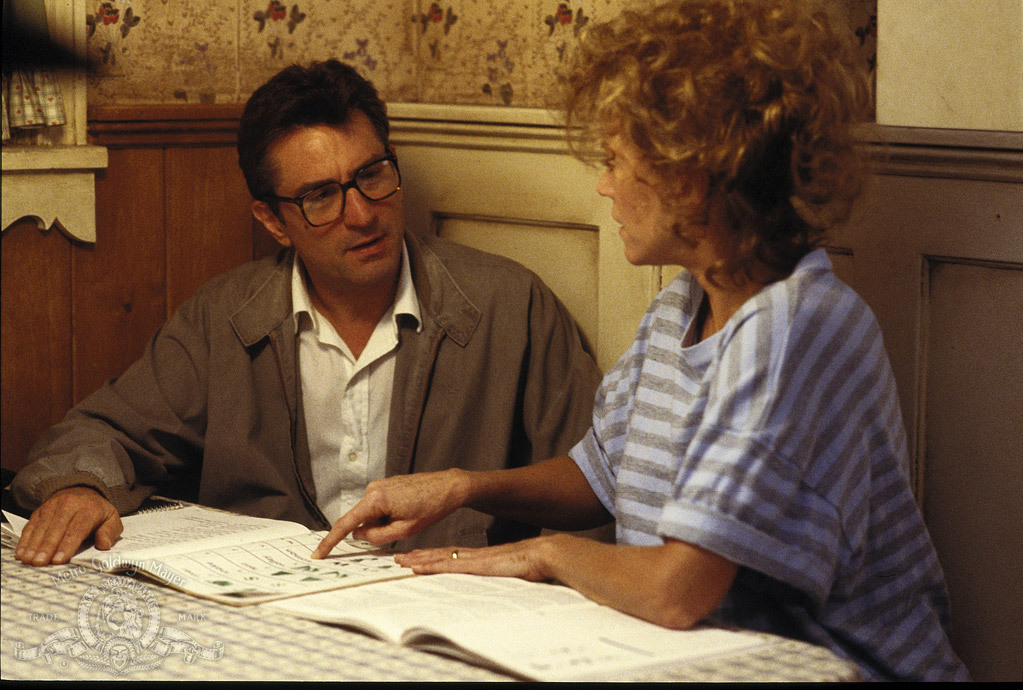
Jane Fonda and Robert De Niro, in their first on screen pairing, deliver insightful and compassionate performances in the title roles. The film tells the touching story of the friendship and developing love between Stanley, an accomplished but insecure man who suffers from the all too common disability of illiteracy, and Iris, an able, strong-willed woman who is slowly becoming overwhelmed with grief from the loss of her husband, from whom she was widowed only eight months previously.
The wide ranging emotions of the characters, which also include Stanley’s elderly father and Iris’s pregnant teenage daughter, are beautifully and delicately captured in John Williams’ poignant orchestrations and themes. The main title eloquently sets the atmosphere for what becomes an impressionistic poem-like presentation of the score. Solo piano, flute and strings are the dominant components of both the main title and the score, with the development of the characters’ musical themes tracing the progression of the relationship between Stanley and Iris.
Film experiences of this caliber are as rare as film scores of such inspired insight, and the combination of these elements are more mutually exclusive than one might think. In John Williams’ case, however, after scoring an unparalleled number of truly outstanding and memorable motion pictures and treating them all to a bounty of musical riches to help further elevate them, it is no wonder that he is considered among the best to ever practice his craft. Be it with the assistance of a huge symphonic palette or working within an economy of means, as is the situation here, Williams always knows just what to say—what needs to be said—after which it is impossible to imagine any film of his existing without his contribution.
-Robert Townson 2
A piano plays a note, experiments with a thought, repeats it, then meanders downward, almost childlike, until an unassuming rhythm is found. Over it, a flute tries out an unpretentious melodic phrase, repeats it, tentatively takes it further, discovering connections as it goes. Finding that it’s making sense, the entire line is repeated with more confidence and then other thoughts enter, building, growing, learning with modesty and restraint. It might not seem that a score by John Williams is being described, yet this is how the main title music begins for the 1990 film Stanley & Iris, one of the composers most tender and unassuming works, but no less accomplished than those for which he is best known.
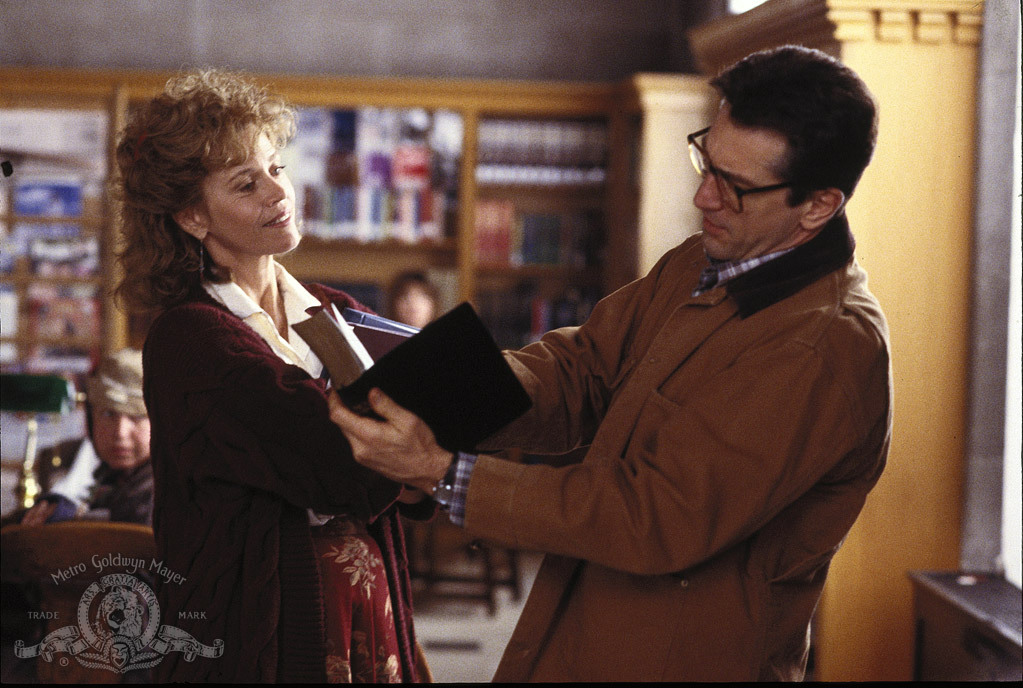
Williams perfectly captures the story of the two eponymous characters and the New England working class environment in which it unfolds. Stanley Cox (Robert De Niro) and Iris King (Jane Fonda) both work at the Nevins & Davis Bakery in the fictitious town of Laurel – he in the cafeteria and she on the assembly line. When Iris unintentionally exposes Stanleys illiteracy, he is dismissed from his job and can no longer afford to take care of his aged father. Iris, a widow raising two children, finds new purpose by committing herself to teaching Stanley to read and write, during which their relationship blossoms, albeit sometimes awkwardly, as is usually the case in life.
With its focus on the day-to-day struggles of everyday people and its matter-of-fact spotlighting of socioeconomic issues (not just illiteracy, but also domestic abuse, teen pregnancy, care for the elderly and industrial stagnation), it is not surprising that Stanley & Iris was directed by Martin Rift, with whom Williams had collaborated on two earlier projects. The first, Pete ‘n’ Tillie in 1972, dealt with a man/woman relationship that, like most, works sometimes but not others. Conrack, Ritt’s next film in 1974, was the autobiographical story of author Pat Conroys experience as a teacher bringing basic education to African American children on a culturally undeveloped South Carolina island. […]
Stanley & Iris remains worthy of attention not only for being Ritt’s last film and for De Niro’s and Fonda’s vulnerable and naturalistic performances (it was also Fonda’s last film prior to a 15-year break), but because its themes remain relevant. It’s also an example of the type of movie that major studios funded in relative abundance at the time, with A-list talent bringing top craftsmanship to a story about average people dealing with relationships and societal issues. Among that A-list talent, of course, is John Williams. While the composer’s filmography is filled with smaller and lesser known works, more seemed to emerge in the mid-1980s to mid-1990s, such as The River, The Accidental Tourist, Always, Presumed Innocent and Sabrina. These types of scores can be revelatory, as there are no space battles or truck chases to compete with, no animatronic or computer-generated creatures to help sell to an audience. Music in these dramas reflects the characters and their struggles, both inner and outer. There is, perhaps, a greater purity to film music such as this, as typified by the earlier described main title music, in which Williams provides a musical representation of what learning to read feels like.
This Deluxe Edition release features the entire underscore Williams composed for Stanley & Iris, including material that was shortened or unused in the finished picture. The presentation reveals a more varied score than is readily evident, with multiple themes not necessarily assigned to specific characters, but instead placed according to mood or the subject matter of a scene. Several solo instrument lines are featured throughout, particularly piano, flute, clarinet and trumpet.3
-Mike Matessino
Videos
Main Title from Stanley & Iris | M-G-M
“Putting It All Together” scene from Stanley & Iris | M-G-M
Brett Mitchell performs his original solo piano arrangement of the title track from John Williams’s score for Stanley & Iris
Bibliography and References
. Canby, Vincent – “Review/Film; Middle-Aged and Not Quite Middle Class,” The New York Times, February 9, 1990
. Dyer, Richard – “John Williams begins 10th year in tune with Pops,” The Boston Globe, 7 May 1989
. Matessino, Mike – “Learning to Read and Ritt Music,” Stanley and Iris – The Deluxe Edition liner notes, Varèse Sarabande, 2017
. Taitz, Sonia – “Stanley & Iris carries a message of H-O-P-E,” The New York Times, February 4, 1990
Footnotes
 The Legacy of John Williams