

Table Of Contents
- Film Details
- Music Credits
- Essential Discography
- Awards and Nominations
- In Williams’ Words
- Quotes and Commentary
- Videos
- Bibliography and References

Film Details
Year: 1998
Studio: Columbia Pictures
Director: Chris Columbus
Producers: Wendy Finerman, Mark Radcliffe, Michael Barnathan
Writers: Gigi Levangie, Jessie Nelson, Steven Rogers, Karen Leigh Hopkins, Ron Bass
Main Cast: Julia Roberts, Susan Sarandon, Ed Harris, Jena Malone, Liam Aiken
Genre: Drama
For synopsis and full cast and crew credits, visit the IMDb page
Music Credits
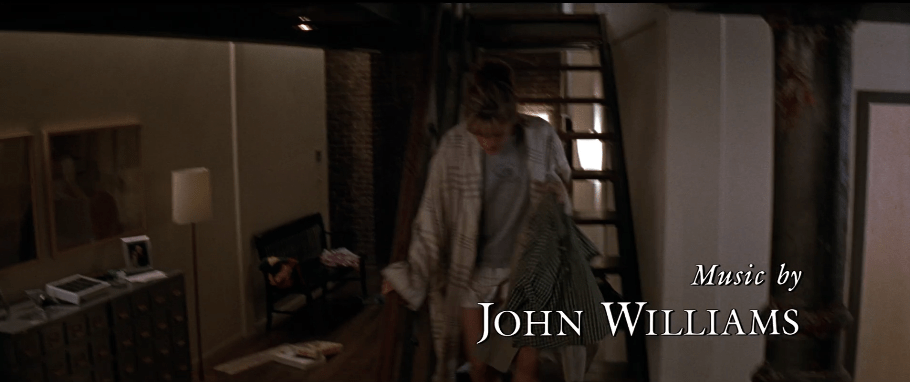
Music Composed and Conducted by John Williams
Guitars Solos: Christopher Parkening
Oboe Solos: John Ellis
Music Editor: Kenneth Wannberg
Assistant Music Editor: Peter Myles
Scoring Mixer: Shawn Murphy
Scoring Crew: Sue McLean, Greg Dennen, Mark Eshelman, Patrick Weber
Music Preparation: JoAnn Kane Music Service
Orchestra Contractor: Sandy DeCrescent
Orchestrator: John Neufeld
Concertmaster: Bruce Dukov
Recorded at Sony Pictures Scoring Stage, Culver City, California
Recording Dates: October 12, 13, 15 and 16, 1998
Essential Discography

Music From The Motion Picture (1998) – CD
Sony Classical – SK 61649
Album Produced by John Williams
Mastered by Patricia Sullivan Fourstar

Music From The Motion Picture (2024) – Vinyl reissue
Music On Vinyl/Sony Classical MOVATM393
2-LP limited edition of 500 numbered copies on translucent green vinyl
Includes insert with liner notes
Selected Re-recordings
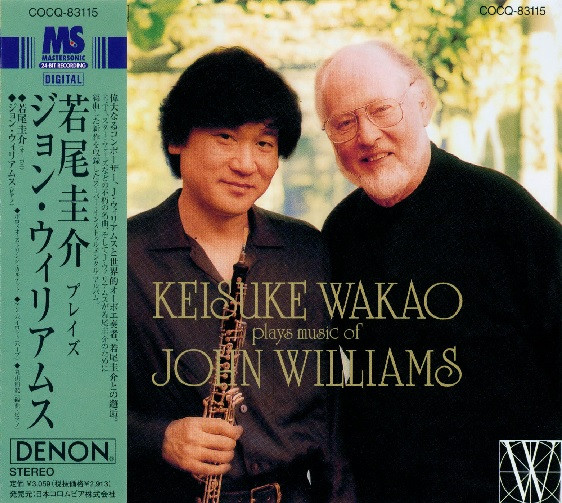
Keisuke Wakao Plays the Music of John Williams (1999)
Denon – COCQ-83115
contains “The Days Between” from Stepmom (Arranged for oboe and piano by John Williams)
Keisuke Wakao, oboe
John Williams, piano
Awards and Nominations
BMI Film Music Awards
Winner (Richard Kirk Award)

In Williams’ Words
“Christopher Columbus is a young director with whom I had worked about ten years ago. We did Home Alone together, a wonderful little piece about Christmas. He rang me up to ask me to come and see his film, Stepmom, which I liked very much. Julia Roberts and Susan Sarandon were in it and had one very touching relationships as the characters in the film. The music, I thought, wanted to be something very simple and lyrical. And I just thought to myself that an acoustic guitar, not an electric guitar, but a classical guitar might give us just that kind of individual voice to speak to the audience… Ergo, Christopher Parkening. When you think about classical guitar artists, Christopher Parkening goes to the head of the list. The thing I love about classical guitar is that the strings are actually gut strings, so there is, in the broadest sense, an animal element, or you could even say a human element to the instrument itself that sort of goes right to the viscera, so to speak, to the soul of the matter and of the listener.” 1
Quotes and Commentary
John Williams. His name brings one word to mind: Trust. It is the key element in a successful relationship between a composer and a filmmaker. As a director, you are placing months of passionate work into the hands of someone who will guide your film’s emotional journey. It is essential to give that person your trust, with the promise that they will not only enrich your film, but elevate it to a higher level.
John’s genius is twofold. He provides the film viewer with an emotionally complex and deeply moving experience, and he gives the record listener a glorious album that stands on its own as a major artistic achievement. It is not an easy feat, but one that John Williams does time and time again. It has been an honor to work with him. He has enriched my life and my film, and I will be forever grateful.2
– Chris Columbus

I had heard whispers of controversy about this score before my copy of the album arrived for review. “Not the best John Williams…self-derivative…”, I had heard. True that Stepmom does not have a theme that is immediately arresting and memorable; rather, this score is subtly understated with long-breathed melodies and easy-flowing impressionistic music that, nonetheless, should invidiously invade the listener’s affections on repeated hearings. And yes, there are many self quotations from E.T., Superman, and The Accidental Tourist to name but three John Williams scores but his consummate artistry weaves his older material into this new score so graciously that instead of being irritated, one welcomes their return like old friends. The overall mood is of gentle romance and family compassion. This is easy-listening Williams not far removed from Sabrina or Stanley and Iris and none the worse for that. The writing for the featured guitar (Christopher Parkening is admirable, sensitive and poetic) is lovely and occasionally very imaginative. The beautiful oboe playing of John Ellis should also have been acknowledged more emphatically with a front page booklet credit.
Stepmom stars Susan Sarandon as an older woman, Jackie ,who is supplanted by new younger wife (of Luke played by Ed Harris), Isobel (Julia Roberts). Circumstances force the two women to put aside their differences for the sake of the family that they now must share.
The opening cue “Always and Always” opens with a celeste theme against strings which suggests cosy domestic bliss – very feminine: delicate, pink, dreamy, hazy. As the cue progresses the music proceeds hestitantly – almost prayer-like. “The Days Between” carries this mood forward but there is soon a brief Copland tinge before the music proceeds introspectively; the oboe singing a song verging on sadness and regret. In this lovely cue the music is very reminiscent of Finzi, Moeran and other British composers and there is a subtle recollection of the Stanley and Iris music. The music is subtly Ravelian impressionistic too and the entry of the guitar softly tinges the music appropriately Spanish-coloured. “Time Spins its Web” is very evocative – an insistent clock ticking rhythm on strings with web-spinning piano arpeggios and clever rhythmic twists as the cue develops – a clever little invention. “The Soccer Game” is a quietly exuberant creation for the children at play. Again there is clever cross-rhythm writing and quieter music as we see the children’s game through the women’s eyes and are touched by their emotions and, fleetingly, their concerns and anguish: here, John Williams’s astringent writing for guitar (I think) is especially compelling
“A Christmas Quilt” is another exquisite cue; cosily romantic and warmly nostalgic. Finzi comes to mind once more and there is an allusion to a well known nursery tune. The magic of the E.T. score and the Close Encounters music is recalled. Once more the oboe writing impresses. “Isobel’s Horse” is a short cue for strings alone and it mixes Copland with string writing styles of British composers such as Holst and Elgar. There are some nice humorous touches too. “Taking Pictures” is guitar-led with another ravishing long-breathed melody strongly featuring the oboe. “Snowy Night” is very evocative of gently falling, twisting snowflakes with nice writing for the celeste again and the oboe. I was very much reminded of the feeling of isolation and disorientation of The Accidental Tourist score at this point and there are also reminders the remote beauty of “The Fortress of Solitude” from Superman. “Ben’s Antics” bring us down to earth again with childish pranks. The music for this cue chugs along happily and comically but there is also an edge as we share the women’s views and conflicting emotions once more. “Isobel’s Picture Gallery” is music that has a remoteness suggesting loss (The Accidental Tourist again comes to mind); but the temperature soon rises and the music becomes poignant. There is an endearing delicacy and fragility about this cue which includes an attractive Ravelian piano solo part.
In “Jackie and Isobel” Christopher Parkening plays the main theme against a most refulgently romantic string backing – a ravishingly beautiful track and worth the price of the album alone. “Jackie’s Secret” is slow-treading music beneath a mournful oboe – this is the most introspective and dramatic cue. “Bonding” continues this mood; it begins pensively, almost eerily before the tempo quickens and the mood lightens allowing the music to dance along – if rather reflectively but not unattractively. This is thoughtful, quietly brooding material with a softly veiled magic. The End Titles music rounds off the score magically with significant material for the guitar and oboe and piano.3
– Ian Lace

Videos
“Jackie and Isabel” | Stepmom (1998) | Sony/Columbia Pictures
The “Always and Always” scene from Stepmom (1998) | Sony/Columbia Pictures
The “Christmas Quilt” scene from Stepmom (1998) | Sony/Columbia Pictures
“The Days Between” from Stepmom | Christoper Parkening, guitar; Boston Pops Orchestra conducted by John Williams | Evening At Pops 2002
Brett Mitchell performs his original solo piano arrangement of ‘The Days Between’ from Stepmom
References
- John Williams, Introduction to “The Days Between” from Stepmom concert performance, Evening at Pops, 2002 ↩︎
- Stepmom – Music from the Motion Picture liner notes, Sony Classical, 1998 ↩︎
- Ian Lace – “Stepmom CD Review – Editor’s Choice – CD of the Month,” Film Music On The Web, February 1999 ↩︎
 The Legacy of John Williams