

Table Of Contents
- Film Details
- Music Credits
- Essential Discography
- In Williams’ Words
- Quotes and Commentary
- Videos
- Bibliography and References
Film Details
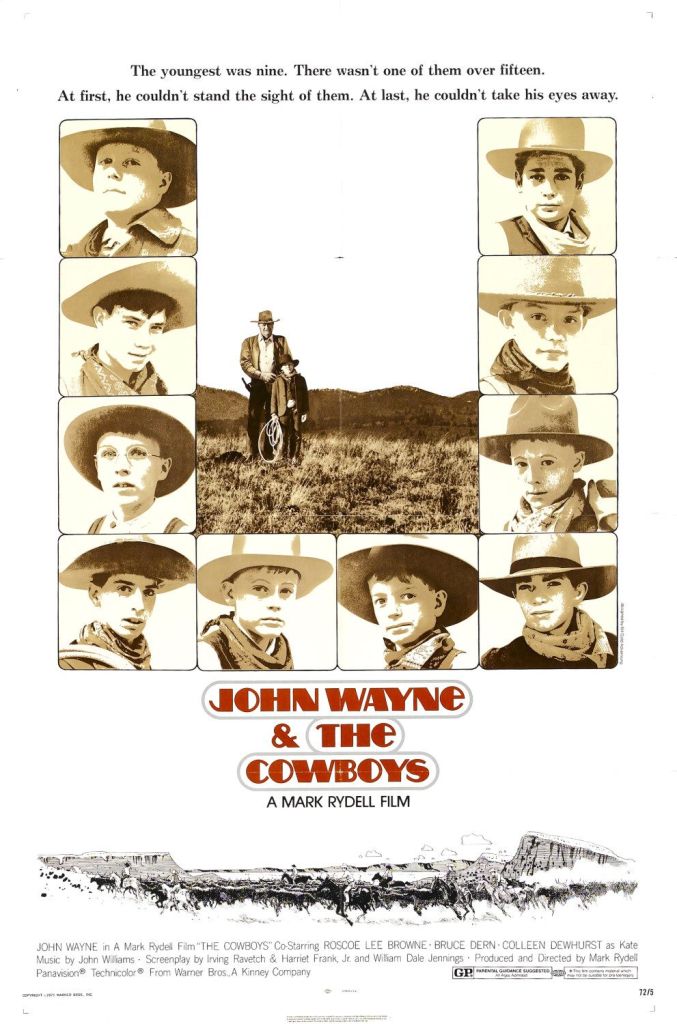
Year: 1972
Studio: Warner Bros.
Director/Producer: Mark Rydell
Writer: Irving Ravetch & Harriet Frank, Jr. and William Dale Jennings
Main Cast: John Wayne, Roscoe Lee Brown, Bruce Dern, Colleen Dewhurst
Genre: Adventure – Drama – Western
For synopsis and full cast and crew credits, visit the IMDb page
Music Credits
Music Composed and Conducted by John Williams
Music Editor: Donald Harris
Scoring Mixer: Dan Wallin
Orchestra Contractor: Kurt E. Wolff
Concertmaster: Israel Baker
Orchestrators: Herbert W. Spencer, Alexander Courage
Recorded at The Burbank Studios (Warner Scoring), Burbank, California
Recording Dates: November 15, 16, 18, 19 and December 17, 1971
Essential Discography
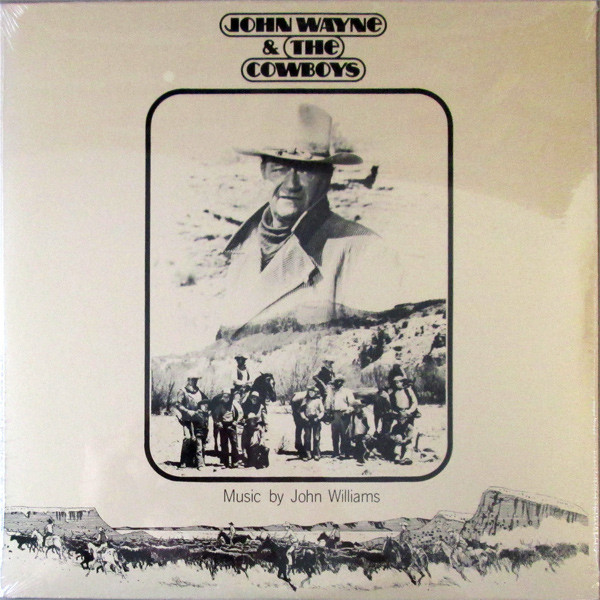
Unofficial Release – LP (1973)
Unlabeled – RC-31
Mastered at Greg Lee Processing
Unofficial “promo” pressing of the original film soundtrack

Original Motion Picture Soundtrack – CD (1994)
Varèse Sarabande VSD-5540
Produced by Robert Townson
Liner Notes: Kevin Mulhall
First official release of the original film soundtrack
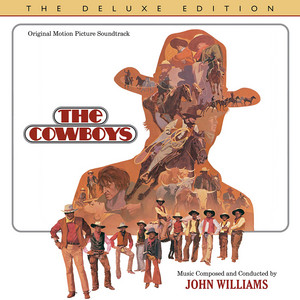
The Deluxe Edition – CD (2018)
Varèse Sarabande VCL 0618 1184 (also issued as 2-LP vinyl edition VSD00463)
Produced by Robert Townson and Mike Matessino
Mixed, Edited and Mastered by Mike Matessino
Liner notes: Mike Matessino
Complete film score presentation plus additional alternate tracks
Selected Re-recordings

Pops Around the World: Digital Overtures (1982)
Philips 6514 186 (LP) – 400 071-2 (CD)
contains “The Cowboys Overture”
Boston Pops Orchestra conducted by John Williams
Produced by George Korngold
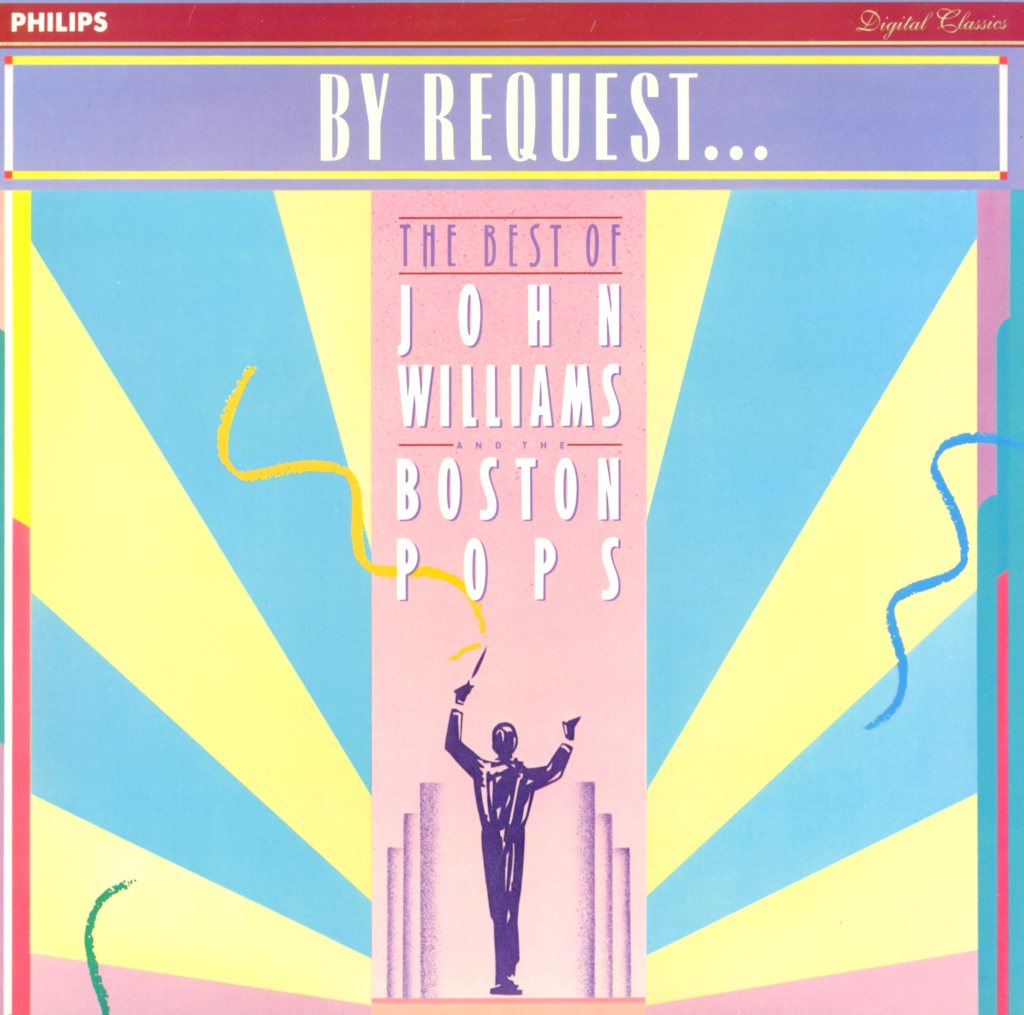
By Request… The Best of John Williams and the Boston Pops (1987)
Philips Classics 420 178-2
contains “The Cowboys Overture”
Boston Pops Orchestra conducted by John Williams

Spotlight On John Williams (2021)
Prospero Classical – PROSP0012
contains “Overture” from The Cowboys
City Light Symphony Orchestra conducted by Kevin Griffiths
Produced by Pirmin Zangerle, Basil Boehni
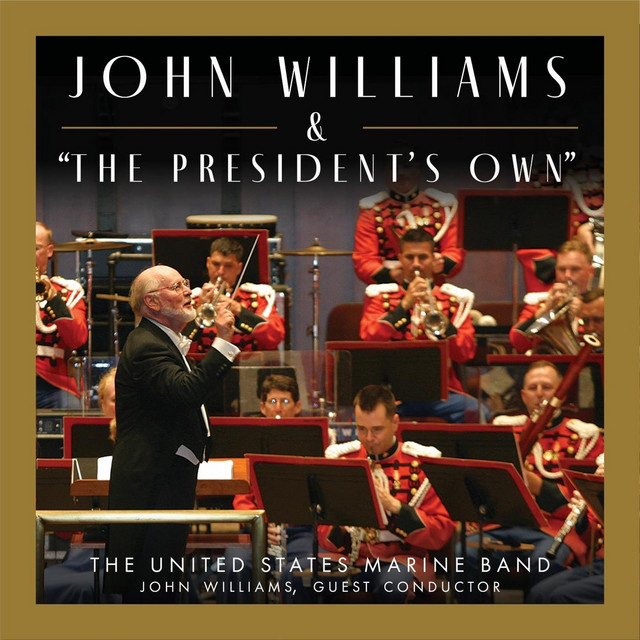
John Williams & “The President’s Own” (2022)
contains “The Cowboys Overture” (transcr. by Jay Bocook for wind band)
The United States Marine Band conducted by John Williams (live recording)
In Williams’ Words
“The Cowboys was a film directed by the very talented Mark Rydell and featured John Wayne, probably Hollywood’s quintessential cowboy.
The movie required a vigorous musical score to accompany virtuoso horseback riding and calf roping, and when my friend André Previn heard fragments of the score, he suggested that a concert overture lay hidden within the film’s music.
Several years slipped by, and each time I saw the indefatigable Previn he would ask, “Have you made an overture of Cowboys yet?”
He kept this up until 1980, when I finally worked out the piece and played it at a Boston Pops concert. Both the orchestra and the audience seemed to enjoy the music to such an extent that it has been part of our repertoire ever since.” 1

Quotes and Commentary
We worked very closely together, as I do with all composers, because I’m one of the few directors who really understands music, having been trained at Juilliard and Chicago Musical College, and they like working with me for that reason. So it becomes a very intimate relationship. Sometimes I think I make films so I can go to scoring sessions. There’s nothing quite so exciting as coming onto a scoring stage with John Williams and a hundred musicians and hearing, for example, the overture to The Cowboys, which to this day I remember as being one of the most exciting moments of my life.2
– Mark Rydell

The primary influence in the score is Aaron Copland, whose folk-based lyricism and rhythmic style – popularly known as “Americana” – set the pattern for most Hollywood western scores. While owing a debt to Copland, Williams’ music reveals how his own style – now unmistakable – was developing at the time.
Most of the major melodic material is introduced in the main title. It opens with an attention grabbing solo for French horns followed by two themes separated by a lyrical bridge for strings. There is no strict leitmotif system employed by Williams, but these youthful, energetic themes, written with pentatonic simplicity, are meant to be associated with the boys.
To underscore the scenes involving the Bruce Dern gang. Williams composed a brief, ominous motif for bass harmonica. The last major theme is for Wil Andersen, a piece that strikes emotional chords related to Andersen’s occupation, family, and ultimately Wayne himself, described this way by writer/director Peter Bogdanovich: “He brings to each new movie – good or bad – a resonance and a sense of the past – his own and ours – that fills it with reverberations above and beyond its own perhaps limited qualities.”3
– Kevin Mulhall
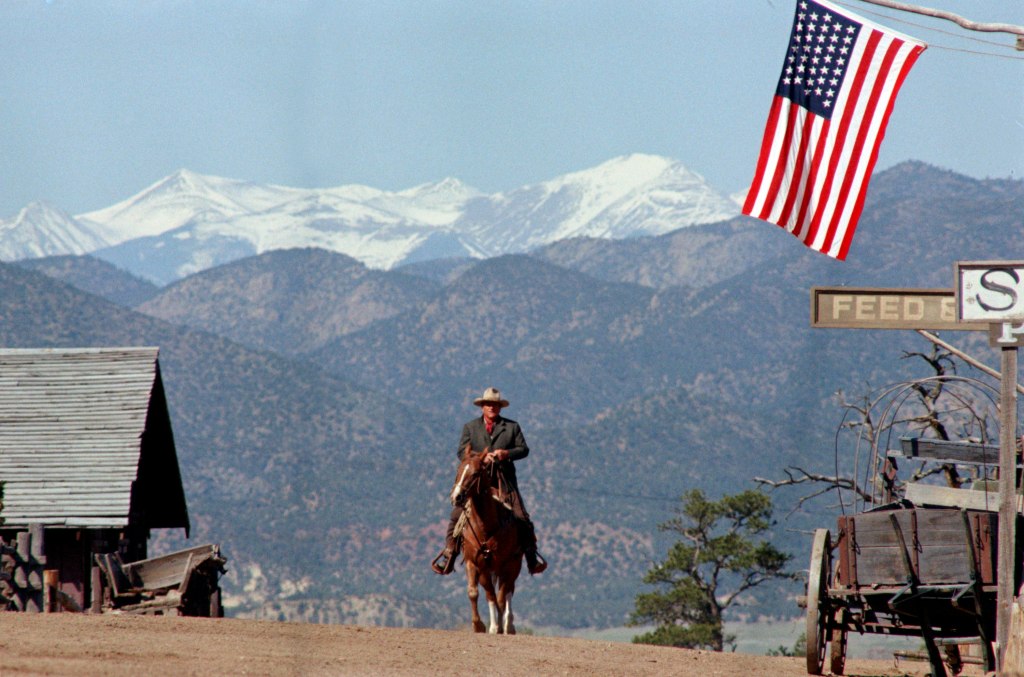
This is [John Williams’] largest-scale pre-Star Wars original work. On the surface it’s a western score in the grand tradition of Elmer Bernstein and Dimitri Tiomkin, both of whom Williams worked for as a session pianist. Like The Reivers, there is the expected nod towards Copland (a Rydell favorite) but Williams, in his unique voice, does exactly what he would later accomplish with the likes of Superman and Dracula: he transcends the story at hand and encapsulates an entire mythology. Our collective memory and images about the Old West are somehow summarized definitively in The Cowboys. The theme for Long Hair, for example, which brilliantly uses the bass harmonica and the Brazilian cuíca, feels representative not just of the story’s villain but of every danger or threat one might encounter in the Old West.
Williams worked on The Cowboys in the autumn of 1971 after completing Fiddler on the Roof in London, a musical adaptation that would earn him his first Oscar®. It was part of what might be considered an “Americana” period for the composer that began with The Reivers and encompasses The Cowboys, Cinderella Liberty (his next project with Rydell), Tom Sawyer (another Oscar®-nominated musical adaptation), The Man Who Loved Cat Dancing, Conrack (directed by Martin Ritt from a Ravetch & Frank script), The Missouri Breaks and The Sugarland Express, his first Steven Spielberg collaboration. Spielberg has often cited the influence of The Reivers and The Cowboys on his desire to work with Williams, with certain idiomatic approaches Williams was employing during that period, particularly the use of guitar and bluesy harmonica, aligning perfectly with what Sugarland required. On The Cowboys, Tommy Morgan played harmonica, and guitar was performed by Bob Bain and Howard Roberts. The orchestra numbered 69 players for the largest cues. Dan Wallin engineered the recording at the Burbank Studios scoring stage (now the Eastwood stage at Warner Bros.) on November 15-19, 1971, with one day for additional harmonica and guitar on December 17. Williams and Wallin worked together there on None but the Brave, one of the composer’s biggest projects from the ’60s, and would again on The Accidental Tourist, Indiana Jones and the Last Crusade and Stanley & Iris (another Martin Ritt film with a Ravetch and Frank screenplay).4
– Mike Matessino

Videos
John Williams conducts the Boston Pops Orchestra in The Cowboys Overture
Evening at Pops, WGBH (1980)
“Crazy Alice” scene from The Cowboys (1972)
Warner Bros. Pictures
The Cowboys Overture | Mallet Percussion Tutorial with Stephen Kehner
The Percussion Conservatory
Bibliography and References
. Elley, Derek – “The Film Composer: John Williams – Pt. 1 and Pt. 2”. Films and Filming, July/August 1978
. Matessino, Mike – “Summer’s Over: The Cowboys“. Liner notes for The Cowboys: The Deluxe Edition, Varèse Sarabande, 2018
. Mulhall, Kevin – The Cowboys – Original Motion Picture Soundtrack liner notes, Varèse Sarabande, 1994
Legacy of John Williams Additional References
John Williams and the American Sound, essay by Maurizio Caschetto
Footnotes
- Williams, introductory note to The Cowboys Overture, Hal Leonard Music Publishing ↩︎
- Quoted in Matessino, The Cowboys: The Deluxe Edition liner notes, 2018 ↩︎
- Mulhall, excerpt from The Cowboys – Original Motion Picture Soundtrack liner notes, 1994 ↩︎
- Matessino, excerpt The Cowboys: The Deluxe Edition liner notes, 2018 ↩︎
 The Legacy of John Williams