

Table Of Contents
- Film Details
- Music Credits
- Essential Discography
- In Williams’ Words
- Quotes and Commentary
- Videos
- Bibliography and References
Film Details
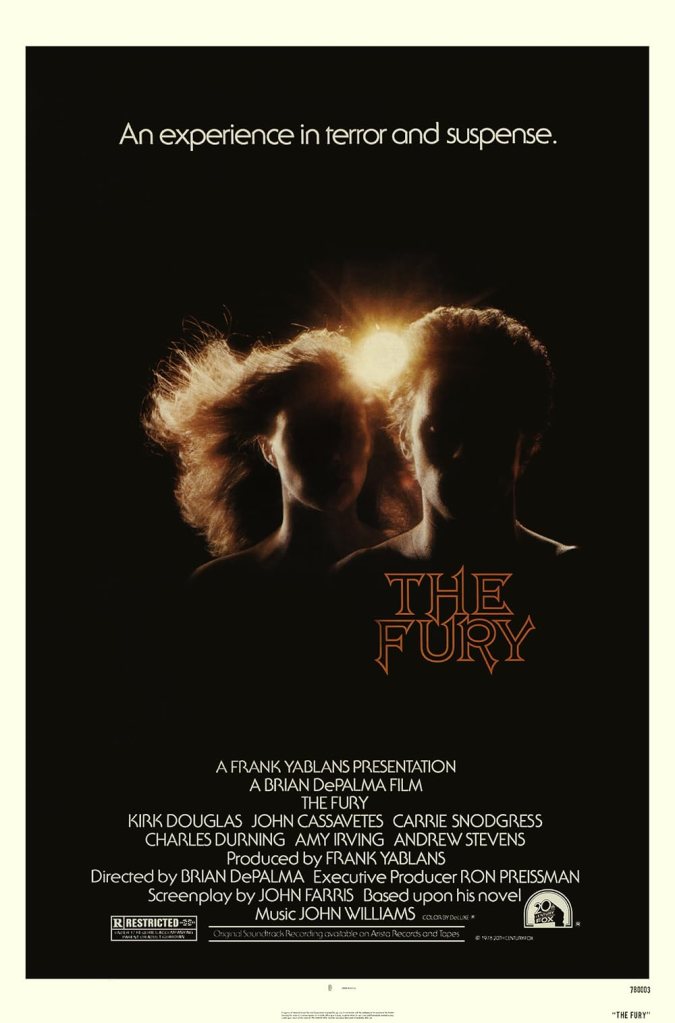
Year: 1978
Studio: 20th Century Fox
Director: Brian De Palma
Producer: Frank Yablans
Writer: John Farris, based upon his novel
Main Cast: Kirk Douglas, John Cassavetes, Carrie Snodgress, Charles Durning, Amy Irving, Andrew Stevens, Fiona Lewis, Carol Rossen
Genre: Horror – Thriller
For synopsis and full cast and crew credits, visit the IMDb page
Music Credits
Music Composed and Conducted by John Williams
“Hold You” and “I’m Tired”
Music by John Williams, Lyrics by Joseph Williams
Performed by Joseph Williams
Music Editors: Robert Raff and George Korngold
Music Supervisor for 20th Century Fox: Lionel Newman
Scoring Engineer: John Neal
Orchestra Contractor: Meyer Rubin
Concertmaster: Paul Shure
Orchestrator: Herbert W. Spencer
Recorded at 20th Century Fox Studio Scoring Stage, Los Angeles, California
Recording Dates: January 16-18, 1978
Original Soundtrack Album Credits
Performed by The London Symphony Orchestra
Leader: John Georgidas
Recording Engineer: Eric Tomlinson
Assistant Engineer: Alan Snelling
Recorded at All Saints’ Church, Tooting, London
Recording Dates: February 9 and 10, 1978
Essential Discography
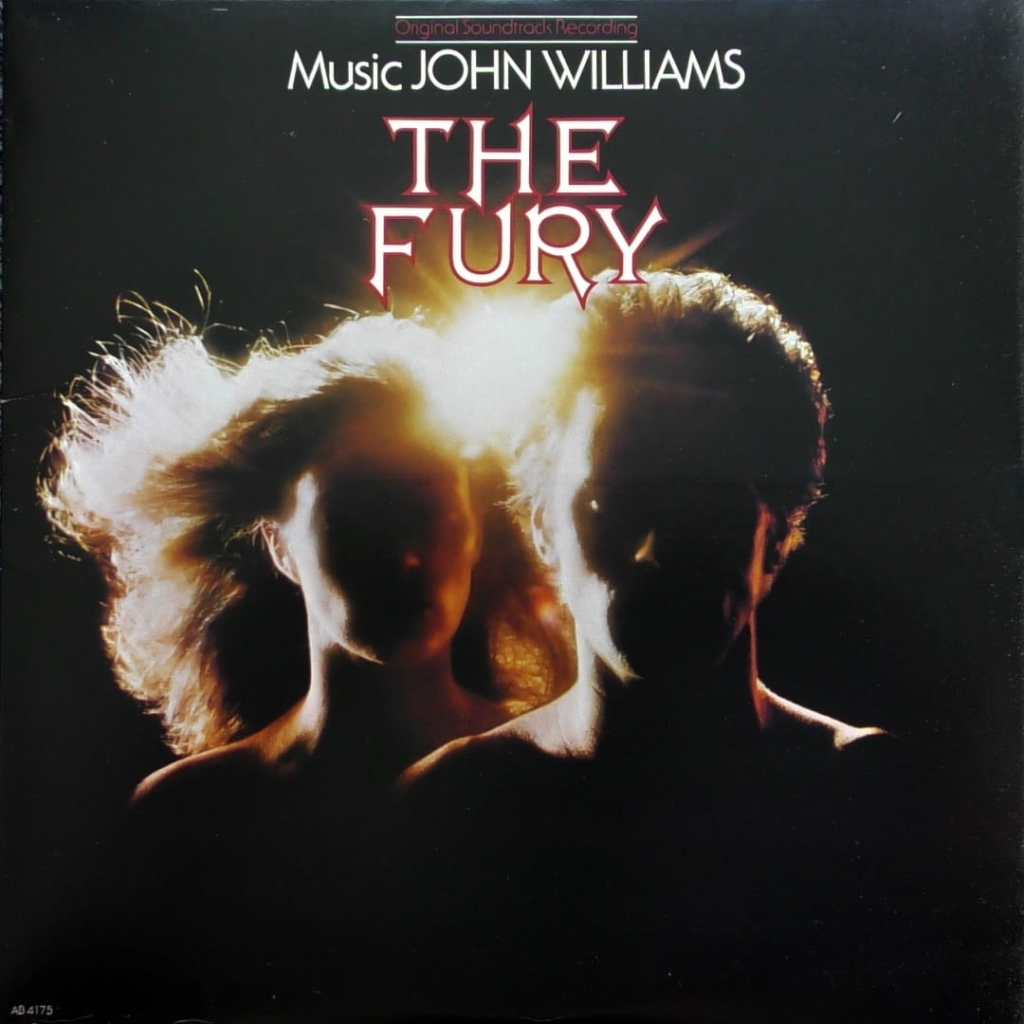
Original Soundtrack Recording – LP (1978)
Arista Records AB 4175
Re-recorded selections from the original score, arranged and expanded by the composer for album presentation.
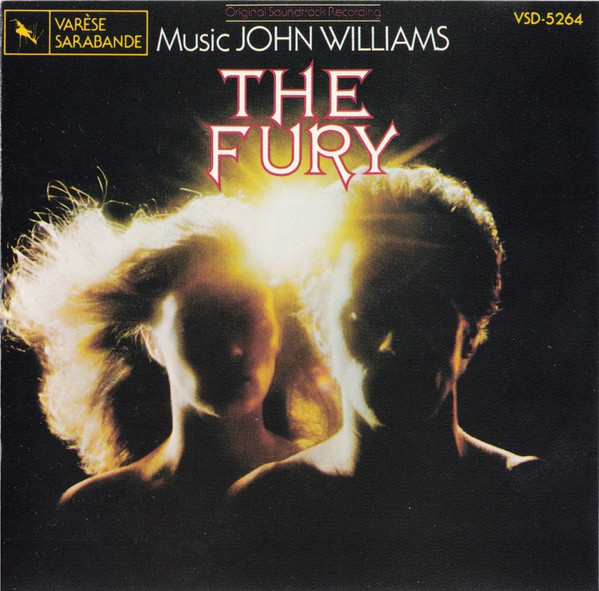
Original Soundtrack Recording – CD reissue (1990)
Varèse Sarabande VSD-5264 (also issued on Alhambra A 8914)
Prepared for release by Tom Null and Robert Townson
Liner notes: Kevin Mulhall
Compact Disc reissue with one previously unreleased additional track (“Death on the Carousel – Original Version”).
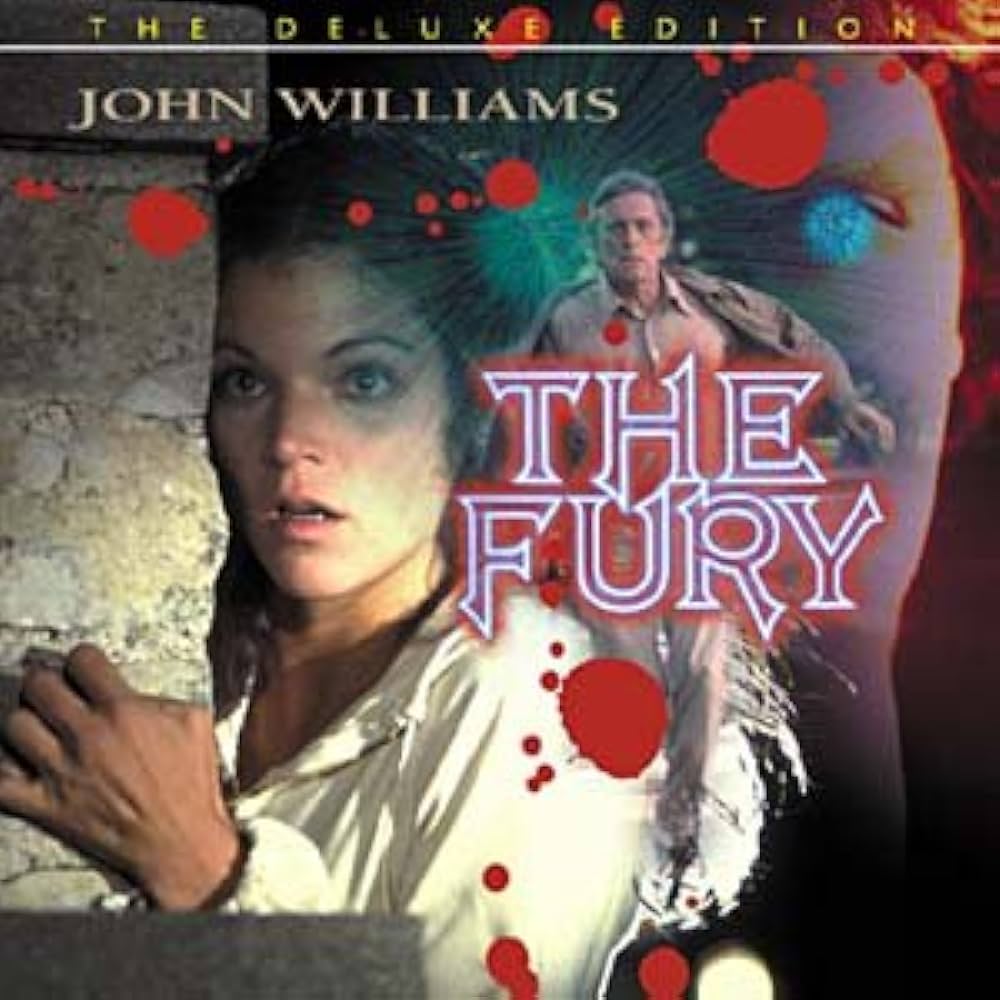
The Deluxe Edition – 2-CD set (2002)
Varèse Sarabande VCL 0702 1011
Assembled by Ron Fuglsby
Edited and Mastered by Dan Hersch
Produced by Nick Redman and Robert Townson
Liner notes: Nick Redman
Premiere release of the original film recording on Disc 1; remastered reissue of the 1978 OST album on Disc 2
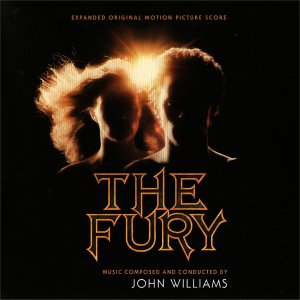
Expanded Original Motion Picture Score – 2-CD set (2012)
La-La Land Records LLLCD1238
Edited by Neil S. Bulk and Mike Matessino
Restoration and Remix by Mike Matessino
Film Score Reissue Produced by Nick Redman and Mike Matessino
Soundtrack Album Reissue Produced by Didier C. Deutsch
Liner notes: Julie Kirgo
Remastered and expanded reissue of the original film recording on Disc 1; newly remastered version of the 1978 OST album on Disc 2.
In Williams’ Words
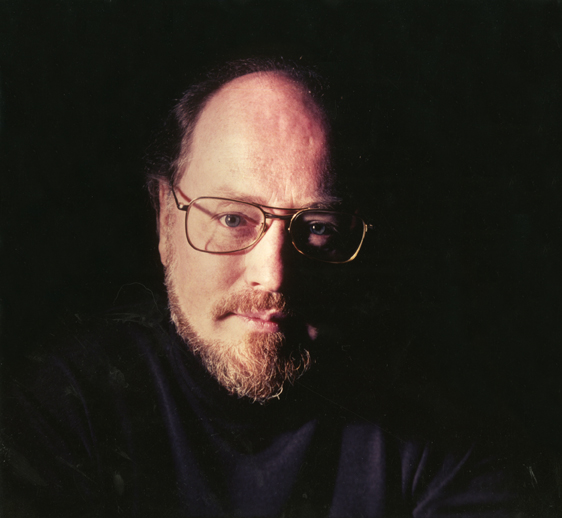
“I’d admired Brian De Palma’s last few films, particularly Obsession, which had a Bernard Herrmann score I liked very much (so like Vertigo). And I thought Brian had served Herrmann’s music better than anyone in so many years. I wrote to him and thanked him for that. Later I met him—in the interim Bernard Herrmann had died—and we talked about Benny and it turned out that Brian was a very close friend of Steven Spielberg (whose girlfriend, Amy Irving, is a star of the picture). One day Brian burst into my office at Twentieth Century-Fox and said, ‘Look, we’re doing this picture The Fury, and alas poor dear Benny isn’t with us anymore and Amy’s the star—would you do the score?’ and I said, ‘With great pleasure.’ So it was all a very close and intimate kind of thing.
[Brian] loves music; he can’t have enough of it. He loves to play it out loud, and 1 think that’s wonderful from my own point of view. He’s also a good film-maker: as I studied the timing of the film on the moviola I realised what great expertise was involved. He’s a great student of Hitchcock, of course; every shot is planned—there’s none of this willy-nilly editing from here to there. It’s rhythmic, it’s very musical in that sense; the scenes will almost play themselves. So many directors are jealous of their realistic sounds—they want exactly what was there in the scene. Not with Brian! He’ll have an opera playing in the background if he likes it! He’s theatrical, he has flair, he’s musical—all of these.”1
Quotes and Commentary
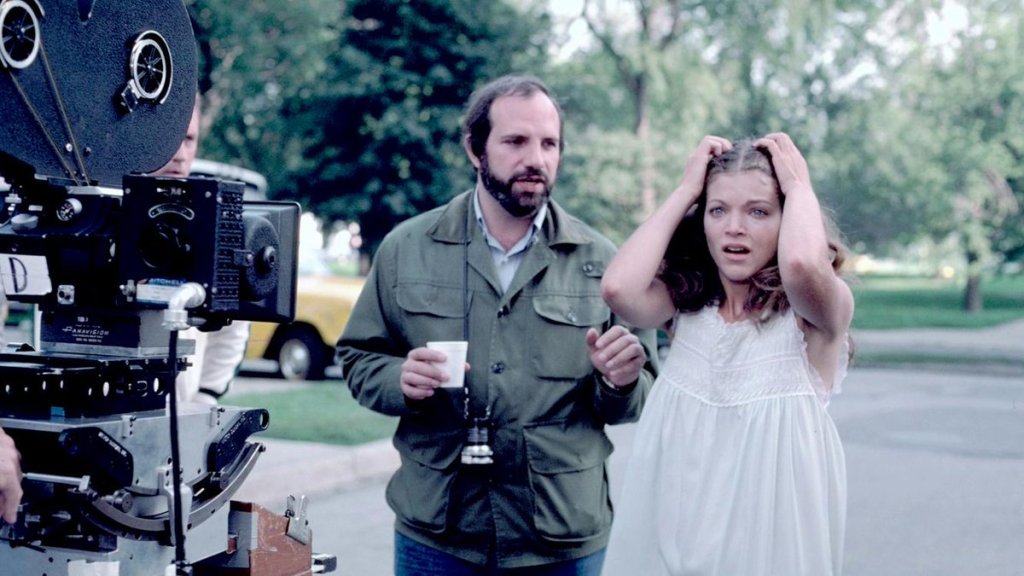
“After Carrie, I got offered another studio picture. Or a couple… Just different studios, and the best one I could get was The Fury. We suddenly had a huge budget, which was like $5 million or something. And we suddenly had all these movie stars, you know, Cassavetes and Kirk Douglas, and I said, “Wow, let’s do this. I’ve never done this before.” Plus, we had a whole bunch of charming girls in this. And even though it’s kind of not the movie you would have top on your list to make, there were a lot of things in it I really liked—I love the Johnny Williams score. I thought Johnny did a great job. That’s one of my favorite scores.” 2
– Brian De Palma
Brian De Palma’s Hitchcock-loving sensibilities had reached a crescendo with Obsession, scored by Hitch’s regular collaborator, Bernard Herrmann.
Obviously, The Fury would benefit from a musical treatment redolent of Herrmann, who had passed away in the interim. […] The approach to The Fury was to envelop the shenanigans in a trademark, mesmerizing, Herrmann-like dream-dance. The story, which involved a government agent’s supernaturally gifted son being kidnapped, was ripe and overblown. The tone of the film is writ large, operatic, unrealistic. To ground it in some semblance of real-world believability, DePalma knew the music had to instruct the audience in accepting the off-kilter, far-fetched, not to say downright ridiculous goings-on. […]
The “Main Title,” is the first statement of the composer’s prologue and epilogue; the bookending theme that conjoins The Fury and hermetically seals it in DePalma’s world. A dreamy, sinister, waltz-like dance of the dead, the theme mercilessly builds, inviting fear, excitement, expectation, and a kind of ghostly wonder. Played against simple, stark, black and white titles, the music portends much and admirably establishes the mood. Invoking Herrmann, as was, of course, Williams’ explicit brief, the woodwinds climb upwards and outwards, downwards and forwards, reaching out from the blackness like the fingers of tortured spirits. […]
“Gillian’s Escape” is the movie’s setpiece. A Hitchcockian, Herrmannesque, played-entirely-in-slow motion sequence that stands or falls utterly on Williams’s contribution. Unimaginable without, or with little, music, this nightmarish psychologically-motivated, prototypical death-dream plays as the composer’s own homage to his beloved Benny. Fusing Vertigo with Marnie, Williams lets rip and gives himself over to the unfolding nonsense with joyous aplomb. Perhaps Herrmann reappeared on the Fox stage that day, complaining bitterly, but beaming with pride as Lionel Newman’s favorite son of composition touchingly acknowledged an old master of the form.3
– Nick Redman
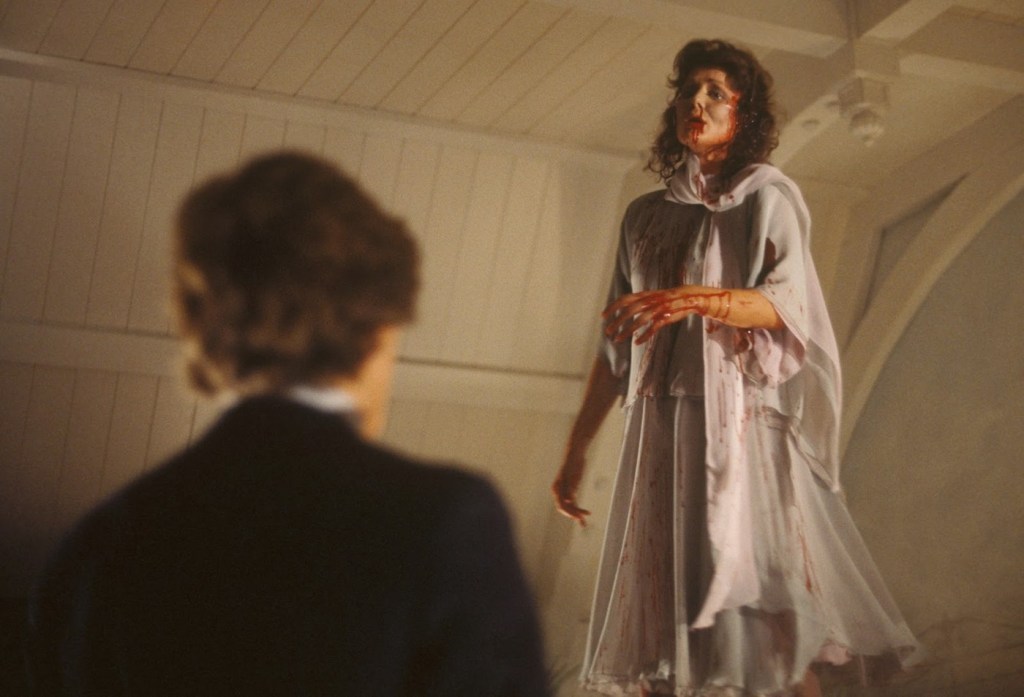
The technical execution of The Fury is outstanding – the film relies on DePalma’s hellish visual style, Richard Kline’s haunting photography, and an evocative music score by John Williams. DePalma has always acknowledged the importance of first-rate film composition, whether if be the work of
Bernard Herrmann (Sisters, Obsession), Pino Donaggio (Dressed To KIll, Carrie), or Ennio Morricone (The Untouchables, Casualties of War). Amidst the stylish trashiness of the film, John Williams has provided The Fury with a modein masterplece of dramatic scoring that ranks with the best of the 1970s.
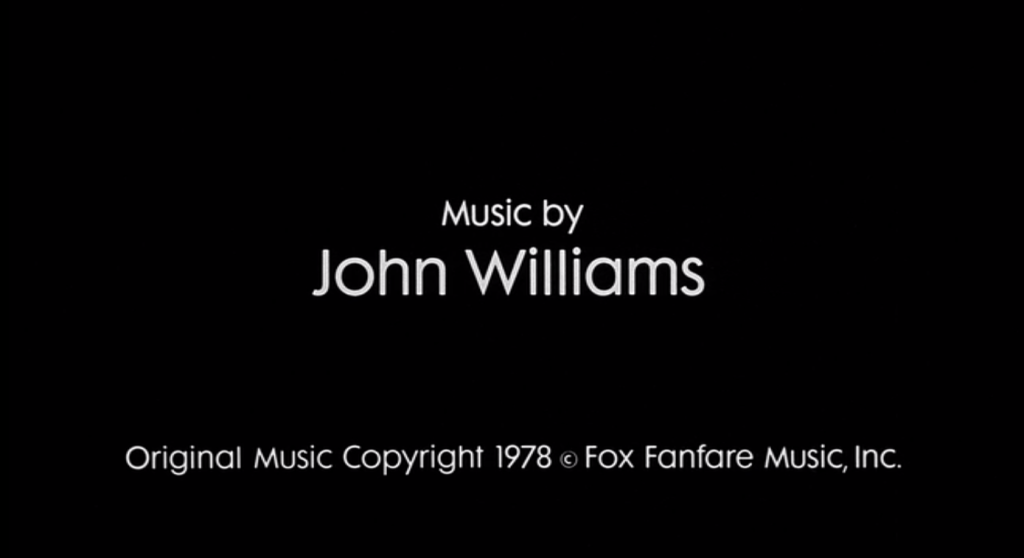
Following the 20th Century Fox logo, the “Main Title” appears on screen. Nothing is shown but the credits, and no image is required, because Williams’ opening musical statement brilliantly encapsulates the film’s dark and mysterious ambience. The music begins with an ascending and descending triad (reminiscent of Hermann’s “Vertigo*) that forms the start of a theme first intoned by the clarinet. Willlams enlarges the texture of his waltz macabre by adding more strings, kettle drum and brass. Deliberately paced, the waltz bullds in intensity as the French Horns perform a final, commanding statement that brings the three minute track – a complete piece in itself – to a powerful resolution. Williams announces that The Fury is not
an exploitation film but rather a frightful an fantastical horror story.4
– Kevin Mulhall
Videos
“Coming Down the Stairs” scene from The Fury
20th Century Fox
‘The Fury’ Retrospective
Film analysis by Film Journal Society (includes commentary on the film’s score)
Bibliography and References
. Burden, Tim – “A Movie Magic Special: John Williams and The Fury,” 2012
. Elley, Derek – “The Film Composer: John Williams – Pt. 1 and Pt. 2”. Films and Filming, July/August 1978
. Kael, Pauline – “The Current Cinema”, The New Yorker, March 20, 1978
. Kirgo, Julie – “Sounds Of The Fury”, Liner notes for The Fury – Expanded Original Motion Picture Score, La-La Land Records, 2012
. Mulhall, Kevin – liner notes for The Fury – Original Soundtrack Recording CD reissue, Varèse Sarabande, 1990
. Redman, Nick – “The Sound Of The Fury”. Liner notes for The Fury – The Deluxe Edition, Varèse Sarabande, 2002
Footnotes
- Quote from “The Film Composer: John Williams – Pt. 1 and Pt. 2”. Films and Filming, July/August 1978 ↩︎
- De Palma (2015), a documentary film by Noah Baumbach and Jake Paltrow, Empire Ward Pictures, A24 ↩︎
- Redman, excerpt from liner notes for The Fury – The Deluxe Edition, Varèse Sarabande, 2002 ↩︎
- Mulhall, excerpt from liner notes for The Fury – Original Soundtrack Recording CD reissue, 1990 ↩︎
 The Legacy of John Williams