
Table Of Contents
- Film Details
- Music Credits
- Essential Discography
- Quotes and Commentary
- Videos
- Bibliography and References

Film Details
Year: 1973
Studio: Metro-Goldwyn-Mayer
Director: Richard C. Sarafian
Producers: Martin Poll, Eleanor Perry
Writer: Eleanor Perry, based upon the novel by Marilyn Durham
Main Cast: Burt Reynolds, Sarah Miles, Lee J. Cobb, Jack Warden, George Hamilton, Bo Hopkins, Robert Donner
Genre: Western – Drama – Romance
For synopsis and full cast and crew credits, visit the IMDb page
Music Credits
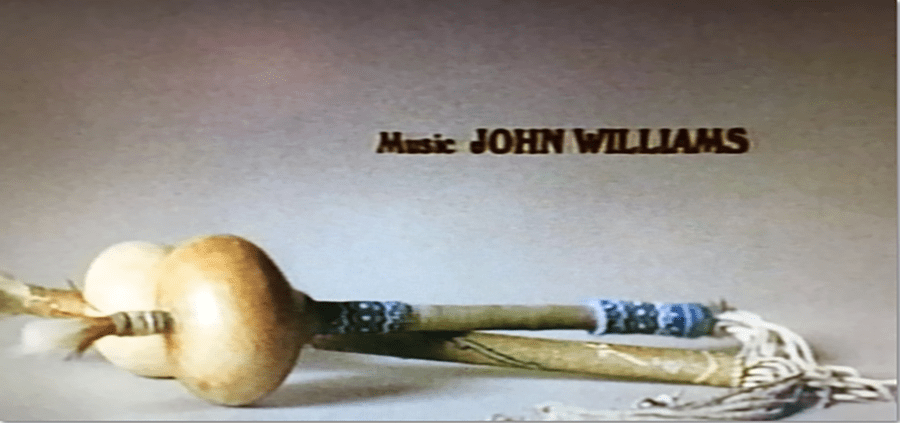
Music Composed and Conducted by John Williams
Music Editor: William Saracino
Scoring Mixer: Aaron Rochin
Orchestra Contractor: Meyer Rubin
Concertmaster: Israel Baker
Recorded at M-G-M Studios Scoring Stage, Culver City, California
Recording Dates: June 14 and 15, 1973
Essential Discography

Original Motion Picture Soundtrack – Limited Edition (2002)
Film Score Monthly Vol.5, No.4
Produced by Lukas Kendall
Remixed by Mike McDonald
Mastered by Doug Schwartz
Premiere release of the original motion picture score; also includes unused score by Michel Legrand
Quotes and Commentary
Composer Michel Legrand had been hired to score the film by its original director, Brian Hutton (Where Eagles Dare). Legrand wrote his music in Paris in May of 1973 and traveled to Hollywood the first week of June to record the score. It quickly became apparent to the director and the studio that the composer’s vision for the film did not match their own. Director Richard Sarafian, in consultation with studio executives James Aubrey and Daniel Melnick, met with Legrand to inform him that they felt they needed a different type of score for the film, so he was being let go. The same day they interviewed several composers (including Miklós Rózsa) and hired John Williams, who spotted the film with Sarafian the next day. Williams, in an amazing feat, wrote nearly 40 minutes of music for the film in less than a week.
John Williams had previously scored three westerns: The Rare Breed, a 1966 James Stewart film; the 1966 remake of The Plainsman, originally intended as a TV movie; and 1972’s The Cowboys, a John Wayne film directed by Mark Rydell that helped put Williams on the map. The composer would score one more western after Cat Dancing, the quirky 1976 Marion Brando-Jack Nicholson vehicle The Missouri Breaks. These scores range from the traditional approach of The Rare Breed, to the endlessly melodic, larger-than-life music for The Cowboys, to the unique Missouri Breaks score, written for a chamber ensemble of folk instrument, electric bass and keyboards.
For The Man Who Loved Cat Dancing, the composer employed a medium-sized orchestra (42 musicians at its largest) that mixed harmonica, banjo and guitars with strings, keyboards, percussion and a handful of winds: flutes, clarinet, trumpet and horns. The musical approach blended contemporary popular elements with traditional American gestures and all-purpose suspense scoring.
While one might expect a sparsely spotted, monothematic approach considering the severe time constraints under which the music was composed, Williams supplied three full-fledged themes, along with several recurring motives and some memorable stand-alone set pieces. The principal melody is a love theme for Jay and Catherine, utilized throughout the score. Williams also provided two contrasting themes: one loosely associated with Jay Grobart (introduced after the love theme in the main title and used for the end credits) and another for Catherine.1
– Jeff Eldridge

After the release of the film, John Williams retooled the love theme from The Man Who Loved Cat Dancing as the verse of a song called “Dream Away.” The composer also added a chorus section and singer-songwriter Paul Williams (no relation) provided the lyrics. The song was recorded by Paul Williams and included in his 1974 album Here Comes Inspiration, with John Williams conducting his own orchestral arrangement.
“Dream Away” would also be recorded in 1973 by none other than Frank Sinatra for his comeback album Ol’ Blue Eyes is Back, with a different arrangement penned by Sinatra’s regular collaborator Don Costa.
Videos
Jay and Catherine connect in The Man Who Loved Cat Dancing, M-G-M/Warner Archives, 1973
Main Title from The Man Who Loved Cat Dancing, M-G-M/Warner Archives, 1973
Bibliography and References
. Canby, Vincent – The Man Who Loved Cat Dancing: Review,” The New York Times, June 29, 1973
. Champlin, Charles – “Movie Review: Dancing a Slightly Off-Trail Western,” Los Angeles Times, June 27 1973
. Eldridge, Jeff – “The History of Cat Dancing,” The Man Who Loved Cat Dancing – Original Motion Picture Soundtrack liner notes, Film Score Monthly, 2002
Legacy of John Williams Additional References
John Williams and the American Sound, essay by Maurizio Caschetto
Footnotes
- Eldridge, The Man Who Loved Cat Dancing – Original Soundtrack liner notes, 2002 ↩︎
 The Legacy of John Williams