

Table Of Contents
- Film Details
- Music Credits
- Essential Discography
- Awards
- In Williams’s Words
- Videos
- Bibliography and References
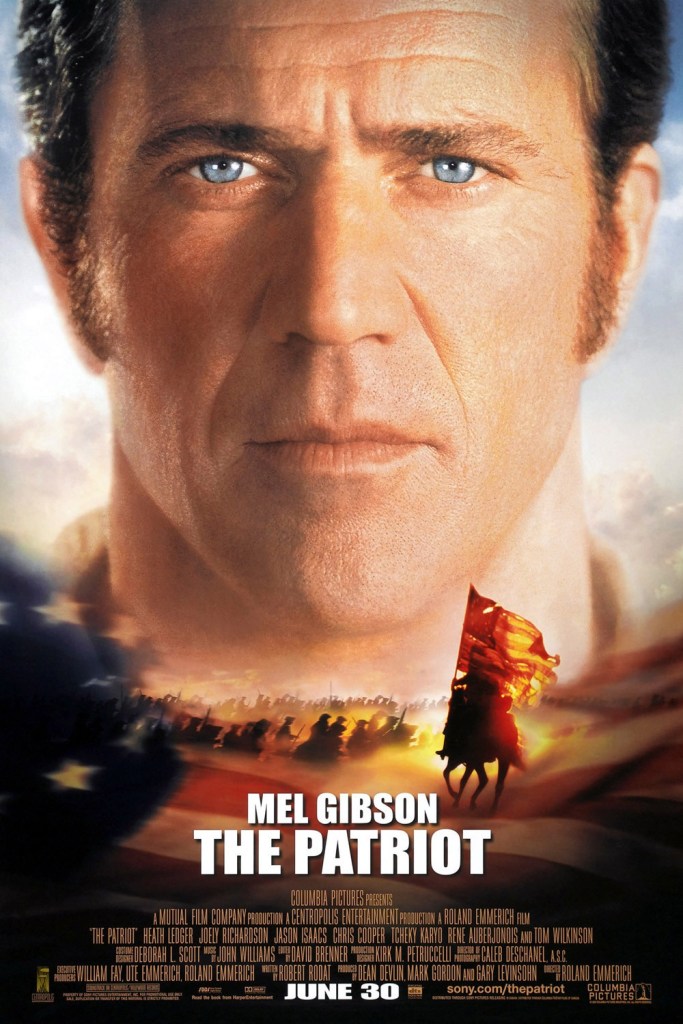
Film Details
Year: 2000
Studio: Columbia Pictures
Director: Roland Emmerich
Producers: Dean Devlin, Mark Gordon, Gary Levinsohn
Writer: Robert Rodat
Main Cast: Mel Gibson, Heath Ledger, Joely Richardson, Jason Isaacs, Chris Cooper, Tcheky Karyo, Rene Auberjonois, Tom Wilkinson
Genre: Action – Drama – History – War
For synopsis and full cast and crew credits, visit the IMDb page
Music Credits
Music Composed and Conducted by John Williams
Violin Solos by Mark O’Connor
Music Editor: Ken Wannberg
Scoring Mixer: Shawn Murphy
Orchestra Contractor: Sandy DeCrescent
Music Preparation: JoAnn Kane Music Service
Orchestrators: John Neufeld, Mark McKenzie
Concertmaster: Endre Granat
Assistant Music Editor: Peter Myles
Assistant Engineer: Sue McLean
Recorded at Barbra Streisand Scoring Stage, John Williams Music Building, Sony Pictures Studios, Culver City, California
Recording Dates: May 6, 13, 15-20, 2000

Essential Discography
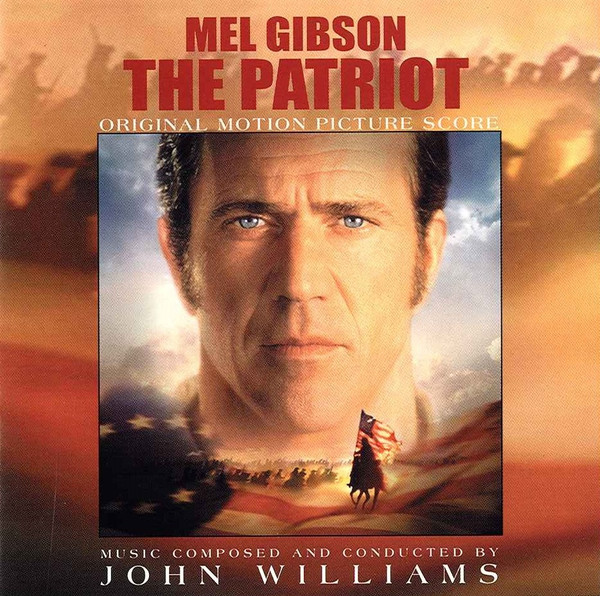
Original Motion Picture Score (2000)
Hollywood Records – HR-62258-2
Album Produced by John Williams

Remastered And Expanded Edition 3-CD set (2025)
Intrada Special Collection Vol. 504
Produced, Edited and Mastered by Mike Matessino
Executive Producers: Douglass Fake, Roger Feigelson
Liner notes: John Takis
Film score presentation (plus alternate and source music cues) on Disc 1 and 2; remastered soundtrack album program on Disc 3
Selected Re-recordings

Lights, Camera… Music! Six Decades of John Williams (2017)
BSO Classics – 1704
contains “Theme” from The Patriot
Boston Pops Orchestra conducted by Keith Lockhart

John Williams Reimagined (2024)
Warner Classics – 5054197942334
contains “The Patriot,” flute and piano transcription by Simone Pedroni
Awards and Nominations
Academy Awards
Nomination: Best Original Score
In Williams’ Words
“I never had really done a historical piece exactly like that: an old-fashioned action-melodrama where the orchestra can rage and storm and make theatrical gestures that other types of films wouldn’t quite accommodate… At the end of the film, we had 16 piccolos doing some flairs and flourishes in the spirit of the time. And Mark O’Connor played his violin in a way that is so quintessentially American, in the Appalachian tradition, this pure sound that is inescapably attached to that particular geography and that period.” 1
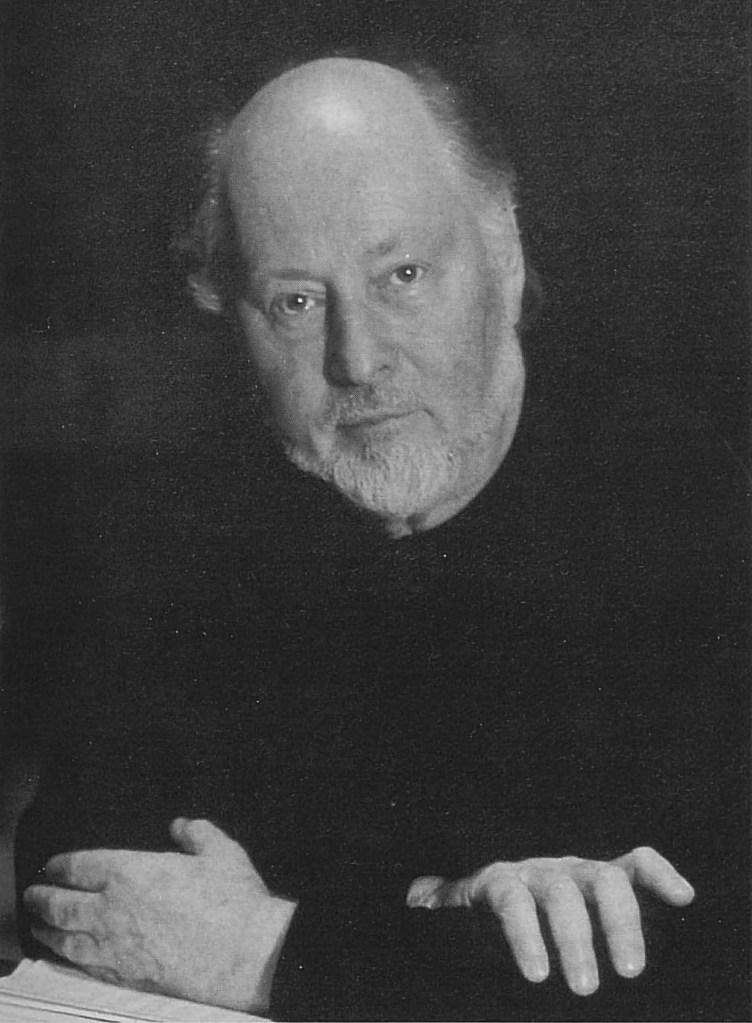
“I didn’t know Dean Devlin and Roland Emmerich, but I immediately discovered that they were enormously agreeable and likeable men. There was a wonderful enthusiasm about what they were doing. The American Revolution was a great event, but it seems most American schoolchildren don’t know much about it. I thought it would be interesting to do because of that.
“Also from a musical point of view, there were the demands of a large-scale action canvas. It’s a big assignment and a daunting job. It requires a lot of music. I’m not erudite on the topic of 18th century American music, although I know that William Billings was the most popular composer at the time. When I was at the Boston Pops we used to play some of his music. I didn’t use any of Billings, but some of the folkloric thematic material I wrote was in the vein of what memory told me was the popular idiom of the day, adapted for the orchestra.
“Although I didn’t use Mark O’Connor’s violin a lot, I did want it in the end
scene. It was the texture of American music at the time that I wanted to leave
moviegoers with. His sound has, for me, a very genuine and true ring of a
development of the country music of Appalachia.
“I had a fairly generous amount of time to write the score – six or eight weeks of writing, a week or more of recording, another month of dubbing. It was in the area of 100 minutes of music. I had around 90 players, plus 16 piccolos. Jim Walker, who is very well known, did much of the piping and fluting and all the ethnic wind instruments.
“It requires a good deal of stamina to do these things. It gives the orchestra a chance to play out in full. We had a good blow. We recorded at Sony in Hollywood. Later, I played it in concert at the Hollywood Bowl and at Tanglewood, and we brought in 16 Middlesex Volunteers with their piccolo fifes to play with us. It sounded grand.” 2
Quotes and Commentary
From his relationship with the Tanglewood Music Festival to his long association with the United States Marine Band, John Williams has often been celebrated as a quintessentially American composer. Indeed, his earliest film score (for the 1952 travelogue You Are Welcome) was written during his military service, when he was an arranger for the 596th Air Force Band. After his return to civilian life, Williams honed his craft across a broad spectrum of American stories, from westerns to military pictures to contemporary dramas. Over time, on films such as The Reivers, The Cowboys and Tom Sawyer, Williams developed a fresh Americana voice—one that paid homage to past masters such as Aaron Copland and Leonard Bernstein while incorporating his own musical sensibilities, in particular his intricate harmonic language. The Americana of John Williams is a contrast of bold dramatic gestures and subtle emotional shifts, with a poignancy that has enriched both his blockbusters (think of the Kansas scenes in Superman)
and his intimate historical portraits for American directors like Oliver Stone (Born on the Fourth of July, JFK and Nixon), John Singleton (Rosewood) and Steven Spielberg (most pertinently, Amistad, Lincoln and the documentary The Unfinished Journey).
Yet film scores alone did not define Williams on the American stage. A major turning point in his career came in 1980 when he accepted a highly visible appointment as Principal Conductor of the Boston Pops Orchestra. For a full 14 seasons (and afterward as Conductor Laureate) he led that august ensemble in rousing performances of both his own work and popular American standards. […] By the end of the decade, Williams had launched an enduring relationship with the Sony Classical record label, which led to yet more exposure in the form of popular albums like I Love a Parade, Summon the Heroes and American Journey. A regular feature of these concert albums was the incorporation of commissioned works such as Williams’ iconic “Olympic Fanfare and Theme” (the first of several compositions he wrote for the Olympic Games). […] In contrast to his more solemn and introspective Americana sound, the tone of these commemorative works tended to be jubilant and celebratory. This more “extroverted” style did not often cross into Williams’ film work, with SpaceCamp in 1986 being a notable exception.
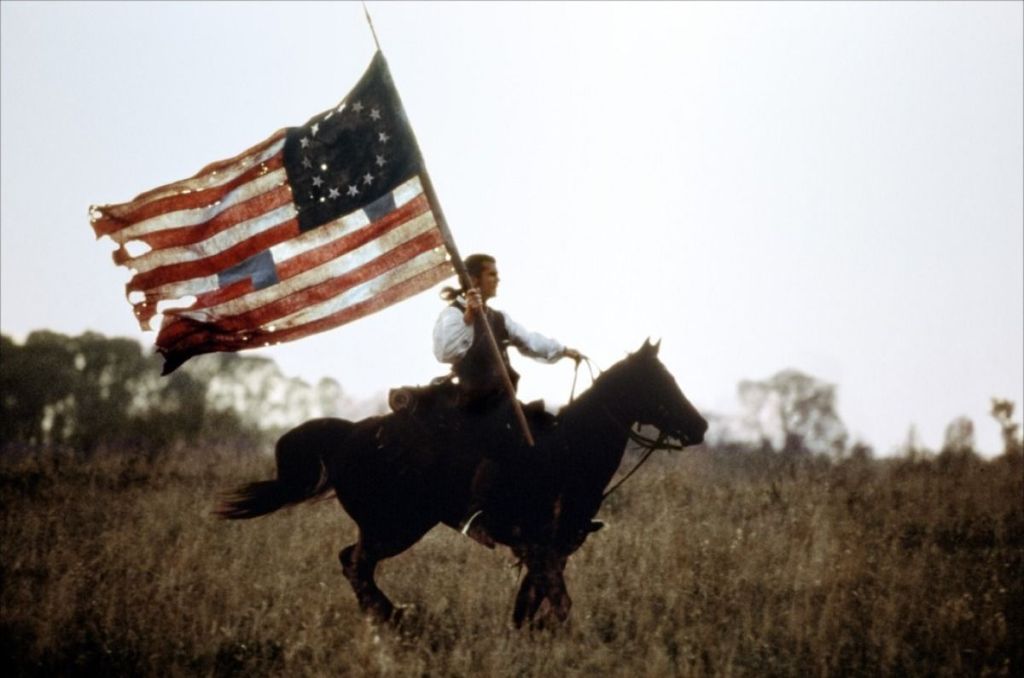
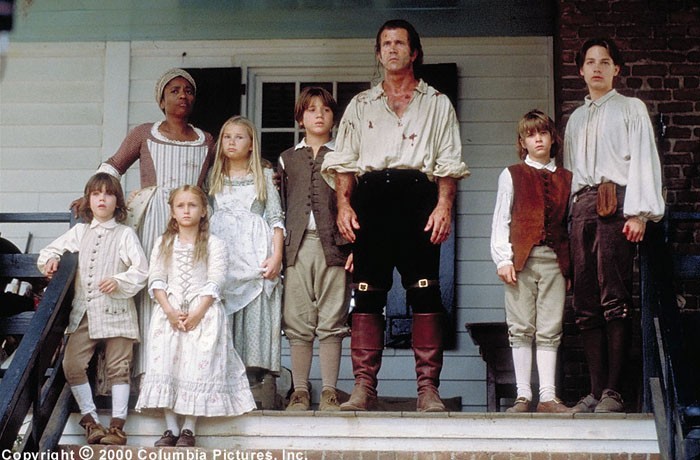
In June of 2000, however, Columbia Pictures released a film that gave Williams an opportunity to bring the whole spectrum of his American legacy to bear. Part intimate character study and part rousing adventure story, The Patriot was an epic drama of the American Revolution starring Mel Gibson and directed by Roland Emmerich. It was also Williams’ first score for a film that reached so far back into American history. 3
– John Takis
Videos
“Ann Recruits the Parishoners” scene from The Patriot
“Martin Sets the Trap” scene from The Patriot
Suite from The Patriot
Film Symphony Orchestra conducted by Constantino Martinez-Orts
Bibliography and References
. Bennett, Ray – “The Composers,” The Hollywood Reporter Film and TV Music Special Issue, January 2001
. Burlingame, Jon – “Cream of the crop,” Variety, January 17, 2001
. Dyer, Richard – “John Williams listens to the song of a tree,” The Boston Globe, July 2, 2000
. Michie, Chris – “Scoring The Patriot,” Mix Online, July 2000
. Takis, John – Liner notes for The Patriot Remastered and Expanded Soundtrack, Intrada Special Collection, 2025
Legacy of John Williams Additional Resources
. The Patriot Expanded Edition Exclusive Listening Preview, podcast episode, 2025
. John Williams and the American Sound, essay by Maurizio Caschetto
Footnotes
 The Legacy of John Williams