

Table Of Contents
- Film Details
- Music Credits
- Essential Discography
- Awards and Nominations
- In Williams’ Words
- Videos
- Bibliography and References
Film Details
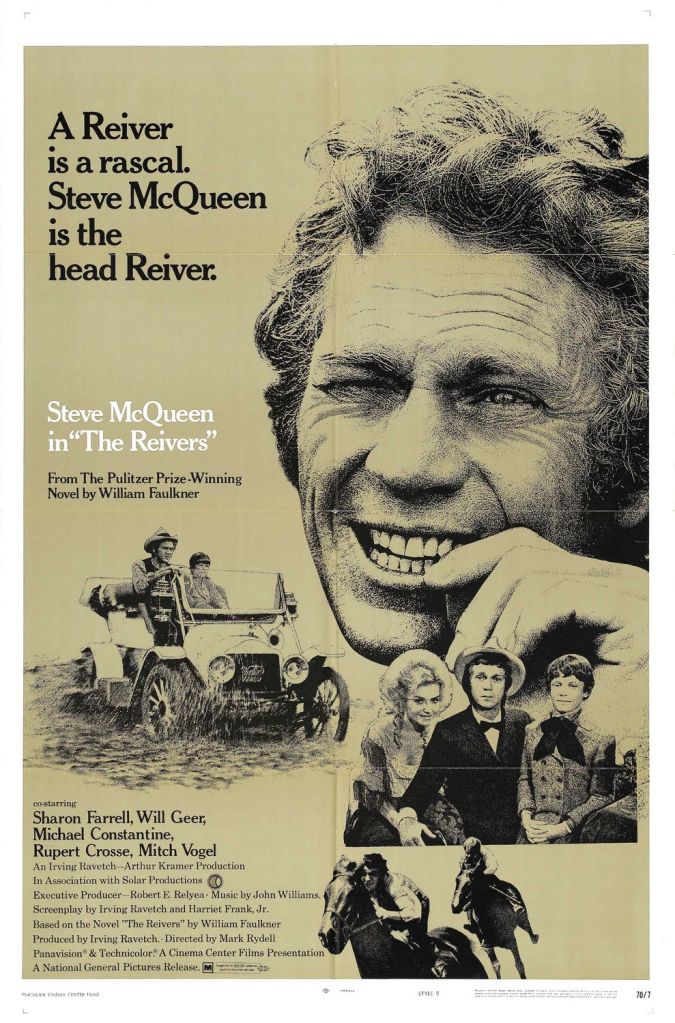
Year: 1969
Studio: Cinema Center Films/National General Pictures
Director: Mark Rydell
Producer: Irving Ravetch
Writers: Irving Ravetch and Harriet Frank, Jr., based upon the novel by William Faulkner
Main Cast: Steve McQueen, Sharon Farrell, Will Geer, Michael Constantine, Rupert Crosse, Mitch Vogel
Genre: Comedy – Drama
For synopsis and full cast and crew credits, visit the IMDb page
Music Credits
Music Composed and Conducted by John Williams
Music Editor: Robert Takagi
Engineer: Milton Cherin
Orchestrator: Herbert W. Spencer
Orchestra Contractor: Herman Berardinelli
Concertmaster: Israel Baker
Recorded at CBS Studio Center, Studio City, California
Recording Dates: September 29 and 30 & October 1, 7 and 8, 1969
Essential Discography
Original Soundtrack Album and Expanded Reissues

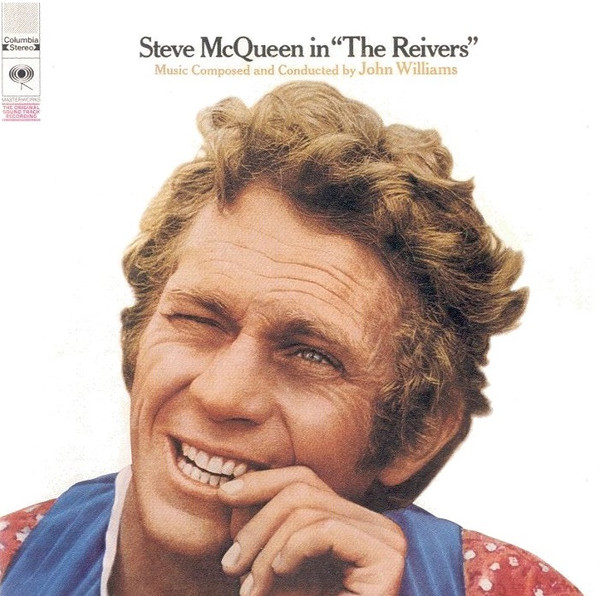
Original Sound Track Recording – LP (1970)
Columbia Masterworks – OS 3510
Album Produced by Thomas Z. Shepard
Sleeve Notes by Charles Burr

Original Motion Picture Soundtrack – CD Reissue (1990)
Masters Film Music – SRS 2009
Reissue Produced by Robert Townson
Liner Notes: Kevin Mulhall
Original Motion Picture Soundtrack – CD Reissue (1995)
Legacy/Columbia – CK 66130
Liner Notes: Didier C. Deutsch
Reissue with 1 unreleased track

Remastered And Expanded Original Soundtrack 2-CD (2025)
La-La Land Records LLCD 1659
Produced, Edited and Mastered by Mike Matessino
Liner Notes: John Takis
Contains film score presentation (plus source cues and alternates) on Disc 1; remastered original soundtrack album and suite for narrator and orchestra on Disc 2.
Selected Re-recordings
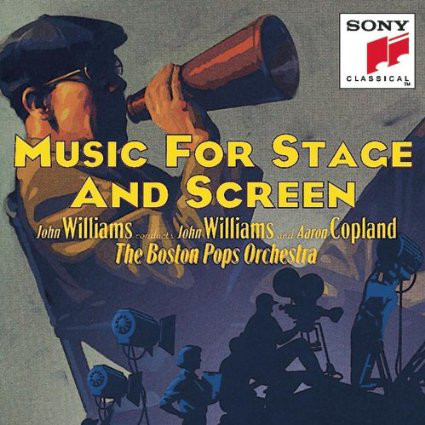
Music For Stage And Screen (1994)
Sony Classical SK 64147
contains “The Reivers (Suite for narrator and orchestra)”
Boston Pops Orchestra conducted by John Williams
Burgess Meredith, narrator
Produced by Thomas Z. Shepard
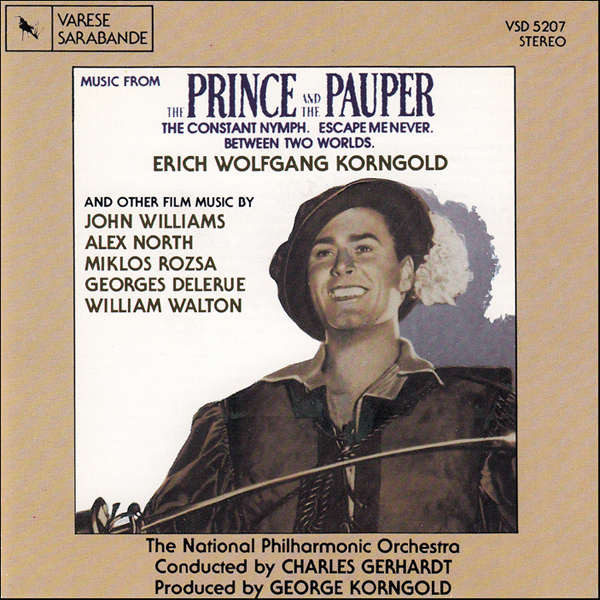
The Prince And The Pauper (And Other Film Music) (1989)
Varèse Sarabande – VSD-5207
contains “Suite from The Reivers“
National Philharmonic Orchestra conducted by Charles Gerhardt
Produced by George Korngold
Awards and Nominations
Academy Awards
Nomination: Best Original Score – For a Motion Picture [Not a Musical]
In Williams’ Words
“With regard to the inspiration one may detect in The Reivers score, I think it must have had to do with the film itself since I work to a final print and not a story board. It never occurred ot me to write down or up to the film. I find all of Mark Rydell’s pictures especially musical and, since Rydell himself is something of an amateur musician, the question as to what kind of music was arrived at mutually. Rydell and I have always collaborated very comfortably. The banjo parts, by the way, were both composed and improvised – about 50% each since the banjo player was not an expert reader. Lastly, the fact that the little boy in the film looked exactly like my youngest son at the time of the creation of the movie may have had something to do with the affinity I felt for the film!” 1
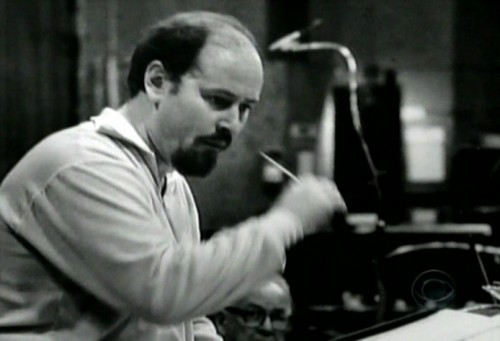
“I just love The Reivers. Mark Rydell directed the film beautifully and it starred the late Steve McQueen, who embodied so many of these kind of characters of romantic, let’s say, 19th century Americanism that’s so beautifully depicted in the film. And of course we had Burgess Meredith doing the narration—he was unequalled as a performer and in the creation of this kind of atmosphere. It was a great experience. These are all ‘original folk tunes’, if I can put it that way, that I fashioned in what was a very hurried period of putting the score together. It’s all original to the film, but it comes out of the great tradition of these other folk tunes that we have.” 2
Quotes and Commentary
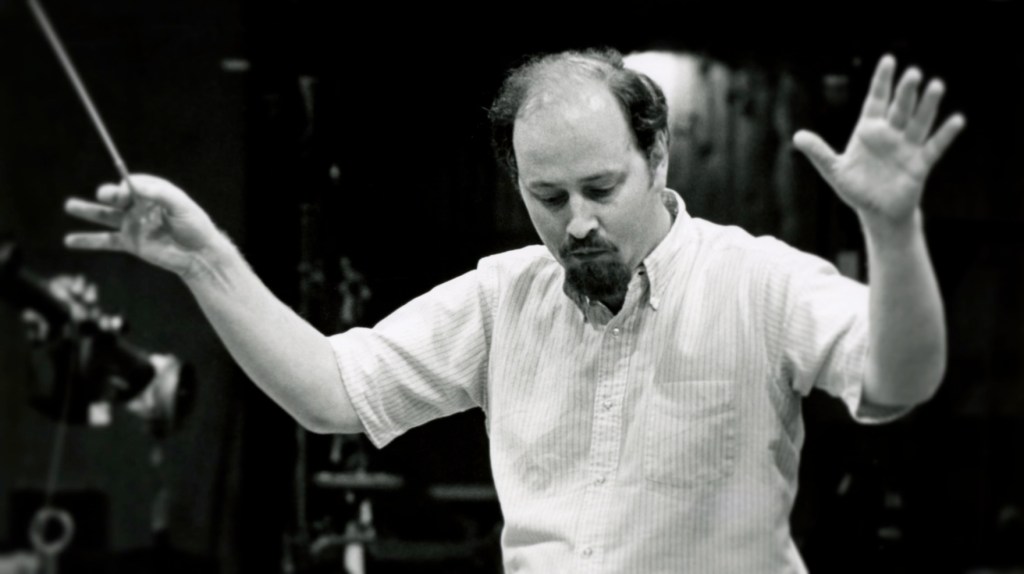
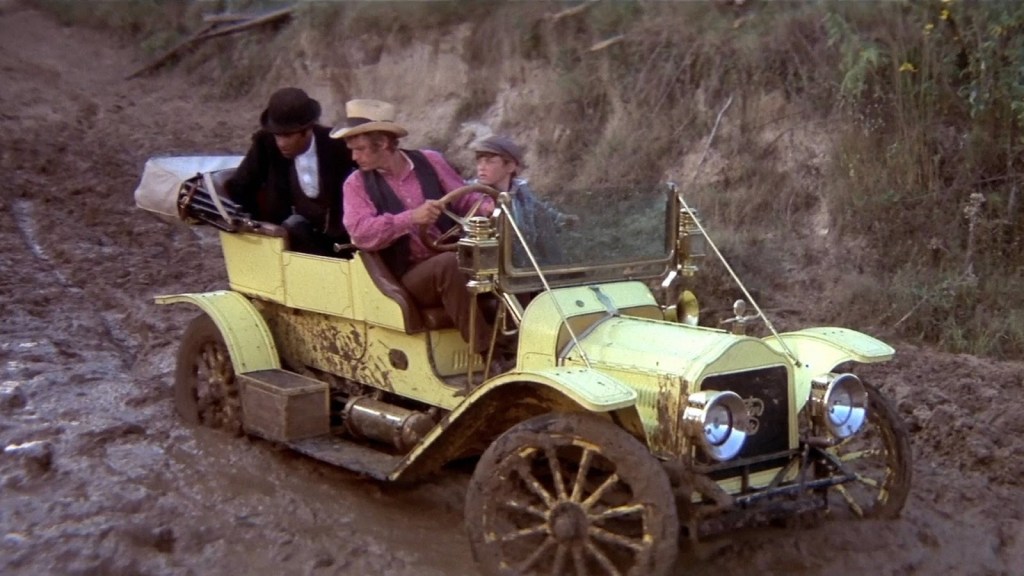
The score for The Reivers was written by John Williams—with just a little help from Stephen Collins Foster, inasmuch as “Camptown Races” is heard—in the film—loud and clear, bawled at the top of the voices of the three merry car thieves as they barrel through the back roads of Mississippi.
But let it be said that John Williams, as this film proves, can write for banjo with the best there is or ever was, and if Mr. Foster were alive today he’d be looking to his laurels.
The score sounds so fresh it’s as if it were written and conducted with a fishing rod in country air. You listen and breathe deeper.
It’s a subtle score, with a lot of different scenes to deal with, a lot of different subjects and emotions-from the hysteria of a horse race to the mystery of a 12-year-old boy considering in his soul what a woman is, from the look of her and certain newly gained information. The gamut runs all the way from kids skinny-dipping in the old fishin’ hole to Saturday night in a house of joy.
How John Williams has arranged to give a consistent sound, unbroken sonority, to all this is his own business and his secret.
Whatever else it is, it is a high art that returns the pleasure of this film with every listening.3
– Charles Burr
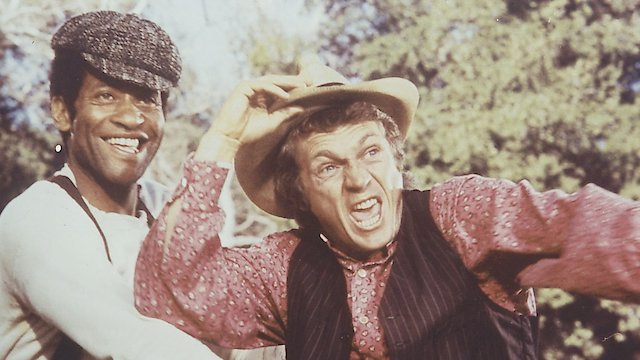
To convey the rural setting of the story and the picaresque adventures of its protagonists, the film needed a robust, flavorful score. John Williams obliged with a series of cues that displayed the right amount of sweet innocence and evidenced great signs of originality, even as it paid dutiful homage to Aaron Copland. […]
The score was nominated for an Oscar that year, the first time the Academy officially recognized the skills of the composer, previously nominated only as an arranger.
In the Williams canon, The Reivers has become an important milestone, and remains one of his finest lyrical achievements. Working for the first time with Mark Rydell, a director known for his understanding of the role played by music in a film, the composer used the complete range of his symphonic voice and came up with a score filled with spontaneity, freshness, and vitality, all closely matching the moods of the novel and its screen incarnation.
Reviewing the film in New York magazine, Judith Crist called it “one to warm the old nostalgia, give the heartstring a gentle tug and, above all, fill one with a joyous sense of life and laughter.” Her comments would apply to the score as well.4
– Didier C. Deutsch
The Reivers presented Williams with an early opportunity to develop the
Americana sound he would explore further on The Cowboys, Tom Sawyer,
Superman and other projects—a dimension of his oeuvre that helped to build
his reputation as “America’s composer.” The sound he created for The Reivers
proved an ideal match for Faulkner’s blend of playful humor and vividly drawn prose, conjuring the warm glow of an “endless summer” as experienced by a child on the cusp of adolescence. His melodies are colorful and long-lined, enlivened with the intricate contrapuntal writing that was already a signature element of his voice. To capture the flavor of the period, Williams augments his orchestra with guitar, banjo, fiddle, harmonica, mouth harp and honky-tonk piano, and his traditional orchestral cues are interwoven with passages rooted in old-time music and early jazz. Significantly, the bluegrass-inflected passages, being closer to the folk music of the American heartland, accompany rural scenes while Memphis (with its multiple automobiles) is treated to more of a Dixieland sound and features the ribald buzz of a kazoo. In 1905, this style of music would have been as shiny and modern as a motorcar. Kazoos would not be mass produced or a major part of the culture for another decade, but more important than strict authenticity is the friction between past and future that the music achieves.5
– John Takis

Videos
The “Road to Memphis” scene in The Reivers (1969) | Paramount/CBS
The “Moment of Glory” scene in The Reivers (1969) | Paramount/CBS
John Williams conducts the Boston Pops Orchestra in the suite from The Reivers, with Burgess Meredith as narrator (1980) | PBS “Evening At Pops”
Brett Mitchell performs his original solo piano arrangement from John Williams’ The Reivers
Bibliography and References
. Caps, John – “Keeping In Touch With John Williams,” Soundtrack! The Collectors’ Quarterly No.1, March 1982
. Deutsch, Didier C. – Liner notes for The Reivers – Original Soundtrack Reissue, Legacy/Columbia, 1995
. Richman, Lucas – “Interview with John Williams,” Knoxville Symphony Orchestra podcast, September 2009
. Takis, John – “A Nostalgic Odyssey,” liner notes for The Reivers – Remastered and Expanded Original Soundtrack, La-La Land Records, 2025
Legacy of John Williams Additional References
. Soundtrack Spotlight podcast with Mike Matessino and John Takis on The Reivers and The Patriot
. John Williams and the American Sound, essay by Maurizio Caschetto
Footnotes
- Quoted in Caps, Soundtrack! The Collectors’ Quarterly, 1982 ↩︎
- Quoted in Richman, 2009 ↩︎
- Burr, The Reivers – Original Sound Track Recording sleeve notes, 1969 ↩︎
- Deutsch, The Reivers – Original Soundtrack reissue liner notes, 1995 ↩︎
- Takis, The Reivers – Remastered and Expanded Original Soundtrack liner notes, 2025 ↩︎
 The Legacy of John Williams