

Table Of Contents
- Film Details
- Music Credits
- Essential Discography
- Awards and Nominations
- Quotes and Commentary
- Videos
- Bibliography and References

Film Details
Year: 1984
Studio: Universal Pictures
Director: Mark Rydell
Producers: Edward Lewis, Robert Cortes
Writers: Robert Dillon, Julian Barry
Main Cast: Mel Gibson, Sissy Spacek, Scott Glenn, Edward Lewis, Shane Bailey, Becky Jo Lynch, Billy Green Bush, James Tolkan
Genre: Drama
For synopsis and full cast and crew credits, visit the IMDb page
Music Credits
Music Composed and Conducted by John Williams
Flute Soloist: James Walker
Trumpet Soloist: Warren Luening
Guitar Soloist: Tommy Tedesco
Music Editor: Kenneth Wannberg
Scoring Mixer: Dan Wallin
Orchestra Contractor: Sandy DeCrescent
Concertmaster: Erno Neufeld
Orchestrator: Herbert W. Spencer
Assistant Music Editor: Tom Carlson
Assistant Engineers: Bill Benton, Tim Boyle, Tom Steel
Recorded at The Record Plant, Paramount Studios Stage M, Hollywood, California
Recording Dates: August 29 & 30 and September 25, 1984

Essential Discography
Original Soundtrack Album and Reissues
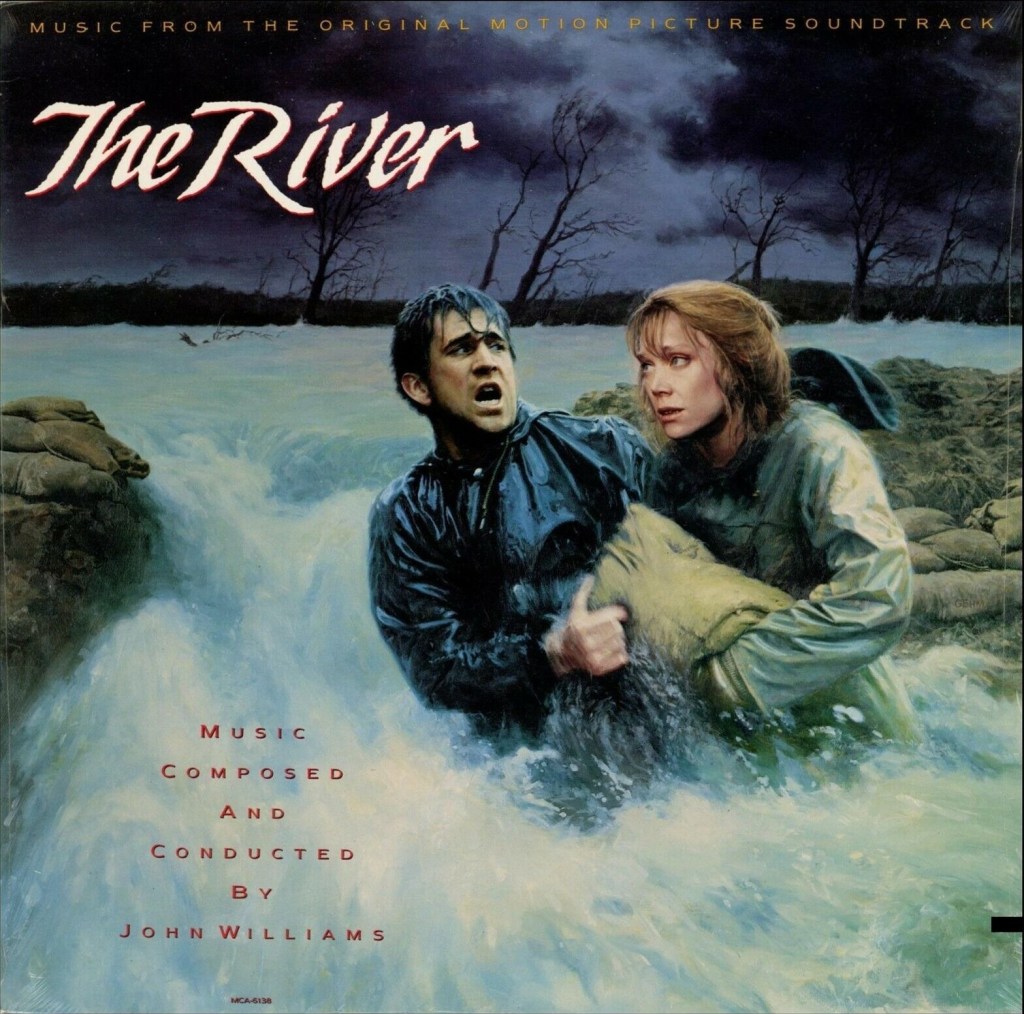
Music from the Original Motion Picture Soundtrack – LP (1984)
MCA Records – MCA-6138
Album Produced by John Williams

Music from the Original Motion Picture Soundtrack – CD reissue (1990)
Varèse Sarabande VSD-5298
Executive Producer: Robert Townson
Production Supervision: Tom Null
Liner notes: Robert Townson
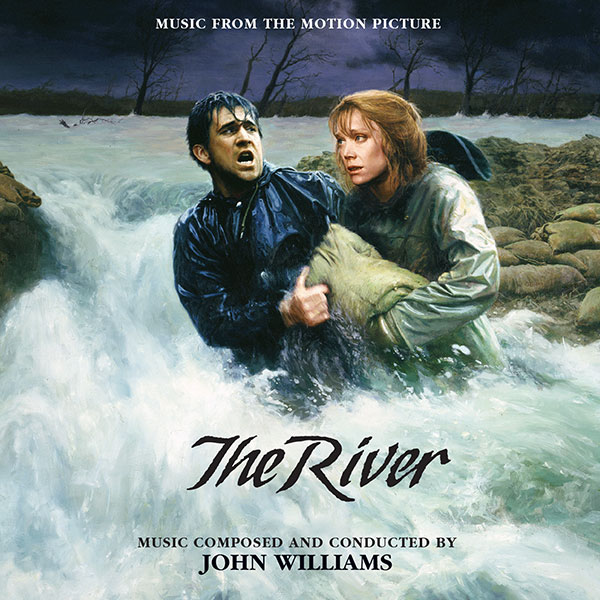
Music From The Motion Picture – Expanded Reissue – CD (2019)
Intrada Special Collection Volume ISC 441
Produced, Edited and Mastered by Mike Matessino
Executive Producers: Douglass Fake, Roger Feigelson
Liner notes: Mike Matessino
Remastered reissue of the 1984 OST album + complete film score presentation
Selected Re-Recordings

John Williams Reimagined (2024)
Warner Classics – 5054197942334
contains four selections from “The River,” arranged for piano, flute and cello trio by Simone Pedroni
Sara Andon, flute
Cecilia Tsan, cello
Simone Pedroni, piano
Awards and Nominations
Academy Awards
Nomination: Best Original Score
Golden Globes
Nomination: Best Original Score
Quotes and Commentary
The River is a tribute to a vanishing America—the America of the Independent Farm Family.
The Garvey Family in The River represents the lifestyle that made America work: continuity of generations, the passing-on of traditions and of knowledge and skills from fathers to sons and mothers to daughters—a lifestyle where every member of the family is unique and necessary for the survival of all.
American farmers as a breed are in the gravest trouble they have been in since the Depression. They are imperiled by rising interest rates, falling land values, overproduction, failing commodity prices, drought, overabundant rainfall and the recent rise in agribusiness.
The Garvey Family is up against a plethora of man-made and natural disasters, and yet they endure and love each other and eventually triumph.
They are a reassurance about America and a warning about its future.
The Garveys are the tenders of the land. If America loses the Garvey Family and the people for whom they stand it might well have lost the foundation on which it was built. 1
– Mark Rydell

The consideration of serious orchestra composition immediately brings to mind the musical centers of Europe such as Prague, Vienna, Paris, London and Berlin. However, to overlook the musical heritage of the United States is to discount the breathtaking and spacious music known simply as Americana. Composers such as Aaron Copland, Charles Ives, Leonard Bernstein, Stephen Foster and Bernard Herrmann are but a few of the major contributors to this genre.
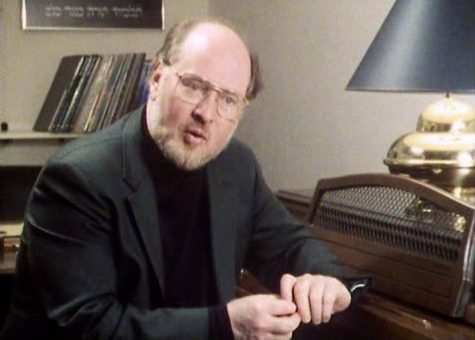
A body of four film scores by John Williams continues this tradition of fresh. vibrantly orchestrated musical landscapes of America. His 1968 Stephen Foster-influenced score for The Reivers achieved for its composer his first major critical ovation. Four years later he composed a wonderful Coplandesque score for John Wayne’s The Cowboys (1972), followed in 1976 by the very earthy bluegrass score for the Marlon Brando / Jack Nicholson film The Missouri Breaks. Then, in 1984 Williams scored The River, a film by Mark Rydell (who also directed both The Reivers and The Cowboys) which examines the hardships of the American farmer.
Each of these films is strongly disparate in viewpoint but at its core is tied unmistakably into the American spirit. More than with the previous three scores, The River takes steps away for any influences of past composers. It is left solely to John Williams’ own musical resources and inspirations to paint a picture of the unity of the family in the midst of economic hardships brought on by a highly competitive and high tech world.
Like many of his contemporaries. Williams has become most known for the grand symphonic accompaniment he provides for movies like Star Wars and Superman. It is, however, quite often the smaller more intimate work which brings the most satisfaction to its writer and allows a more direct link between the composer and his audience.
This very touching score for The River earned Williams an Academy Award nomination in 1984 alongside his score for Indiana Jones and The Temple Of Doom.2
– Robert Townson
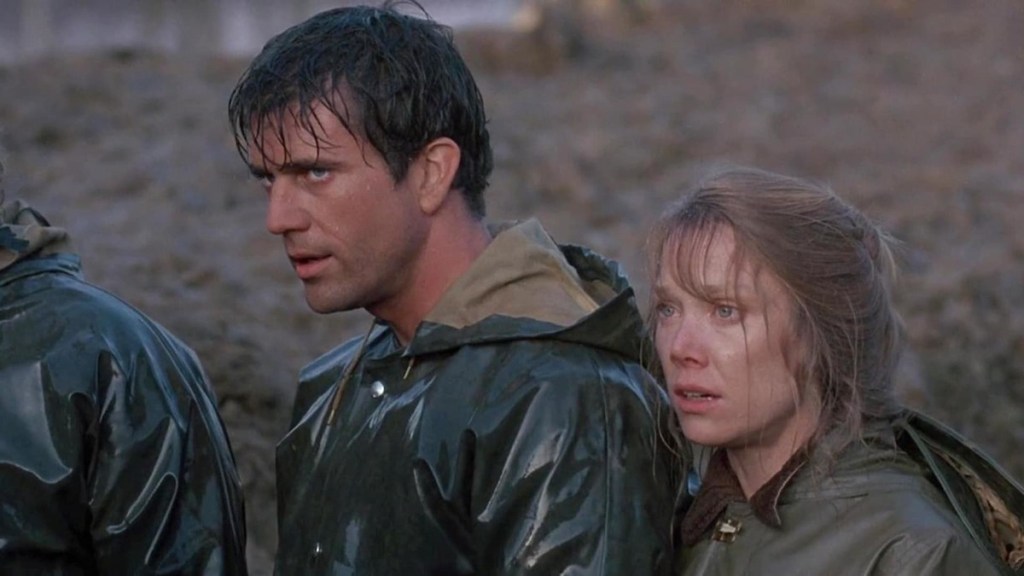
Among the other [Academy Award] nominations for The River was the music by John Williams, who had not worked with Rydell in over a decade. Said decade, for the composer, is practically legendary, comprising the original Star Wars trilogy and his first seven scores for director Steven Spielberg, among them Jaws, Close Encounters of the Third Kind, Raiders of the Lost Ark and E.T. The Extra-Terrestrial. Williams succeeded Arthur Fiedler as principal conductor of the Boston Pops Orchestra during this period, while Rydell enjoyed back-to-back successes with The Rose and On Golden Pond. The River would be the fourth and final collaboration between Williams and Rydell.
For Williams, The River was a return to what has come to be identified as his
“Americana” period, loosely spanning 1969 through 1974, beginning with his breakout score for Rydell’s The Reivers and including his first collaboration with Spielberg, The Sugarland Express (although it might be considered to extend outward on either side with western scores for The Rare Breed in 1966 and The Missouri Breaks a decade later). Smack in the middle came two very different scores for Rydell, the sprawling soundscape of The Cowboys in 1972 and the bluesy romance Cinderella Liberty the following year. Other projects associated with this period of Williams’ filmography include his adaptation score for Tom Sawyer, the western The Man Who Loved Cat Dancing and the dramas The Paper Chase and Conrack (all of which, it might be noted, occupy the same timeframe in which the composer also left an indelible mark on the 1970s “disaster movie” genre). […]
Appearing after the staggering succession of classic Williams scores of the late ’70s and early ’80s that remain popular to this day, The River as a conse quence has remained a relatively obscure entry in the composer’s filmography, especially considering its shorter running time. Yet it is no less lacking in the thematic richness that continues to draw listeners to Williams’ music. The lively main theme lends itself to a variety of arrangements, from its tentative, almost improvisational introduction in “Main Title (Rain Clouds Gather)” to a fully melodic guitar treatment in “The Family” and “The Garveys.” It can also become infused with despair, as in “Telephone Call” for the striking-steel-worker sequence. The theme for the river itself serves as a siren call, beautiful but unpredictable, often played by solo flute. Introduced during the title sequence and recalled over images of the water in “The Garveys,” “Telephone Call” and “Back From Town,” it also notably accompanies a quiet sequence in which Tom recounts a dream about the river to Mae (“The Hotel’”).
Williams supplies two themes associated with the family, one with a contemporary bluesy quality that reflects Tom’s relationship with Mae and their struggle to hold on to their way of life. Often expressed by solo trumpet (as in “The Hotel” and the unused “Releasing The Doe”), it is deftly arranged for synthesizer in “Dialing The Hospital, for woodwinds in “Telephone Call” and strings in “Back From Town.” A more optimistic family theme characterizes the Garveys’ strength and unity, as heard in “The Family” and notably over an image of Tom, on a tractor, passing the family graveyard in “The Garveys.” The theme ultimately extends to the community as a whole in the climactic “The Ancestral Home,” when the farmers stand up to Wade and successfully construct a makeshift dike that holds back the rising water—for now.3
– Mike Matessino
Videos
The River – Original Theatrical Trailer (1984)
Universal Pictures
Brett Mitchell plays his original solo piano arrangement of “Love Theme” from The River
Bibliography and References
. Matessino, Mike – Liner notes for The River – Expanded CD Reissue, Intrada, 2019
. Townson, Robert – Liner notes for The River – CD reissue, Varèse Sarabande, 1990
Legacy of John Williams Additional References
. Soundtrack Spotlight podcast with Mike Matessino on The River and Far and Away
. John Williams and the American Sound, essay by Maurizio Caschetto
Footnotes
 The Legacy of John Williams