

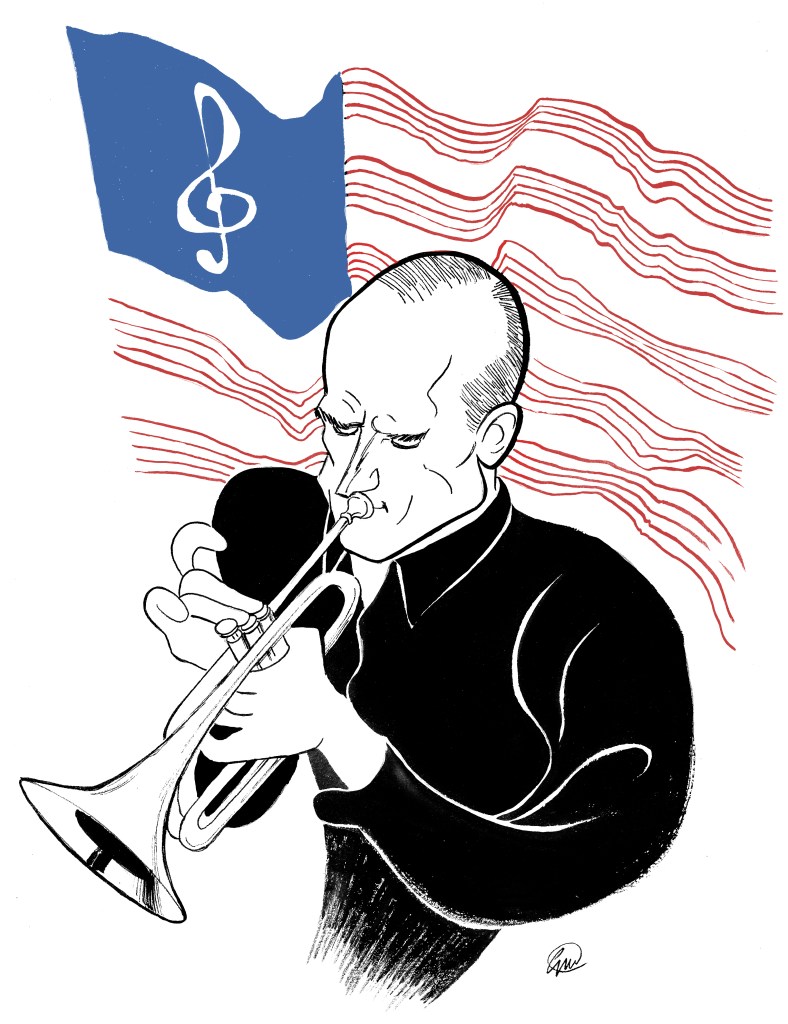
Trumpet legend Tim Morrison has defined probably more than any other soloists one of the key signature styles of John Williams, enhancing the American spirit in many of the composer’s brilliant pieces for film and the concert hall through his singing, lyrical trumpet sound and purity of tone. Tim Morrison has been the voice of Ron Kovic’s struggle in Born on the Fourth of July and the reminiscence of President Kennedy’s core American values in JFK; he underlined John Quincy Adams’ noble speeches in Amistad, and accompanied with somber, plaintive tones the drama of World War II American soldiers in Saving Private Ryan. Whenever John Williams needed that signature American sound in some of his film scores, he often chose Tim Morrison to be the interpreter of choice. Also, as Principal Trumpet of the Boston Pops Orchestra from 1987 to 1997, he has often being the soloist of choice in many concerts and recordings with Williams on the podium.

“[Tim Morrison] has an American sound and his playing is very touching, very beautiful. There is real serenity in his playing.”
John Williams
Born in 1955 in Hermiston, Oregon, Timothy Morrison began his studies with Fred Sautter, the former principal trumpet of the Oregon Symphony. He graduated at the New England Conservatory of Music, where he was a student of former Boston Symphony principal trumpeters Roger Voisin and Armando Ghitalla. He started his professional career by playing in the State Symphony of Mexico in Toluca, Mexico, and then joined the Boston Symphony Orchestra in 1980 as part of the trumpet section and ended his first tenure in 1984 to tour and record with the renowned group Empire Brass, performing in over 100 concerts a year. He returned in Boston in 1987 as Associate Principal of the BSO and Principal Trumpet of the Boston Pops. It was around this time that he started to get noticed by John Williams, who was then Music Director of the Pops. In that period, Williams brought the orchestra to new heights both in concert performances and recording projects, which included at least one new album released every year. Morrison can be heard playing exquisite solos in several selections of the 1988 album Salute to Hollywood, including a tribute medley of tunes associated to Judy Garland (arranged by Morton Stevens), and a beautiful performance of David Raksin’s glowing theme from The Bad and the Beautiful.
The big moment arrived in 1989, when John Williams asked Tim Morrison to be soloist on his score to Born on the Fourth of July, an arresting drama directed by Oliver Stone based on the autobiography of Vietnam war veteran Ron Kovic (portrayed in the film with a stunning performance by Tom Cruise). Williams agreed to score the film after seeing a rough cut and decided immediately the kind of music the film needed. He said to Boston Globe’s journalist Richard Dyer:
“I knew immediately I would want a string orchestra to sing in opposition to all the realism on the screen, and then the idea came to have a solo trumpet — not a military trumpet, but an American trumpet, to recall the happy youth of this boy.”
To convey that sense of an “American trumpet”, Williams invited Tim Morrison to Los Angeles to perform on the score. The trumpeteer recorded the solos with an L.A. studio orchestra and Williams conducting on the podium. The composer has often taken the opportunity offered by the films he worked on to write extensive solo parts for specific instruments in concertante-type of style. In this case, the solo trumpet becomes the true emotional focal point of the score, and perhaps of the film itself, also thanks to Tim Morrison’s vibrant, haunting sound. The film garnered both a big success at the box office and great acclaim from the critics, ending with a whopping eight Academy Awards nominations, including one for Best Original Score. The soundtrack album was also a great commercial success and even inspired a music video that aired on MTV back in the day with both Williams and Morrison appearing in the footage.
The success was the start of a very long and fruitful collaboration between Williams and Morrison, which continued immediately the following year for JFK (1991), again directed by Oliver Stone. Morrison performs the patriotic trumpet solo heard in the film’s opening credits, perhaps one of Williams’ most stirring melodies in his entire film repertoire. Against a backdrop of drums that recalls the military salute, the trumpet sings Williams’ noble “Kennedy” theme and then is joined by the full orchestra.
The score was another phenomenal success, garnering another Academy Award nomination as Best Original Score and furtherly cementing the Williams/Morrison partnership. The project was followed by several sparkling Boston Pops recordings for the Sony Classical label, including the album Music for Stage and Screen featuring Morrison as soloist in a stunning rendition of Aaron Copland’s Quiet City and the 3-movement concert suite from John Williams’ Born on the Fourth of July that debuted successfully at Tanglewood in July 1990.

During those years, Williams and the Boston Pops were running on full steam with intense performance and recording schedules which included such beautiful albums as The Spielberg/Williams Collaboration, Unforgettable, Night and Day: Celebrate Sinatra, The Green Album, and also successful international tours in Japan, where Williams led the orchestra in concerts featuring both his own compositions and standards from the Pops repertoire. Morrison performed the Born on the Fourth of July and JFK solos during both tours.
In 1995, Williams asked again Morrison to be soloist in one selection from his score for Nixon, Oliver Stone’s controversial take on the biography of the much-maligned American President. In this occasion, Morrison performs a sweet Americana folk-tinged solo accompanying a montage of Richard Nixon’s childhood days in his native city of Whittier, California. The prominence of these trumpet solos in Williams’ scores put Morrison into the spotlight as he started getting requests also from other film composers to perform as soloist on their recordings. In 1995, James Horner gave him patriotic Americana solos to perform in the Academy Award-nominated score for Apollo 13.
In 1996, Morrison entered also in the annals of Olympic history—he was the dedicatee of “Summon The Heroes”, the official theme composed by John Williams for the Centennial of the Summer Olympic Games held in Atlanta, USA. The composer recorded the theme with the Boston Pops Orchestra in Boston’s Symphony Hall, with Morrison playing the heroic trumpet solo that opens the piece, as part of an exciting recording featuring heraldic fanfares and Olympic-themed compositions (including new recordings of his own “Olympic Fanfare and Theme” for the 1984 Los Angeles Olympic Games and “The Olympic Spirit” for the 1988 Seoul Games).
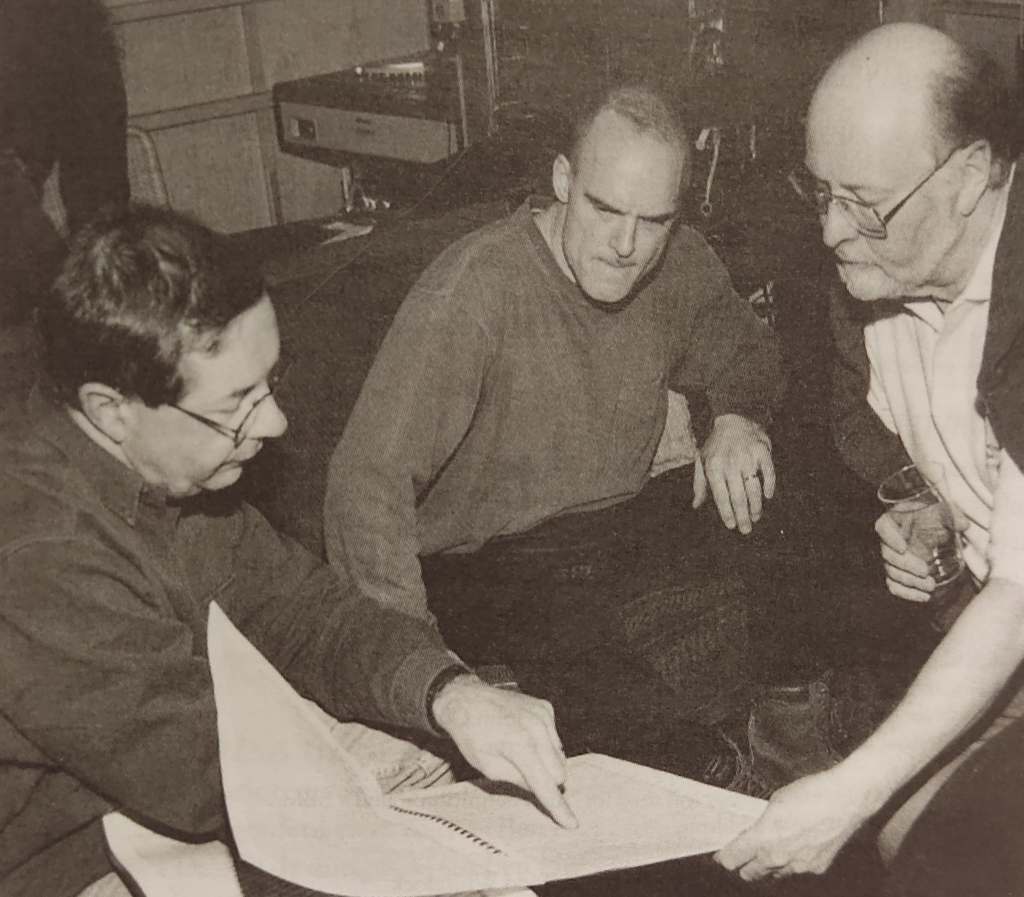
In 1997, Morrison left the BSO and moved to Los Angeles to pursue a new life as studio musician and freelance artist, appearing as guest soloist with orchestras both in the United States and abroad, including appearances with the Rotterdam Philharmonic, the New Japan Philharmonic and the Pacific Symphony. He started to perform in many film and television scores for virtually all of the top film composers in the industry, playing in the trumpet section for James Newton Howard, Hans Zimmer, James Horner, Randy Newman. One of his first gigs was once again a film score by John Williams, for whom he performed lyrical, Americana-tinged trumpet solos on the score for Steven Spielberg’s historical epic Amistad (1997), mostly in scenes accompanying former US President John Quincy Adams (performed by Anthony Hopkins).
The following year, Morrison rejoined his former Boston Symphony colleagues for the next Spielberg/Williams collaboration. The composer wrote more trumpet solos for him, this time to perform in duet with BSO Principal Trumpet Thomas Rolfs, for the stirring score of Steven Spielberg’s Saving Private Ryan (1998). On this occasion, Williams wrote mournful, somber trumpet solos and duets, performed with grace and noble sobriety by Morrison and Rolfs, to accompany the mission of a small group of WW2 soldiers led by Captain John Miller (Tom Hanks) to save a US private behind enemy lines in Nazi-occupied France. The score was recorded in Boston’s Symphony Hall with the BSO, joined by the Tanglewood Festival Chorus for the stunning end credits piece “Hymn to the Fallen”, and was nominated for an Academy Award.
As a studio musician in Los Angeles, Morrison performed in the trumpet section on hundreds of film and television scores including such top hits as The Matrix (Don Davis), Spider-Man (Danny Elfman), The Polar Express (Alan Silvestri), Toy Story 2 (Randy Newman), The Last Samurai (Hans Zimmer), but also performing solos on such scores as Bobby and Lions for Lambs by Mark Isham. He continued to perform in the trumpet section (alongside his colleague Malcolm McNab) on many John Williams’ scores as well, including The Patriot, A.I. Artificial Intelligence, Minority Report, The Terminal, War of the Worlds, Indiana Jones and the Kingdom of Crystal Skull, War Horse, but also on special projects like the E.T. The Extra-Terrestrial 20th Anniversary live-to-picture concert at the Shrine Auditorium in 2002, the recording sessions for the American Journey album, the theme for PBS’ Great Performances and a new recording of the music Williams wrote for NBC News.
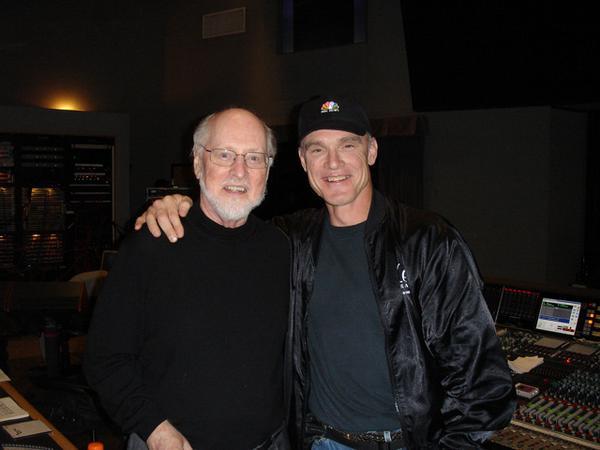
In 2008, Morrison produced and released After Hours, his only album as solo recording artist. The recording features Morrison on solo trumpet performing many jazz standards accompanied by a pool of superb musicians from the Los Angeles area including Alex Acuna, Charlie Bisharat, Tom Brechtlein, Grant Geissman, Biff Hannon, Trey Henry, Dan Higgins, Jack LeCompte, David Miller and Michael O’Neill.
Alongside his life as performing musician, Tim Morrison always devoted time to teaching and coaching the next generation of trumpeteers—Tim has served on the faculties of Boston University, Boston Conservatory and the New England Conservatory of Music, where he was the recipient of an Outstanding Alumnus Award in 1991. He kept a particularly fond relationship with students in Japan, a country he fell in love with thanks to former BSO Principal Conductor Seiji Ozawa—Tim regularly performed with Ozawa’s famed Saito Kinen Orchestra and Opera Nomori Orchestra for many years and is a visiting professor at the Shobi Music School in Tokyo. In 2012, Tim retired as performing artist and started to devote fully to teaching, coaching, and conducting. He lives in the Los Angeles area with his family.

In this wide, in-depth conversation, Tim talks about his brilliant career and musical life, from his studies and early days as performer to his arrival in Boston, his many collaborations with John Williams as soloist on Born on the Fourth of July, JFK, Nixon and Saving Private Ryan, but also the many brilliant Boston Pops recordings he performed in, including the iconic Summon the Heroes solo. He also reflects on Williams’ comment about his “American sound”, and his life as studio musician in L.A.
List of musical excerpts featured in the episode (all music by John Williams except where noted)
. I. Theme from ‘Born on the Fourth of July’ (1989), Boston Pops Orchestra conducted by John Williams; Tim Morrison, trumpet (from the album Music from Stage and Screen, Sony Classical, 1992)
. “Prologue”, from JFK (1991)
. James Horner, “Main Titles”, from Apollo 13 (1995)
. “The Last Battle”, from Saving Private Ryan (1998)
. Gustav Mahler, Symphony No.1 in D Major, Mvt 4. Stürmisch bewegt; Boston Symphony Orchestra conducted by Seiji Ozawa (Deutsche Grammophon, 1977)
. “The Long Road to Justice”, from Amistad (1997)
. Aaron Copland, “Quiet City” for strings, English Horn and trumpet; Boston Pops Orchestra conducted by John Williams; Tim Morrison, trumpet; Laurence Thorstenberg, English Horn (from the album Music from Stage and Screen, Sony Classical, 1992)
. Richard Whiting, arr. John Williams, “Hooray for Hollywood”, Boston Pops Orchestra conducted by John Williams (from the album Salute to Hollywood, Philips Classics, 1988)
. David Mann/Bob Hillard (arr. Nan Schwartz), “In the Wee Small Hours of the Morning”, Boston Pops Orchestra conducted by John Williams (from the album Night and Day: Celebrate Sinatra, Sony Classical, 1993)
. “Prologue” and “Homecoming” from Born on the Fourth of July (1989)
. “Prologue” from JFK (1991)
. James Horner, “End Credits” from Apollo 13 (1995)
. “Growing Up in Whittier” from Nixon (1995)
. “Summon the Heroes”, Boston Pops Orchestra conducted by John Williams; Tim Morrison, trumpet (from the album Summon the Heroes, Sony Classical, 1996)
. Unidentified cue for NBC News; Recording Arts Orchestra of Los Angeles conducted by John Williams
. “Adams’ Summation”, from Amistad (1997)
. “The Last Battle”, “Omaha Beach”, “Hymn to the Fallen” from Saving Private Ryan (1998); Boston Symphony Orchestra conducted by John Williams; Tim Morrison & Thomas Rolfs, trumpets
. “I. Immigration and Building” from American Journey; Recording Arts Orchestra of Los Angeles conducted by John Williams from the album American Journey, Sony Classical, 2002)
. “End Credits” from Born on the Fourth of July (1989)
. Johnny Mercer, “Autumn Leaves”, from the album After Hours (Tim Morrison, solo trumpet)
. George & Ira Gershwin, “Summertime”, from the album After Hours (Tim Morrison, solo trumpet)
. Joaquin Rodrigo, “Concierto de Aranjuez”, from the album After Hours (Tim Morrison, solo flugelhorn)
. “I. Theme and Cadenza” from Concerto for Cello and Orchestra; Recording Arts Orchestra of Los Angeles conducted by John Williams (from the album Yo-Yo Ma Plays the Music of John Williams, Sony Classical, 2002)
. I. Theme from ‘Born on the Fourth of July’ (1989), Boston Pops Orchestra conducted by John Williams; Tim Morrison, trumpet (from the album Music from Stage and Screen, Sony Classical, 1992)
 The Legacy of John Williams