
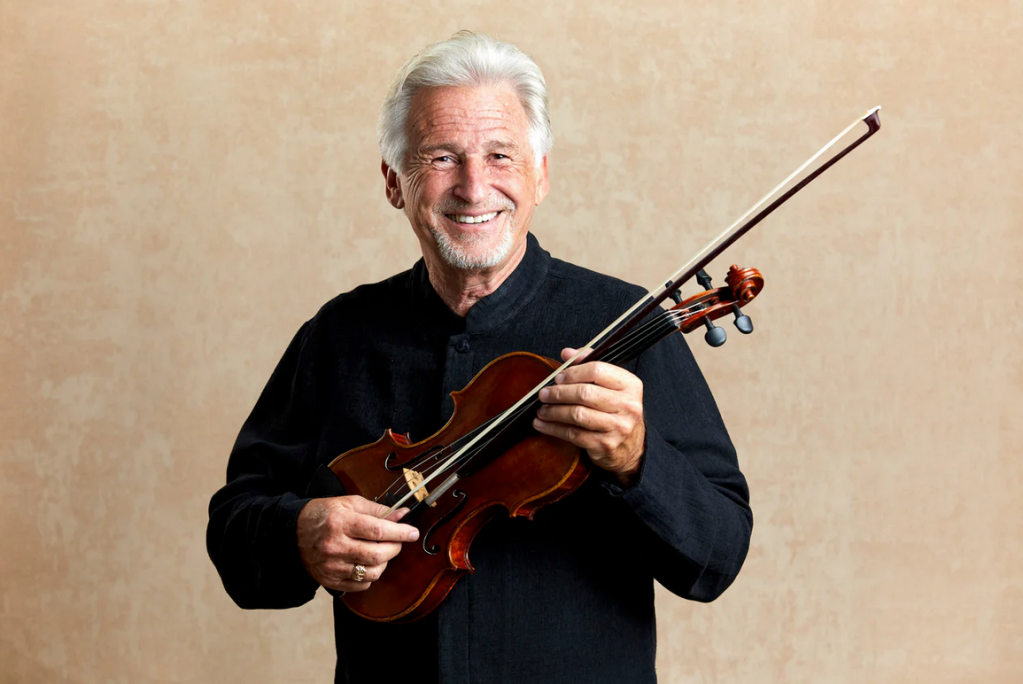
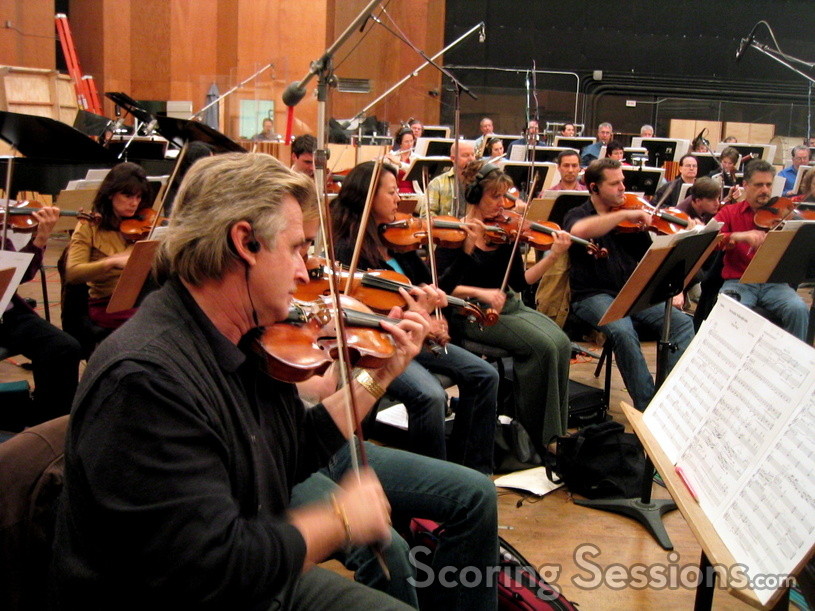
Among string players working in the studio environment, renowned violinist Bruce Dukov certainly occupies a privileged space. With a career spanning across five decades, Dukov has become one of the first-call studio violinists in Los Angeles, lending his virtuoso skills to thousands of recording dates across many different genres, including an incredible amount of film and television soundtracks. Bruce Dukov played for all major film composers working in the industry since the early 1980s and has performed on virtually every score by John Williams recorded in Los Angeles from 1986 until today, including several as concertmaster, thus becoming one of the longest-serving member of the composer’s preferred ensemble of musicians in LA.
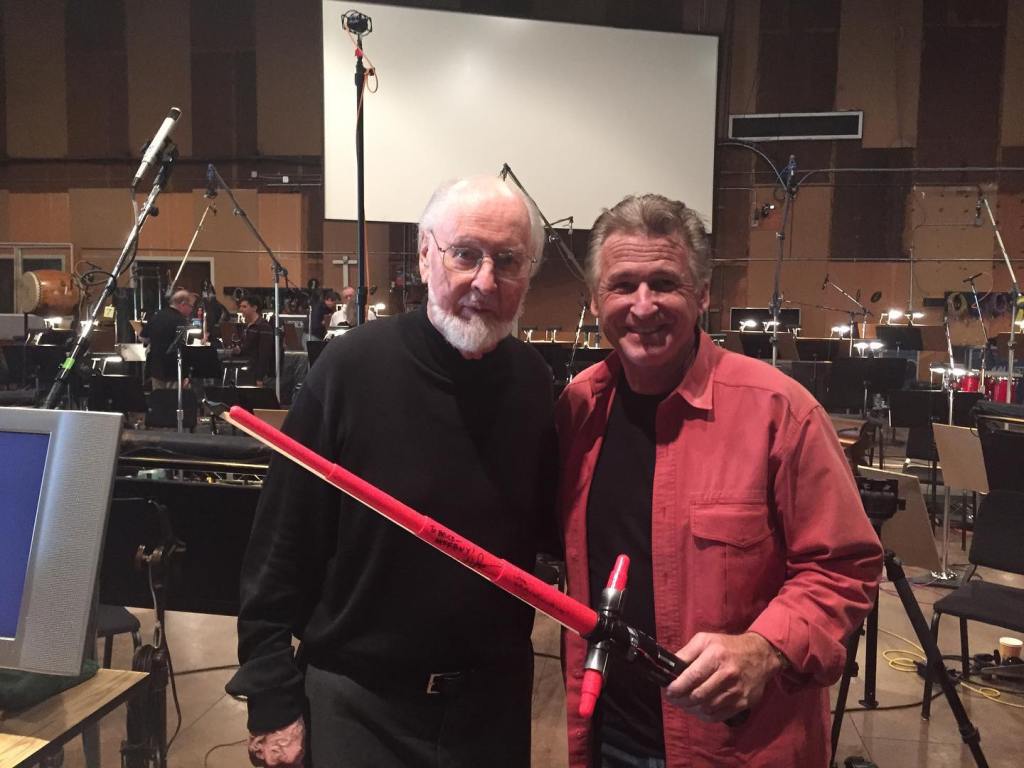
A native of New York City, Dukov was raised in a musical family and fell in love with the sound of the violin since he was a kid by listening to recordings of such masters as Jascha Heifetz. He later honed his skills at the High School of Music & Art in Manhattan before being accepted at the prestigious Juilliard School of Music, where he earned his Bachelor in Music and graduated with the highest award for excellence on the violin. After receiving a U.S. Government Grant in the early 1970s, Dukov embarked on an exciting musical journey to England to further refine his craft, which led him to become a well-recognized virtuoso and win international competitions and coveted prizes. He kept studying with esteemed teachers as Nathan Milstein, Szymon Goldberg, and Wybo van Biemen, and got further coaching sessions with luminaries like Itzhak Perlman, Yehudi Menuhin, and Charles Treger. With such background, Dukov became a renowned classical recitalist, playing in prestigious concert halls of the U.K. and also touring mainland Europe, receiving rave reviews in newspapers and unanimous praise from music critics. In the early 1980s, he also started to freelance as violinist for studio recordings in London, including film sessions for such composers as Jerry Goldsmith, Michel Legrand, and Bill Conti.
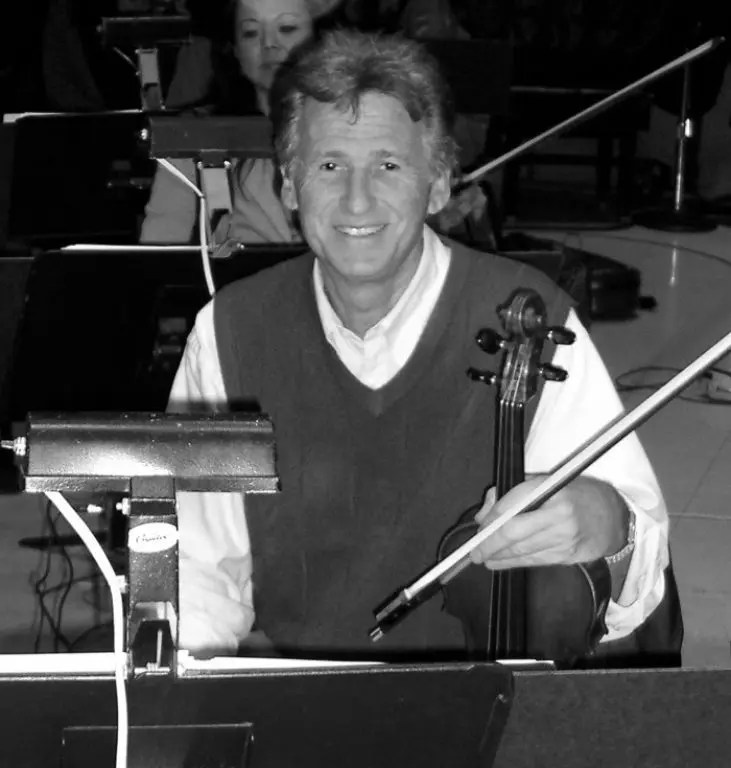
This connection with the American film industry was a key element in Dukov’s decision to move with his family to Los Angeles in 1985 and start a career as a studio musician in Hollywood. The first gigs were mostly dates for television, but his exceptional talent and virtuosity soon helped him step up the ladder to become one of the first-call violinists for film scores by top composers, including John Williams. The first session Dukov performed for Williams was for SpaceCamp (1986), which features an exuberant symphonic score with a lot of high violin lines in the style of E.T. the Extra-Terrestrial. The violinist was immediately impressed by Williams’ command of the orchestra and his calm, no-nonsense demeanor on the podium.
From that moment onward, Bruce Dukov became a recurring member of the core group of musicians who were regularly contracted by Sandy DeCrescent to perform on sessions for John Williams, mainly movie scores, but also a lot of his non-film works and special projects still recorded in Los Angeles, including music for NBC News and the Olympics, the album American Journey for Sony Classical, the 20th anniversary live performance of E.T. the Extra-Terrestrial and the recordings featuring arrangements for solo violinist Anne-Sophie Mutter on Deutsche Grammophon (“Across the Stars”).
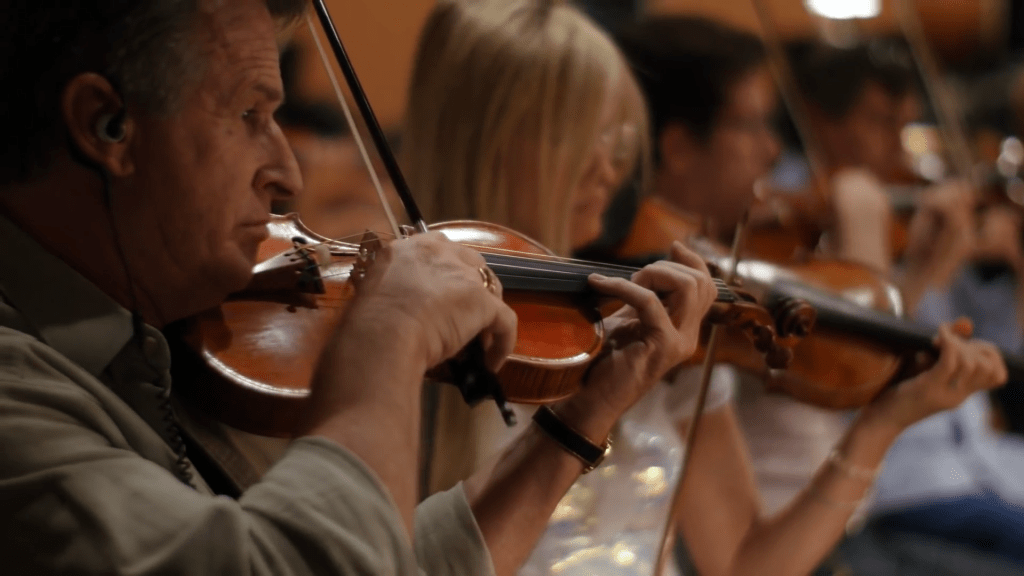
For a few years in the mid-to-late-1990s, Dukov was appointed concertmaster for John Williams and performed in that capacity on such scores as Sabrina, Rosewood, The Lost World, Seven Years In Tibet, Amistad and Stepmom; on the film Rosewood, he also performed the country fiddle solos throughout the score. In such role, Dukov felt the responsibility of following such predecessors as Israel Baker, Stuart Canin, Paul Shure (who served as concertmasters before him), while also getting a closer look to Williams’ approach to working with the orchestra. After stepping down as concertmaster, he kept being called nonetheless to play in the violin section on virtually all the film soundtracks recorded by Williams with LA-based studio musicians up until today (the most recent credit is Indiana Jones and the Dial of Destiny in 2023).
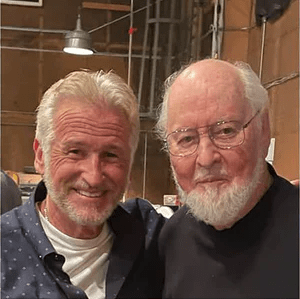
Over the years, Dukov served as concertmaster in Los Angeles also for such composers as Danny Elfman, Howard Shore, Randy Newman, Thomas Newman, Alan Menken, James Newton Howard, Michael Kamen, Elliot Goldenthal among others, sometimes also being highlighted with virtuoso solo passages; he also performed in the violin section for John Barry, Jerry Goldsmith, James Horner, Alan Silvestri, Hans Zimmer. The list of films he performed on includes some of the biggest hits in cinema history (Titanic, Avatar, Toy Story, The Lion King) and the total tally he played on is almost 2,000 titles and counting.
In addition to studio work, Bruce Dukov kept a strong relationship with the classical world. From 1991 to 2008, he was concertmaster of the Hollywood Bowl Orchestra under conductor John Mauceri. In that prestigious role, he was often highlighted as soloist both in live performances and studio recordings, performing popular warhorses of the violin repertoire such as the “Carmen Fantasy” by Franz Waxman, but also many film themes with extended violin solos including Miklos Rozsa’s Love Theme from El Cid and Ennio Morricone’s Cinema Paradiso.
Dukov also dedicated time to teaching, offering coaching and one-to-one courses to young violinists with his own method for virtuoso players. He also wrote and recorded a few variations for two violins on popular tunes like “Happy Birthday” and “The Star-Spangled Banner” in the style of Paganini and Wieniawski, displaying his own unique virtuosity on the instrument.
In 2015, after performing on sessions for John Williams’ Star Wars: The Force Awakens, he wrote a short “Fanfare for Two Violins” variation based around the famous Star Wars fanfare and dedicated it to the composer.
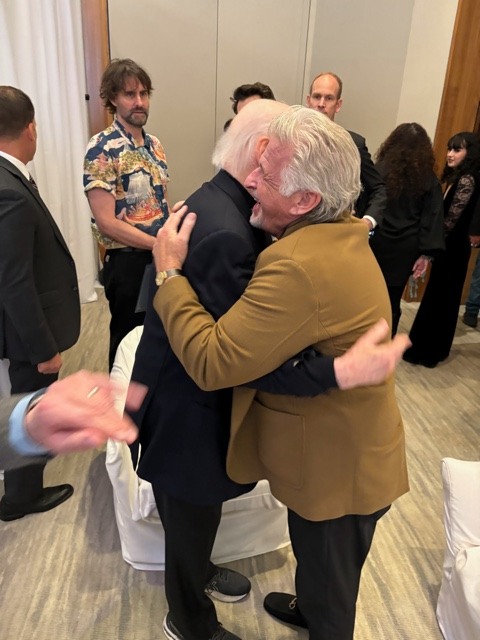
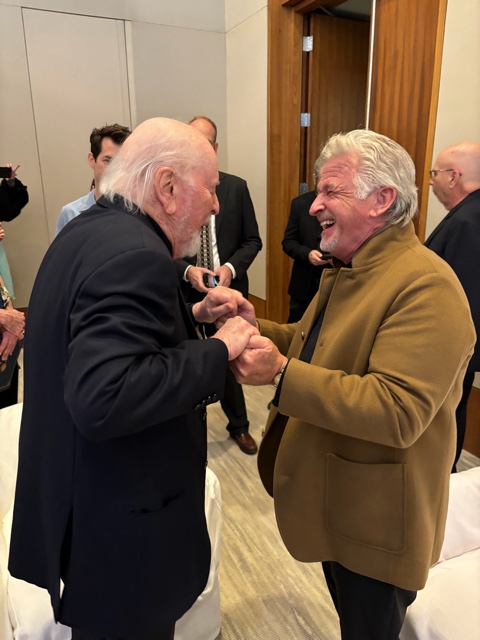
In this conversation, Bruce Dukov talks about how he turned into a professional musician and the path that led him to become one of the most-requested violinists in Hollywood. He also reflects and shares memories on his many years performing for John Williams and his figure as the most renowned composer and conductor working in the industry.
List of music excerpts featured in the episode (music by John Williams except where noted)
. Erich Wolfgang Korngold, excerpts from The Sea Hawk (1940)
. Jerry Goldsmith, “Main Title” from Alien (1979)
. Jerry Goldsmith, “Main Title” from The Great Train Robbery (1978)
. Bruce Dukov, “Variations on a Birthday Theme in the Style of Paganini and Wieniawski,” for Two Violins
. “In Orbit” and “Home Again” from SpaceCamp (1986)
. “The Falcon” from Star Wars: The Force Awakens (2015)
. “Cadillac of the Skies” from Empire of the Sun (1987)
. “Main Title” from Amazing Stories (1985)
. “End Credits” from Sabrina (1995)
. “The Lost World Theme” from The Lost World: Jurassic Park (1997)
. “Rosewood Main Title” and “End Titles” from Rosewood (1997)
. “End Credits” from Born on the Fourth of July (1989)
. “Helena’s Theme” from Indiana Jones and the Dial of Destiny (2023)
. Jerry Goldsmith, “Lost in the Wild” from The Edge (1997)
. “The Mission Theme” (Theme for NBC News), from the album American Journey, Sony Classical (2002)
. “Journey to the Island” from Jurassic Park (1993)
. “End Credits” from Seven Years In Tibet (1997)
 The Legacy of John Williams