

Very few studio musicians in the world acquired the same level of admiration, trust and respect as Tommy Tedesco (1930-1997) did throughout his 40-years career. The legendary guitarist performed on a gazillion of recording dates in the Los Angeles music scene, including thousands of film and television scoring sessions for virtually all the major film composers in Hollywood. In addition to that, Tedesco was part of an unofficial collective of studio musicians labeled as “The Wrecking Crew,” who performed (often uncredited) on an impressive amount of recordings for pop and rock artists between the late 1950s and the early 1980s, including such big stars as Frank Sinatra, Elvis Presley, The Beach Boys, The Mamas & The Papas, Sonny & Cher, Barbra Streisand, Nancy Sinatra, The 5th Dimension, The Byrds, and many others. Tedesco was labeled by the Guitar Player magazine as “the most recorded guitarist in history” for having played on so many recordings, including hundreds of Top-40 songs.
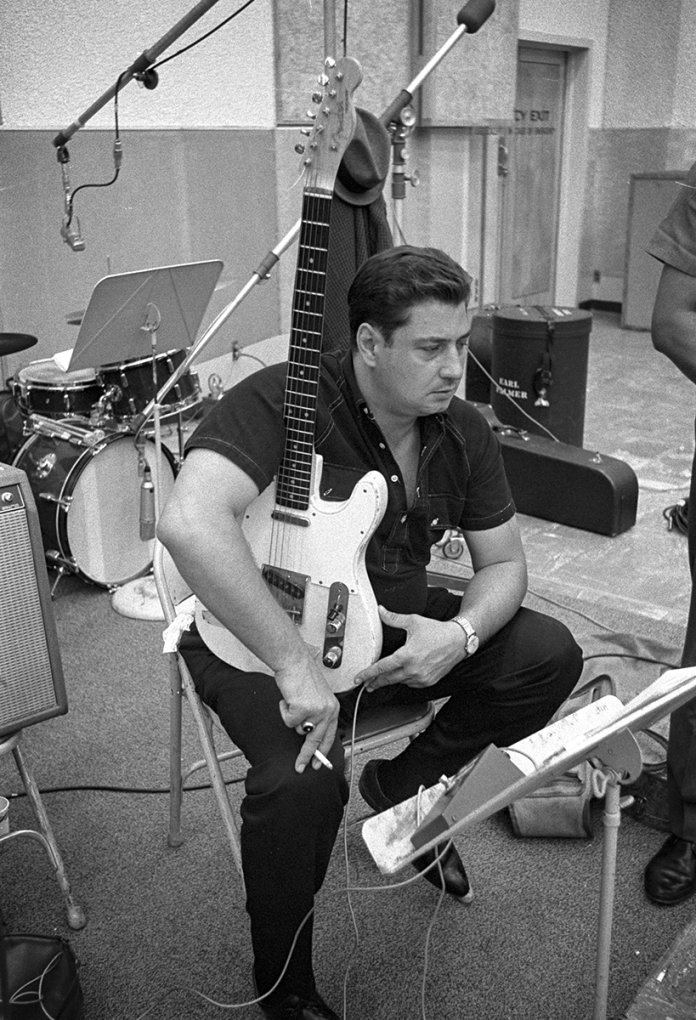
Born in Niagara Falls, NY, on July 3rd, 1930, Tedesco began his career as a professional guitarist in the early 1950s and soon moved to the West Coast, where the jazz and pop music scene was blooming and a lot of work for studio musicians was about to flood in. After setting foot in Los Angeles, he did some of his first studio gigs as a freelance player in film sessions–one of his very first gigs was in Victor Young’s Academy Award winning score for Around The World In 80 Days (1956) and also performed on scores for such esteemed composers as Bernard Herrmann and Miklós Rózsa.
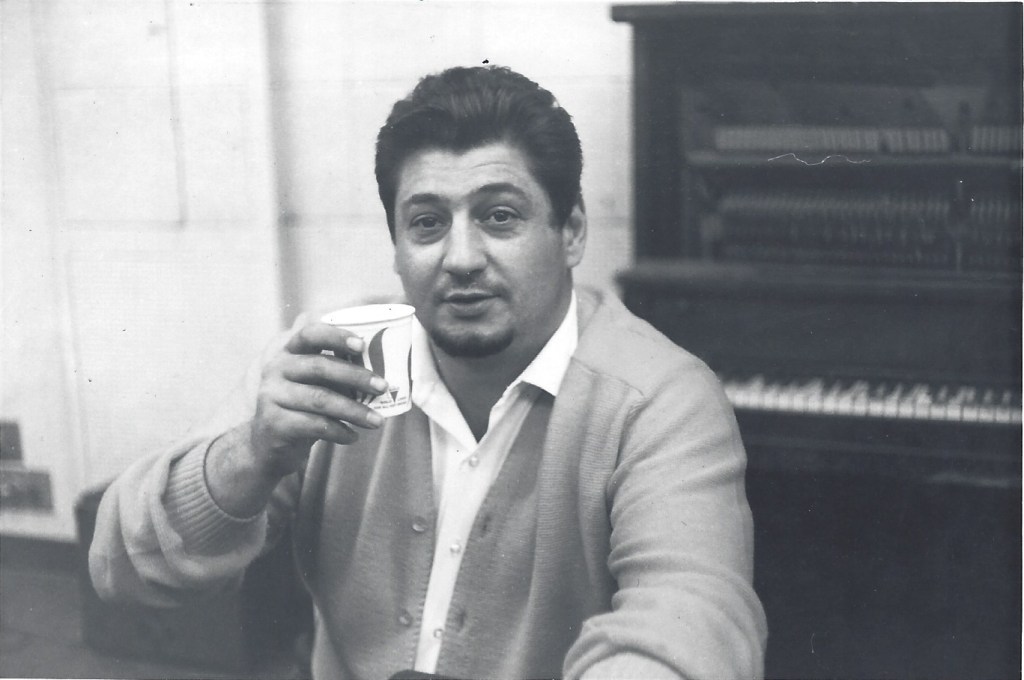
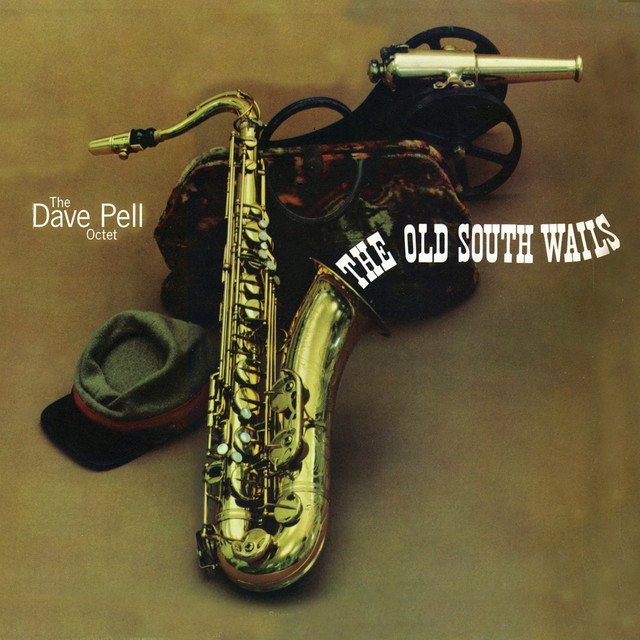
A terrific sight-reader and a specialist of acoustic guitar, Tedesco was also well-versed in improvisation and in his early days in LA performed on a lot of studio dates for jazz recordings, especially for saxophonist Dave Pell, in which he also played alongside a young pianist named Johnny Williams. Between the late 1950s and early 1960s, Tedesco and Williams would share the stage on several other recordings, including a few where Williams served as arranger and conductor. This was the beginning of a long series of collaborations that would continue in the following decades for film and television soundtracks.
I met Tommy I think over 40 years ago in my father’s garage when we had a little jazz band, and he came as one of the local young brilliant lights, and he was then what he is now, just simply wonderful.
John Williams (1993)
It was during the 1960s that Tommy Tedesco’s career as one of the most-requested guitarists in town skyrocketed. Together with his fellow musicians of the same generation (especially rhythm section players), he adapted to the changing landscape of the recording industry and brought a new dimension to what was requested by composers and record producers. This was the peak era of “The Wrecking Crew,” the above-mentioned group of studio musicians that was being contracted on a huge number of recordings in Los Angeles. While they never billed themselves with that brand (“It was a name invented by someone else and we never liked it,” said once Fender bass player Carol Kaye), this unofficial collective appears on an incredible amount of recordings, including countless hit songs and albums, mostly as uncredited side players and teaming with a diverse group of producers, artists and musicians that included Phil Spector, Brian Wilson, Nancy Sinatra, Simon & Garfunkel, Glen Campbell, the Carpenters, Nat King Cole, just to name a few.

Fellow studio musicians who regularly played alongside Tommy Tedesco were guitarists Al Casey, Dennis Budimir, Glen Campbell, Bill Pitman, Ray Pohlman; Electric bass players Carol Kaye, Joe Osborne, Max Bennett; double-bassist Chuck Berghofer; drummers and percussionists Hal Blaine, Larry Bunker, Earl Palmer, Joe Porcaro, Emil Richards, Frank Capp, Vic Feldman; pianists and keyboardists Mike Melvoin, Larry Knetchel, Mike Lang, Don Randi, Mike Rubini, Leon Russell; saxophonists Gene Cipriano, Plas Johnson, Ronnie Lang (this is just a selection of the players, for a comprehensive listing check out the 2008 documentary film The Wrecking Crew, more below).

The string of work was unprecedented and piled up at a vertiginous pace–all these people were constantly on call and 15-hour days were not unusual for a musician like Tedesco, who often alternated record dates, commercial jingles and film sessions in the space of a single day. In those years, Hollywood studios dismantled the resident symphony orchestras that were on salary since the 1930s; orchestras and ensembles playing on film recordings were now contracted with freelance studio musicians, in many cases the same people who were very active in the record industry. These musicians were capable of playing in any style that was requested and they brought a new vibe in the sound of movies of that era. Composers such as Henry Mancini, Lalo Schifrin, Elmer Bernstein, Quincy Jones moved away from the opulent symphonic style that was predominant in the previous decades and wrote jazz- and pop-influenced scores which employed the talents of many of the above-mentioned musicians.
The television industry was also booming at the same time, with work for TV shows becoming more and more in demand. Tedesco’s guitar was ubiquitous and can be heard in almost everything that was aired during the 1960s, including some of the most famous theme songs of the era like Green Acres, Batman and Bonanza.
John Williams was making his way as a film composer in the same period, writing music mostly for comedy films (Penelope, How To Steal a Million, A Guide For The Married Man) in a vernacular not dissimilar to the sound in vogue at the era, fusing pop-styled title songs (often featuring Wrecking Crew members in the rhythm section) with sophisticated orchestral underscore. Tedesco played on many sessions for John Williams during that time, usually alongside fellow studio guitarists Howard Roberts, Bob Bain and Al Hendrickson, becoming one of his preferred hand-picked musicians.
As work for studio musicians in the pop music industry of the 1970s began to slow down, on the other hand calls for film and television scaled up steeply, with many of the Wrecking Crew members becoming the de facto premiere studio players for virtually everything that was recorded in town, performing in film scores by all the most sought-after composers working in that period including Jerry Goldsmith, Alex North, Henry Mancini, Lalo Schifrin, Johnny Mandel and of course John Williams. For these composers, Tedesco became a real favourite whenever they were writing for guitar, especially complex arpeggio acoustic parts.
In that same period, John Williams wrote bluesy, country-like scores for films rooted in the Americana folklore, mainly The Reivers (1969), The Man Who Loved Cat Dancing (1973), The Sugarland Express (1974), Conrack (1974). Harmonica and acoustic guitar were usually spotlighted as solo instruments, with Tedesco featured in many of them. The guitarist mentioned the part of Conrack as one of the toughest pieces he had to play in his career:
I would have to say I’ve had many tough dates for different reasons. I did a John Williams date years ago on a movie called “Conrack.” It was extremely tough because it featured me all over the place. I was very much alone. All those parts were written out.*
Throughout the 1970s, Tedesco was in huge demand for film and television sessions. Among his credits we find such films as The French Connection (1971, Don Ellis), The Godfather (1972, Nino Rota), Enter the Dragon (1973, Lalo Schifrin). He kept being contracted to perform on John Williams’ scores including The Towering Inferno (1974), The Eiger Sanction (1975), Jaws (1975), Family Plot (1976), Black Sunday (1977). Despite his status as one of the most celebrated studio musicians in town, Tedesco always kept a humble character, bringing out the best from his musicianship and just having fun while playing music no matter what was requested to him:
It’s like running a race—anybody that’s run in the Olympics, they’ve never run as fast as he did in the Olympics. When that red light goes on, whether its running a race or playing guitar, whatever it is, all the adrenaline goes through the body. Some guys are at their best then, some say they’re at their worst. I’m at my best with the pressure.*
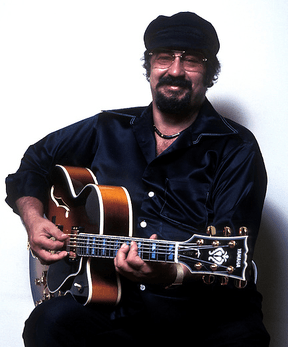
John Williams became a superstar film composer on the heels of the success of the blockbuster films of the late 1970s and early 1980s by Steven Spielberg and George Lucas, for which he wrote stirring symphonic scores that brought back the classical Hollywood style. Throughout the 1980s, the composer though still found the chance to work on smaller scale projects requiring a chamber-like approach. The River (1984), an intimate drama directed by Mark Rydell starring Mel Gibson and Sissy Spacek, boasts a tender lyrical score infused with bluesy Americana, with exquisite solo parts for flute and acoustic guitar performed respectively by Jim Walker and Tommy Tedesco. Both musicians were credited as featured soloists in the film and on the soundtrack album and Tedesco’s playing is particularly poignant and sensitive in the film’s most tender sequences.
“I had a lot of solo work on [The River], and it was rewarding because John loved it and the director [Mark Rydell], he came up, he loved my work and loved my work for years, and his son, who was also a guitar player, was on the date, and knew all about me. The whole date was filled with rewards both financially and ego-wise. Many times you do things you think were pretty good, and it doesn’t go over as well. I got applause from all the musicians after I did my solo, and there’s nothing like when your own peers acknowledge your work.” *
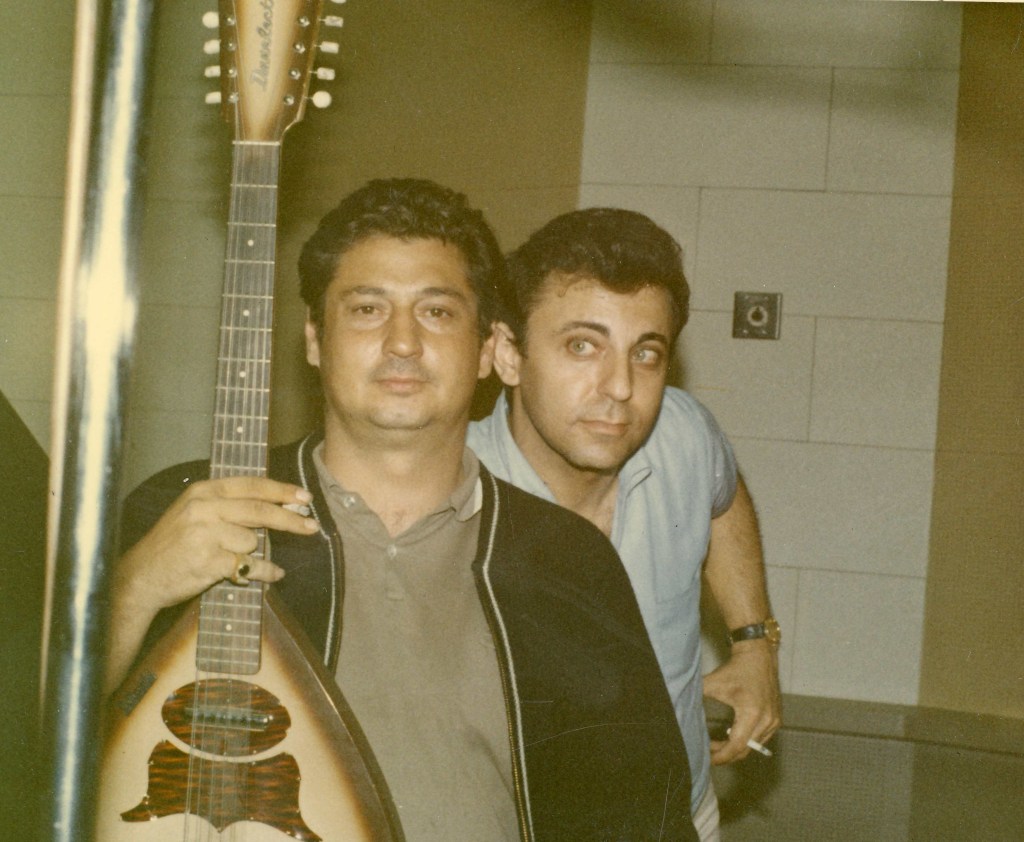
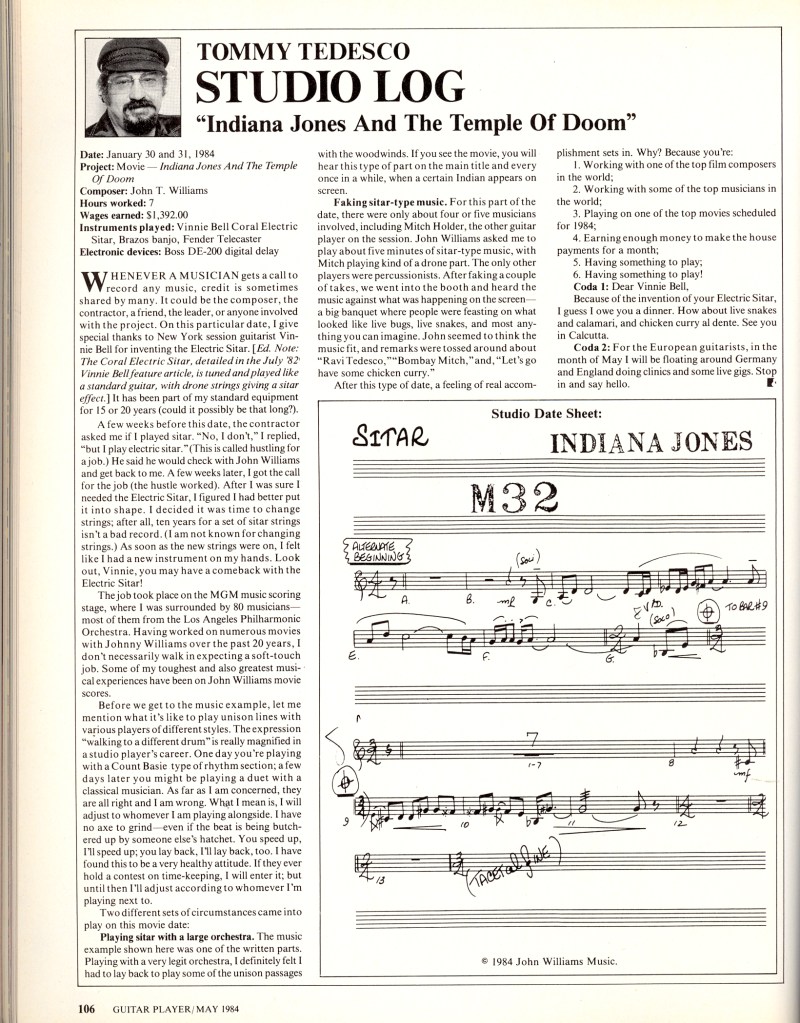
Williams employed Tommy Tedesco also for his skills as a multi-instrumentalist: He can be heard playing sitar on Indiana Jones and The Temple of Doom (1984), while on Indiana Jones and The Last Crusade (1989) he performed on cues featuring mandolin and bouzouki. Tedesco was a well-known “doubler” among studio musicians, often being asked to play more than one instrument especially on film sessions.
We had great guitar players here in Los Angeles. And Tommy was always the best of them. He was the best reader, the best improviser. He had the best and most subtle sense of sound, the right sound for the right moment, always the right instrument, and always the right solution musically, intelligent and intuitive and gifted in all these ways.
John Williams (1993)
One of the distinct qualities of such talented studio musicians as Tommy Tedesco is the ability to adhere faithfully to the style of the music, but at the same time to add their own unique personality to the piece. John Williams has often mentioned that he writes solo lines around the capabilities and the strength of the specific musician and has singled out Tommy Tedesco as a performer who always brought something more than what he expected. And the guitarist himself was always aware that, whenever he was on a call for a composer like Williams, he had to be up to a higher standard:
I just know when I walk into a John Williams date I’m not just gonna relax and have a cup of coffee. I know I have to check the music because it’s really going to be something, because John doesn’t play down any chair. And that works not just for me, but for everyone in the band. When you work for him, you’re gonna be working. Same for Jerry Goldsmith. When they call you, there’s a reason for you being there. And they’re gonna bring you right up to their high standards.*
Tommy Tedesco kept being in demand on movie scores all throughout the 1980s, working for such composers as Bill Conti (Gloria, The Right Stuff) and James Horner (Cocoon, Field of Dreams), whom both featured Tedesco as soloist in several of their scores. In the same period, Tedesco started doing seminars and guitar lessons, working especially with the Musicians Institute in Los Angeles, giving back to the younger generation a treasure trove of knowledge acquired on the field and also showing his own fun, loving character.
Tedesco was a regular contributor of the Guitar Player magazine, for which he penned a column called “Studio Log,” in which he went into detail about the type of work required, the instruments he played and even the fee he was paid. He also wrote a book of guitar exercises and instructions (For Guitar Players Only, Alfred Publishing, 1979) and a memoir (Confessions of a Guitar Player: An Autobiography, Centerstream, 1993).
Tommy Tedesco’s career basically ended in 1992 after he suffered from a stroke that prevented him to continue working professionally. But his very last session date was in 1993, when John Williams asked him to perform a brief acoustic guitar solo on the score of Schindler’s List for one of the film’s many memorable scenes.
It was a poignant conclusion of a 30+ years working relationship and a sort of closing of the circle considering that John Williams and Tommy Tedesco basically started their careers in Hollywood at the same time as young buddying musicians. The composer paid homage to the guitarist in 1993, when he spoke at an event at the Musicians Institute celebrating Tedesco and his luminous career as a performing artist in Los Angeles.
Tedesco died of lung cancer in 1997. A few months before Tommy passed away, his son Denny Tedesco was able to film a roundtable discussion between a few original Wrecking Crew members that included Tommy Tedesco, Fender bass player Carol Kaye, drummer Hal Blaine and saxophonist Plas Johnson reminiscing their time as studio musicians for the first time in years.
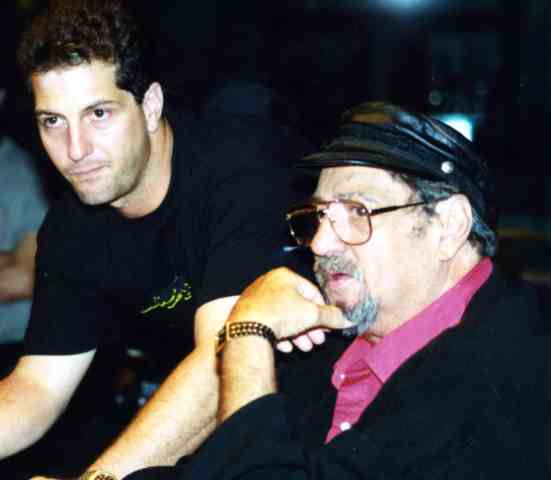
That footage became the cornerstone of a documentary film produced and directed by Denny Tedesco titled The Wrecking Crew, which tells the fascinating story of this unprecedented group of musicians through interviews, archival footage and photographs. The film was first presented with great acclaim at several film festivals across the United States in 2008, but couldn’t be released commercially yet as the many music tracks used in the soundtrack needed to be licensed at a premium cost. In 2013, a successful crowdfunding campaing was initiated to sustain the exorbitant music license fees and cover the final production costs. After collecting more than three-hundred thousands dollars, the film was finally released in US theaters in March 2015 and subsequently on DVD and streaming VOD platforms (check out the official website: https://www.wreckingcrewfilm.com/).
In this episode of the “L.A. Studio Legends” series, producer and director Denny Tedesco talks about the extraordinary career of his father Tommy, from his early days as a young guitar player to the peak years of The Wrecking Crew, going in detail about his many experiences playing for John Williams on numerous projects, including Conrack, The River and Indiana Jones. Denny also reflects on his father’s unique legacy and how he celebrated it through his own documentary film The Wrecking Crew.
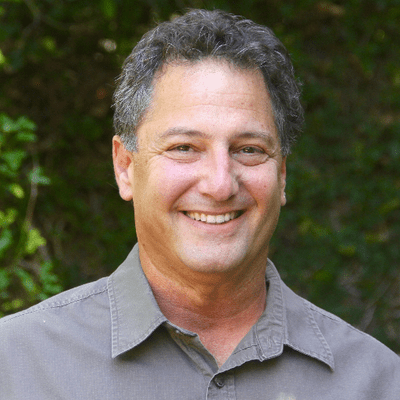
Very special thanks to Denny Tedesco for his kindness and generosity. Check his website wreckingcrewfilm.com and follow his official social media pages on Facebook and Instagram.
* Quotes by Tommy Tedesco taken from The ‘Wrecking Crew’ Exclusive: The Lost Tommy Tedesco Interview, Jon Leonoudakis, mixonline.com, 2008

List of music excerpts featured in the episode (music by John Williams except where noted):
. Richard Rodgers (arr. John Williams), “Manhattan” from the album The Old South Wails (1957), performed by the Dave Pell Octet
. The Ronettes, “Be My Baby,” produced by Phil Spector (1963)
. Neal Hefti, “Batman” title song, from the television show Batman (1966)
. “Main Title/Building Pan” from Penelope (1966)
. “Jay’s Fall/End Title/End Cast” from The Man Who Loved Cat Dancing (1973)
. “Main Title” from The Sugarland Express (1974)
. “Main Title” from Conrack (1974)
. “Marlowe In Mexico” from The Long Goodbye (1973)
. “Growing Up” from The River (1984)
. “Palace Source” from Indiana Jones And The Temple Of Doom (1984)
. “Escape From Venice” from Indiana Jones And The Last Crusade (1989)
. Jerry Goldsmith, “Main Title” from Rio Lobo (1970)
. “The Pony Ride” from The River (1984)
. James Horner, “Field Of Dreams” from Field Of Dreams (1989)
. David Shire, “End Title” from Night, Mother (1986)
. “Stolen Memories” from Schindler’s List (1993)
. Jerry Goldsmith, Suite from Under Fire (excerpt), live recording at the L.A. Music Center, Los Angeles, 1984
. “Young Friends Farewell” from The River (1984)
. “Main Title” from Conrack (1974)
 The Legacy of John Williams