
Seven for Luck gets a lucky European premiere

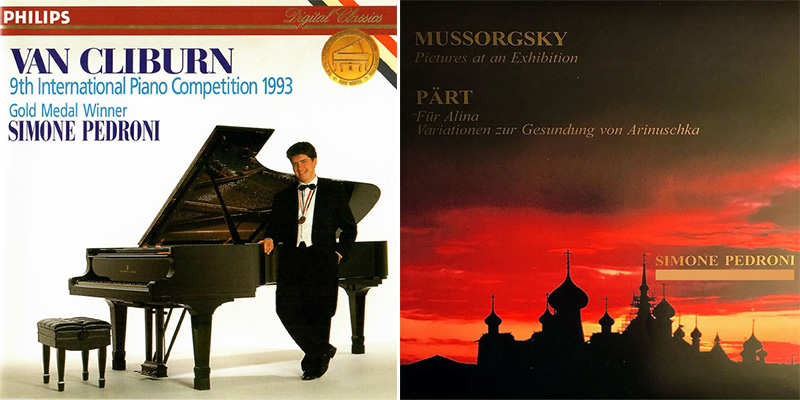
The Alagna Music Festival “Da Bach a Williams” was founded in 2014 by acclaimed pianist and Gold Medal Winner of the 1993 Van Cliburn Competition Simone Pedroni. He is a soloist of the highest artistry and sensibility, who performs and has recorded some of the core repertoire for the piano, but also has premiered works by the likes of his countrymen, including a Piano Concerto by Luis Bacalov. He has always shown a passion for the music of John Williams, performing it whenever possible, often in piano transcriptions made by himself. Although his name was known in classical circles, the film music community only really took notice of Simone Pedroni in the same year of the inception of the Alagna Music Festival, when he was one of the invited artists at a memorial recital for Van Cliburn in Fort Worth, Texas, were he performed works by Franz Liszt and an extended piano suite from John Williams’ film score for the 2012 Steven Spielberg film Lincoln.
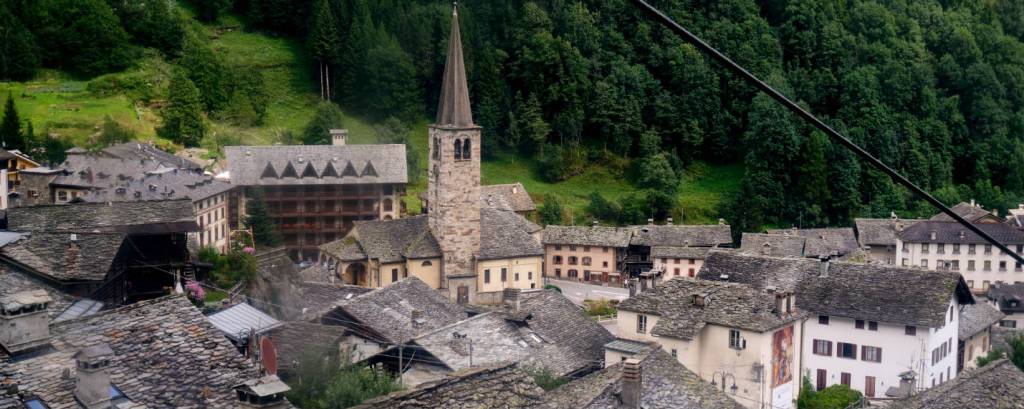
The festival itself clearly shows its affection for John Williams’ music, starting with its subtitle, ”Da Bach a Williams.” Set on the small village of Alagna, on the Valsesia alpine valley in the province of Vercelli, Piedmont, Pedroni found the most perfectly serene environment for its chamber music festival, made up of a group of 3 to 5 recitals per season, ranging from solo performances to small ensembles. The breathtaking landscapes and the slow-paced life of the surroundings offer the exact needed combination for the enjoyment of music. Including always the master pianist as soloist and accompanist in some of the recitals, Pedroni has always had guests of the highest artistic quality, from both Italy and abroad, including Los Angeles-based cellist Cecilia Tsan and flutist Sara Andon (with whom he recorded an album of chamber arrangements of John Williams’ music just released by Warner Classics), and the French ensemble Quator Girard.
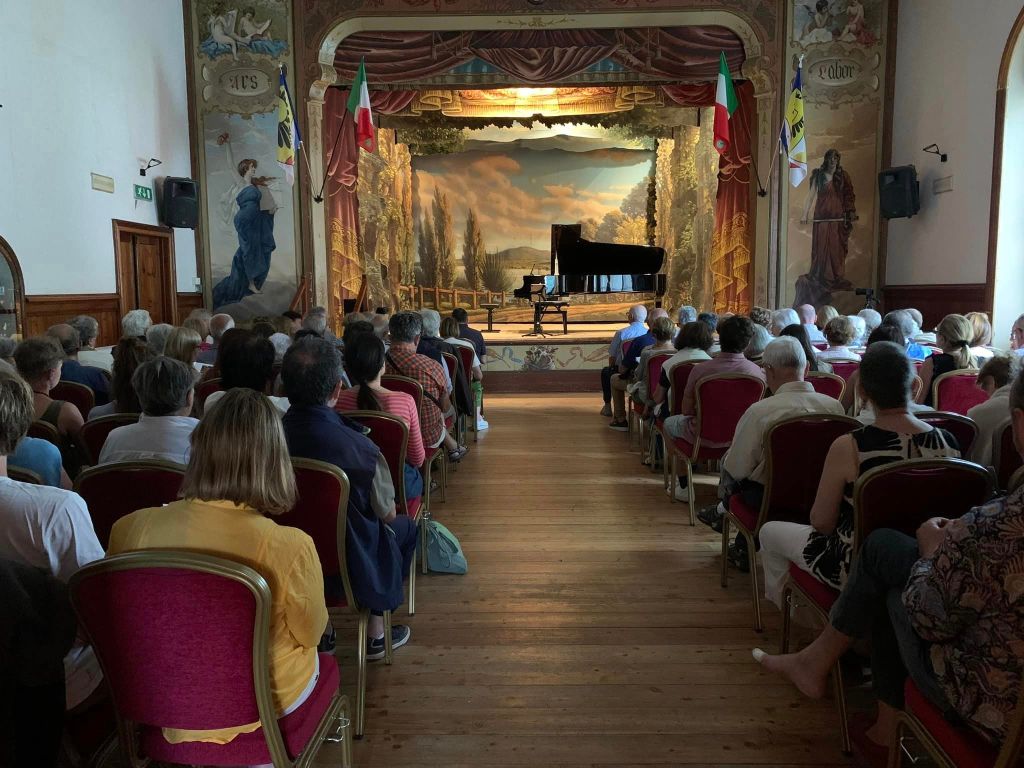
For the 2024 season, which marks the start of the festival’s second decade, Pedroni programmed four recitals, spread over two weeks, due to logistical reasons. Those had to do with a first in the festival: the final concert, on August 10, featured a chamber orchestra, the Orchestra da Camera di Parma, performing music of Vivaldi. The three previous recitals (from August 3 to 5) focused on Pedroni and a couple of younger guests, soprano Maria Grazia Aschei and cellist Christiana Coppola. And again, another first: the European premiere performance of John Williams’ Seven for Luck, a song cycle featuring poetry by Pulitzer Prize winner and former U.S. Poet Laureate Rita Dove.
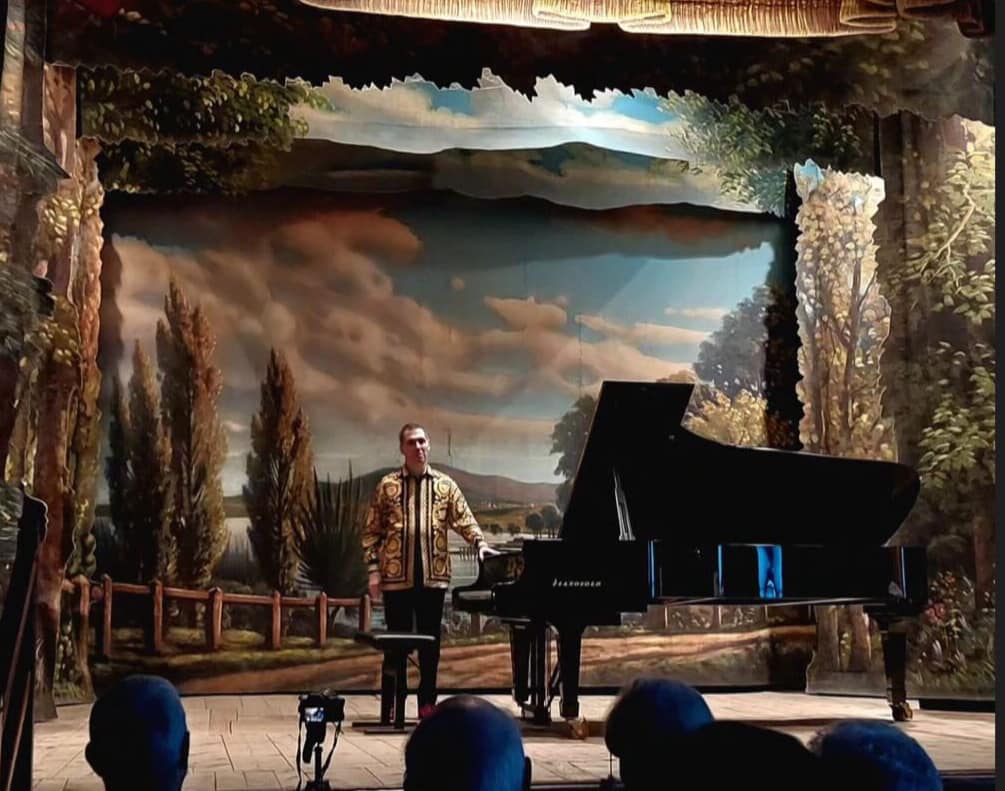
The opening recital had Simone Pedroni on the spotlight as the solo performer. The pianist and artistic director of the festival graciously introduced the season from the stage of the beautiful Teatro Unione Alagnese, remarking the importance of bringing forward a younger generation of talented performers. Cellist Christiana Coppola was at hand and spoke briefly to the audience. After some further information, about the music we were about to experience, Pedroni sat at the piano for two major compositions from Frédéric Chopin’s later life, the Barcarole Op. 60 and the Polonaise-Fantaisie op.61. The Barcarolle, with his wistful, romantic and sensual character, and the Polonaise-Fantaisie imbued with the rhythm and metre of the polonaise, a traditional polish dance, present great demands on the performer, but in Simone Pedroni’s sensitive performance (playing from memory), it all seemed effortless. After the two Chopin pieces, came the monumental Pictures at an Exhibition by Modest Mussorgsky. Again, playing sans score, it all seemed effortless, even though one understands the great technical and emotional demands of the work. Yet the music just seemed to flow from Pedroni’s heart and mind to his fingers and through the eighty-eight keys of the piano to us all in the audience. Right from the start of the first promenade, every section was performed with the fitting character of the picture it intended to depict. “Gnomus” was mysterious and ominous, “Il vecchio castello” had a dirgelike quality to it, “Tuileries” was appropriately youthful, in stark contrast to the depiction of the two jews in “”Samuel” Goldenberg und “Schmuÿle,” filled with austerity. Everything fit the exact character, and even if you have no knowledge whatsoever of the paintings, drawings and sketches by Viktor Hartmann that reportedly inspired the composer, their atmosphere was palpable all the time, right to the end, with the majestic “Bogatyrskiye vorota” (often translated as “The Great Gate of Kiev”). At the hands of Simone Pedroni, the whole piece becomes a journey through the mind and life of the composer. At the end of this masterpiece of the piano one could feel the electricity in the room, pouring out of the brilliant and expressive performance by Simone Pedroni. Having been a favourite of mine for some 30 years now, it is a piece I know fairly well (as a listener only), and yet I don’t think I ever had such an overwhelming experience with it before. As demanding, both physically and emotionally, as performing this three works were, gracious as always, our soloist kindly sent us off with a beautiful performance of Grieg’s Bryllupsdag på Troldhaugen (“Wedding Anniversary at Troldhaugen”), filled with appropriate lyricism. Such a wonderful way to set everyone’s mood as we return to the gentle streets of Alagna. This writer highly recommends anyone interested in these pieces to start right with Pedroni’s own readings. He has recorded the Mussorgsky twice, and the Grieg encore can be found on his YouTube channel (and while there, be sure to check out a great collection of videos, including some captured during previous seasons of the Alagna Music Festival).
The second recital featured the young soprano Maria Grazia Aschei in what could be described as a potpourri of delightful songs going from Schubert’s Gretchen am Spinnrade, written in 1814 up until over 180 years later, with John Williams’ excerpts from Seven for Luck. In between this perfectly curated recital, one had songs by Rossini, Debussy, Poulenc, Tosti, De Falla, Puccini and Gounod. Having heard many of these songs performed by some of the great voices of past and present, one could easily dismiss the efforts of such a young singer, but that would be a crude mistake, even more so in the present case. Miss Aschei showed, right from the opening of Schubert’s An die Musik, a total command of her instrument. Her voice is a mature one already, even at such tender age and performed, with great versatility, all the demanding and varied material. After another Schubert song, Gretchen am Spinnrade, using a text from Goethe’s Faust as source, Pedroni and Aschei offered a trio of Rossini songs: the cheerful In medio a mis colores, the more introspective Au chevet d’un Mourant and the comedic La chanson du bebé. This Rossini mini suite showcased the tremendous versatility of the singer as well as reaffirming a perfect presence on stage, adding theatricality to the performance as needed. She effortlessly moved from mood to mood, just like the most consummate of the musicians. Next were two songs by French composers Claude Debussy (the dream like Nuit d’étoiles) and Francis Poulenc (the waltzing Les Chemins de l’amour, using a melody the composer had written a few years earlier as incidental music for a play).
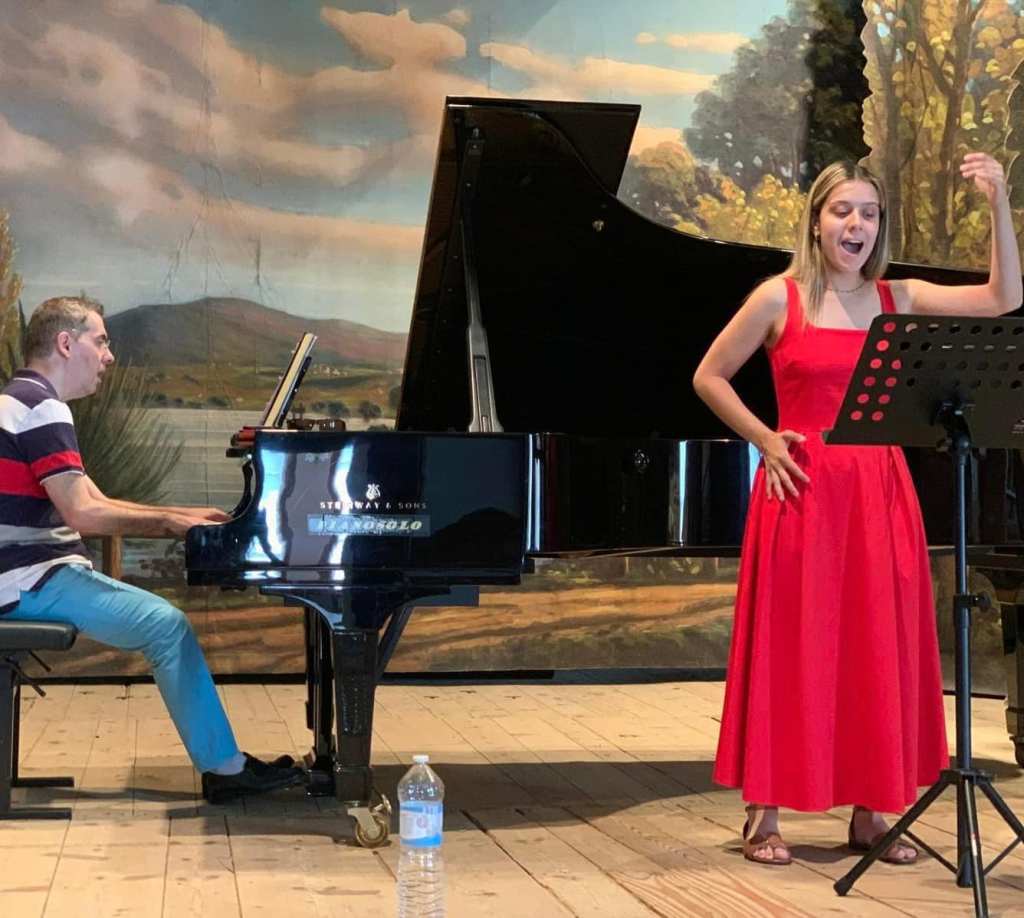
Halfway through the program, Pedroni addressed the audience presenting what he referred to as two John Williams songs, not film music, but rather lieder. While Williams’ voice output is mostly present as part of his film scores, using more accessible musical idioms, after hearing Seven for Luck, one can clearly see that he could have made a career solely as a composer of art song. The music is in turns lyrical, playful, witty, but always greatly demanding on both singer and accompanist. The opening “Song” starts imbued of a melancholy lyricism reminiscent of Samuel Barber to which it returns after a short central bouncier section. “Chocolate” is in a much more frantic tempo, making use of the Sprechstimme technique, reflecting on the sense of juvenile passion. The two songs left a wish for more of Williams’ song cycle, while allowing the reassurance of the tremendous versatility and complete vocal command of Miss Aschei. They also provided the most interesting contrast, as being the only non-european songs in the program, sounding distinctively American (and distinctively Williams, even if not as accessible as some of his film work).
After the astounding European premiere, that earned the performers what seemed to me as the longest ovation of the evening, the recital moved into two songs by Paolo Tosti, followed by another personal highlight, Manuel de Falla’s Seven Spanish Popular Songs. Again, the tremendous versatility of Ms. Aschei showcased on this varied setting. The recital concluded with Puccini and Gounod and, after heartfelt ovations, the audience was graced with an encore, performed lovely, in the form of Puccini’s Mio babbino caro.
As the final note resounded on the magnificent acoustics of the Teatro Unione Alagnese, one couldn’t help being in the most complete awe with the amazing voice and artistry of the young singer. Simone Pedroni was the most perfect accompanist, never overstating himself or overshadowing the soloist, contributing for the most excellent musical marriage between voice and piano.
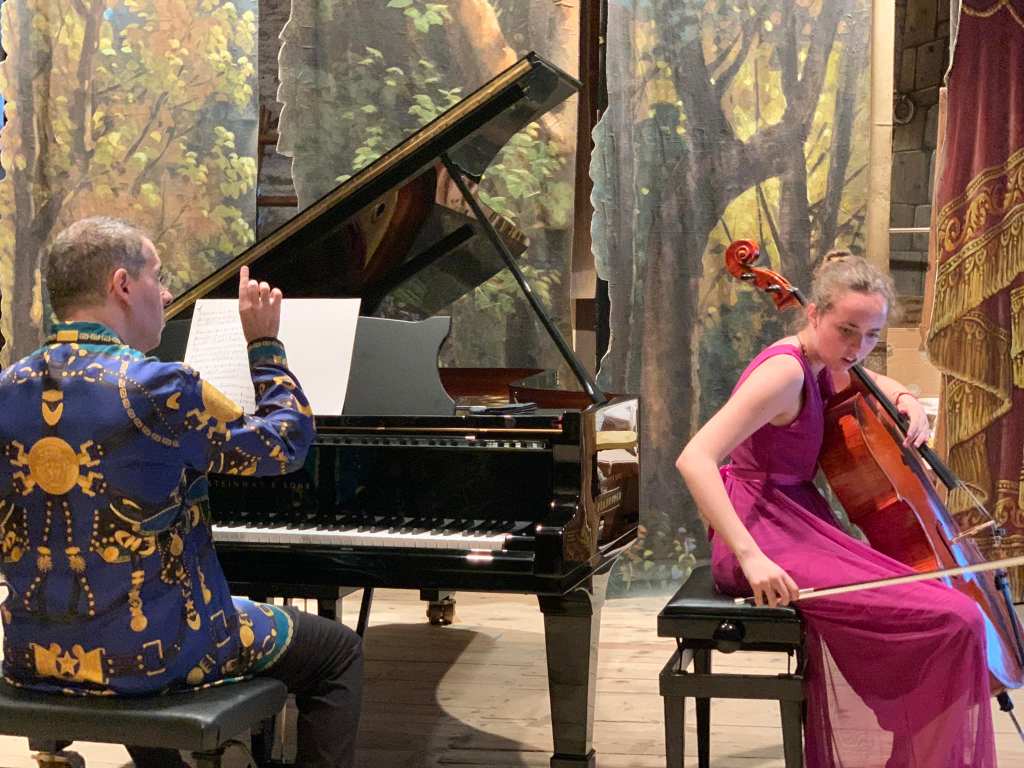
For the third recital, the even younger cellist Christiana Coppola was the featured soloist. Already a prize winner soloist and this year’s artist in residence at the Alagna Music Festival, she was joined by Simone Pedroni on the piano for exquisite performances of Shostakovich and Chopin sonatas. As before, Pedroni presented the program from the stage, enlightening the audience on the genesis of the pieces of music about to be performed. The Shostakovich Cello Sonata Op. 40 was written when the composer was in his late 20’s and going through a tumultuous time in his life. Although the work of a still young composer, it already shows the trademarks of the Shostakovich sound, one that shortly after would be perceived by the Soviet authorities of the time as inappropriate music, creating great difficulties for the composer. For this performance, Pedroni spoke on how he devised a story around the four movements of the sonata, each one describing something on the composer’s life at the time, going from family life to the constant harassment by the insensitive authorities. As I’m sure this helped the performers to enrich their reading of the music, it also helped the audience to better connect to what would otherwise be a much more abstract experience. The performance was fearless powerful or exquisitely delicate, as needed, demonstrating the immense artistry of the two musicians.
The weekend of recitals came full circle with another later work by Chopin, this time the last one published during his lifetime, the Cello Sonata Op. 65. As with Shostakovich, this was written during a difficult time in the composer’s life, as his decade long relationship with writer George Sand was coming to a turbulent end. The music let the composer’s feelings shine and Coppola & Pedroni gave a brilliant and passionate account of it, translating back into sound all the emotion Chopin had poured into the score. The different sound worlds the two composers inhabited also proved the range and versatility of the young soloist.
After a much-deserved ovation, the audience was treated to a delightful account of the slow movement of Rachmaninoff’s Cello Sonata Op. 19, a work the two musicians had performed last year. A perfect way to conclude a weekend of amazing music making.
Being myself an arts teacher of pupils slightly younger, it brings me great joy to witness such talent. Simone Pedroni provided, as one would have expected, sensitive support to these talented young women, providing them the musical backing and the exposure through the stage of the Alagna Music Festival. Another thing that brought me an even growing appreciation was all the care put to the presentation of the programs. In an age where audiences, older and younger, fail to attend classical music concerts and recitals, Simone Pedroni carefully presented the programs, preparing the audience to fully engage with the music, allowing them also to properly enjoy it. In programs with such diversity and emotional and physical demand, this is surely no small feat.
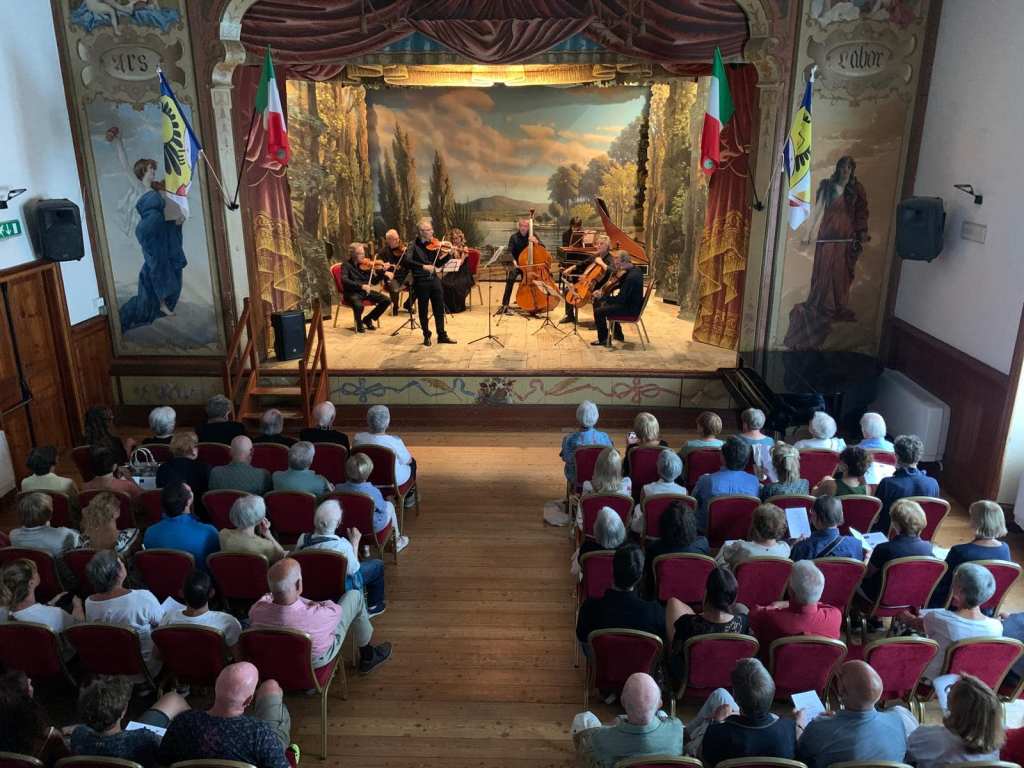
There was another concert during the following weekend, featuring music by Vivaldi, but this writer’s schedule didn’t allow to attend. Nevertheless, I’m pleased to know that it was another successful sold-out performance. While the definitive highlight for me was the two Williams’ songs, I left Alagna longing to return to enjoy more music making of the highest quality in the most dream like environment. Maestro Pedroni is to be commended for creating this great chamber music festival, for championing the performance of some less well-known material and, above all, for bringing front and centre the talent of a new generation. For these wonderful few days, I offer him my gratitude.
References
. Alagna Music Festival “Da Bach a Williams”, Festival website
. Simone Pedroni youtube channel
 The Legacy of John Williams