

Richard Dyer, in his own words, “made a fool of himself” in 1979. He was the classical critic for the Boston Globe (a post he held from 1976 to 2006), and as the Boston Symphony Orchestra was holding auditions for a new music director of the Boston Pops throughout that summer, Dyer went to sample concerts conducted by 12 of the 13 candidates. But “I didn’t go to John Williams,’” he told me, “because I thought, like everyone else: why on earth would he be interested in this?”
Dyer may have started his relationship with John Williams as a skeptic (though never a snob)—but he very quickly became one of Williams’ most ardent champions and advocates in the classical world, as well as the primary scribe who recorded the history of John Williams as it was being written. Dyer died on Friday, September 20th, at the age of 82. The cause was multiple strokes. (The great classical critic Tim Page, my former teacher, wrote a lovely obituary for the Washington Post.)
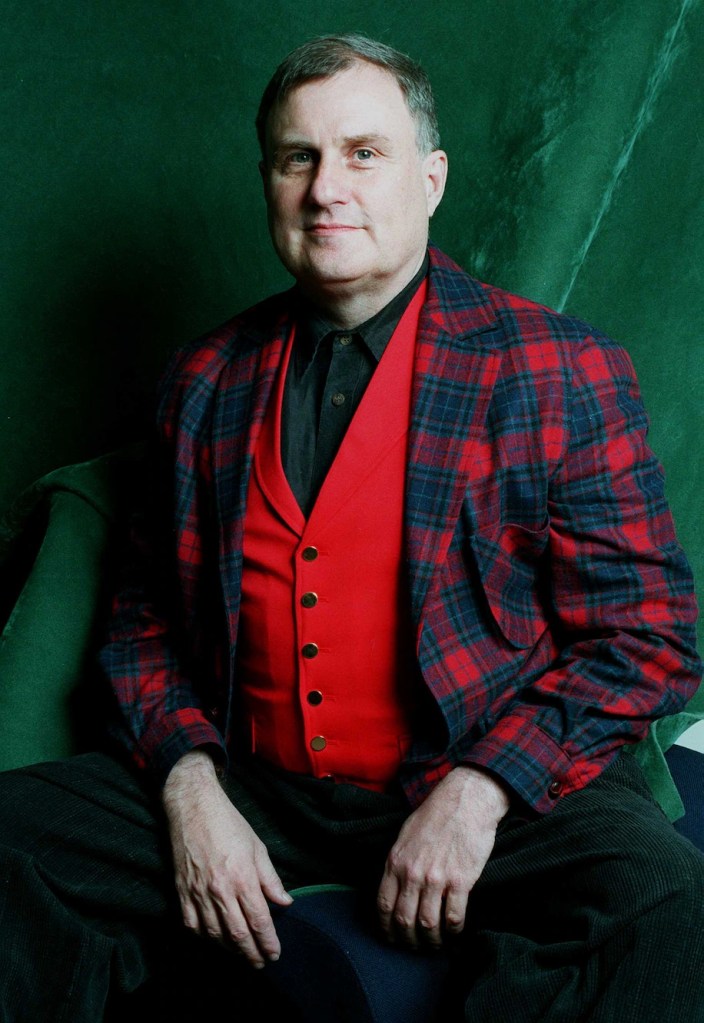
Every Williams fan and scholar owes Dyer an enormous debt, whether they know or it not. Articles and interviews about Williams—or any film composer—were scarce prior to 1980; these were invisible men, and few critics or reporters took their work seriously enough to write about it. The Pops role put Williams on the cultural map in a new way; ”The music director of the Boston Pops automatically becomes one of the most famous musicians in the world,” Dyer wrote in January 1980, “and one of the most sought-after as a guest.” This was also right on the heels of Williams’ phenomenal ascent as a household name and record-breaking composer with Star Wars and the films of Steven Spielberg, and Dyer was there on the scene to chronicle it all.
He didn’t have to, of course. Pops concerts weren’t held in nearly as high critical regard as Boston Symphony concerts (even though they were the very same orchestras, playing in the very same hall). Some of the classical elite in Boston were wary of this “Hollywood” composer parachuting in to conduct their venerable orchestra, and some residents were suspicious of anyone attempting to fill the shoes of the beloved Arthur Fiedler, who had been at the Pops helm for longer than many Bostonians had been alive. Williams had almost no public conducting experience and was not steeped in the classical repertoire—and with his unending stream of blockbuster jobs in L.A. and London, how seriously would he really take this job? How long would he stick around?
Dyer was cautiously optimistic from the start.
“It is … obvious that the Pops has a lot to gain from its connection with Williams—and not just in the potential revenue from Star Wars concerts,” Dyer wrote in one of his first Globe articles after the appointment was announced. “Now it has a music director who can make his own arrangements for the popular part of the program at the highest level of professional skill that exists today. It has a music director who is commercially viable to the recording companies (and the Pops has not had a really satisfactory recording arrangement in years). It has somebody who will look good on television, and who has the kind of modest wit that will perhaps make him an attractive public personality. There is even, who knows, the possibility that Williams can get the Pops into the lucrative world of recording for films.”
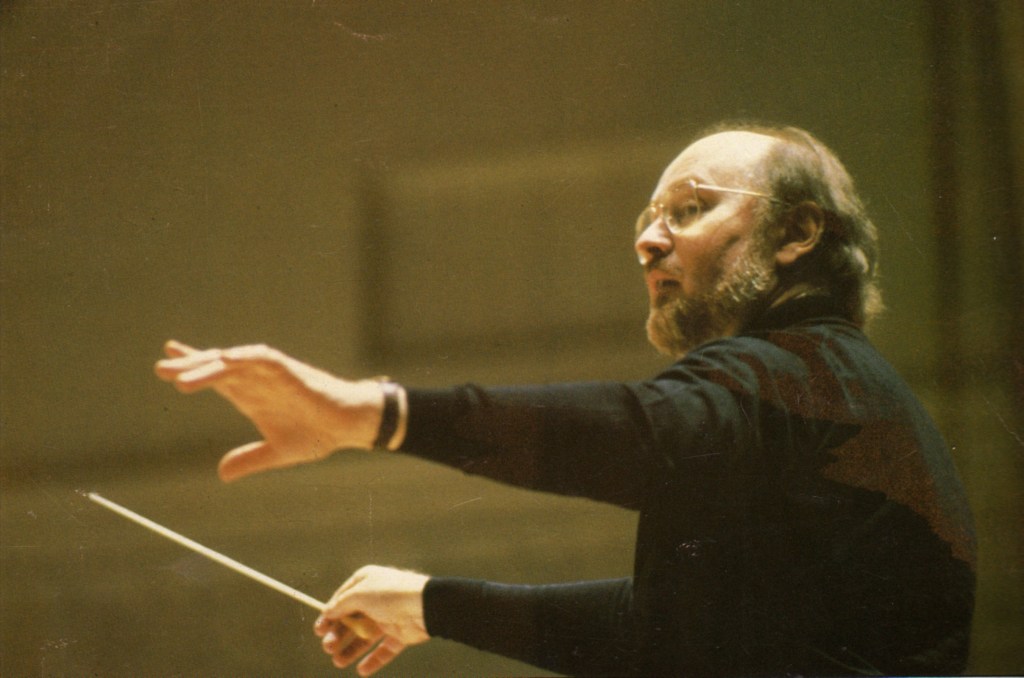
Dyer interviewed Williams’ two closest friends and mentors, André Previn and Lionel Newman, who both emphasized just what a versatile, talented, and serious musician Williams was. Their high opinion seemed to inform his own, and he treated Williams with due respect from day one.
The foundation was reinforced when Dyer traveled to London in January 1980 to meet Williams for the first time and “[try] to find out more about him,” as he told me—which led him into the historic scoring sessions for The Empire Strikes Back at Anvil Studios. Dyer sent a dispatch back to Boston about the moment when the London Symphony took down the (now-legendary) cue where Han Solo is lowered into a carbon chamber, and he vividly captured the smoke-filled atmosphere, the rapport between Williams and the musicians, and entertaining moments with George Lucas and Lionel Newman.
He was astounded to see Williams “re-orchestrate on the spot,” as he told me four decades later. “He would say to the horn, you know, ‘I think I want that on the trombone,’ and just change things around to make them sound better—and on the fly. I’ve never seen anybody else do that.”
Dyer was instantly impressed with Williams as a conductor and all-around musician, and “we sort of hit it off from the beginning,” he said.

He did a deep dive into Williams’ history. In the pre-internet era, “I had those big, red volumes of the American Film Institute,” he said, “which provided a list of all the films he’d written scores for. And over a series of conversations, I mentioned each of them—and he was astonished, but also remembered the most incredible amount of detail of what the music was like in each of them.” Dyer even tracked down a recording of the composer’s one, obscure musical, Thomas and the King. “You’re not allowing me to forget the sins of my youth!” Williams said in good humor.
Dyer profiled Williams in depth, about his personal background and early career, before anyone else did. And he continued to interview Williams on a regular basis—about E.T., The Witches of Eastwick, Home Alone, JFK, Far and Away, Jurassic Park, Schindler’s List, and so much more. Some of these are the only (or at least the most substantive) interviews we have about certain scores. He attended and reported on the scoring sessions for Saving Private Ryan in Boston, and for Star Wars: Episode 1 — The Phantom Menace and Harry Potter and the Sorcerer’s Stone in London.
Piece by piece, Dyer built an invaluable treasury and resource for anyone who wants to read Williams in own words discussing his music, character themes, and score specifics right after or in the midst of composing them (things that often faded in Williams’ memory over time). Williams also elaborated on his philosophies about music and conducting, revealed his hopes and challenges with the Pops and in Hollywood, and generally gave access into his (always eloquent) mind on a whole range of topics. The Dyer interviews were substantial and essential during the golden period of Williams’ incredible reign at the top of pop culture.
And you could always tell: he liked Williams.
“The man projects integrity,” Dyer wrote in 1985. Dyer went even further in 1991, writing that “Williams is a consummate professional, probably one of the most completely equipped musicians at work in the world today.”
Dyer treated the cello concerto as seriously as “Somewhere in My Memory” from Home Alone and everything in between. “The most important observation to make about his music,” Dyer wrote in 1993, “is that he believes in it and it is honest. You can’t write heroic music if you don’t believe in heroism; it would ring hollow. You can’t write patriotic music if you don’t have patriotic feelings. In a way, a mass-media composer like Williams is a truer successor to populist composers like Verdi than most operatic composers today.”
Dyer reviewed countless Pops concerts over the years and bore witness to that important chapter in Williams’ career, as he evolved into a public figure on national television and the leader of one of America’s most important orchestras. Dyer was on the front lines, reporting on the turbulence that led to Williams’ sudden resignation in 1984 and on the mad scramble everyone made to get him back. He charted Williams’ rise as a cherished icon in Boston, lending his own words of support and praise along the way.
He reviewed most of the concert works as they premiered, almost always favorably. “It’s all authentic and in different ways,” Dyer told me. “I don’t think he’s putting anything on in his symphonic music. He does have a tremendous empathetic sense that provides him with themes that tell you more about the character than the performers sometimes do.”
Dyer was once on the jury of the Van Cliburn International Piano Competition in Texas, and he suggested that Williams would be an ideal composer to write a new competition piece, “the way someone else does every four years—not least because he is an excellent pianist himself,” he told me. “The reaction in Fort Worth was horror, and I told them they were crazy.”

Williams succeeded in Boston, and transformed from a popular film scorer into a respected conductor and composer of concert music, on his own merit and with humble persistence. But Dyer, as one of the leading voices of classical criticism in Boston (and therefore nationally), was the wind beneath his wings. When Williams was still being disrespected or ignored by so many arbiters and tastemakers in the classical press, he had the full-throated support and friendship of the man who “runs Boston,” as composer Ned Rorem once said of Dyer.
When I brought Dyer’s name up in one of our conversations, Williams said, “I love Richard” and he began to laugh. He said he has fond memories of Dyer dressing up as a chef at various birthday parties in Boston, and even jumping out of the cake at one. “He was such a hoot,” Williams said. “Quite a good critic, actually.”
Dyer modestly said he would never go so far as claiming Williams as a personal friend, even though “he gives me a big hug every time I see him.” “I think he is fond of people, and they are fond of him,” Dyer told me. “I got to see his house and working studio in California, only because he asked me if I’d ever been to LA and I said, ‘Yeah, I was there last year.’ And he said, ‘And you didn’t call me??’ It wouldn’t have occurred to me to do that. But the next time I was there, I did. And we spent the day together, actually.”
In researching my (forthcoming) book on Williams, I relied heavily on Dyer’s interviews and reports on the Pops—and Tanglewood, and all things Boston, and quite a number of scores and concert works. So many wonderful quotes, insights, and historical observations are contained in his Globe articles. He was also quick to help me and give me interviews himself when I started the project, and I was fortunate to visit with him in person in 2022 and have an informal chat on his front porch in Boston.
In other words, I could not have written a biography of John Williams without Richard Dyer. May his memory be eternal.
 The Legacy of John Williams